How much does a hyaluronic acid injection cost in Laval?
With us, filler starts from $325 for a half syringe, taxes extra. What drives the price, and why the cheapest option often costs more.

The neuromodulator relaxes movement, filler restores volume. How we choose with you, without selling you both by reflex.


“Botox or hyaluronic acid?” The two don’t do the same work, so the answer depends on your line. If it deepens when you move your face, we look at the neuromodulator. If it’s there at rest because volume is missing, we look at filler.
People often ask as if they had to pick a side, and it’s normal to get lost. We explain what each one does, what it costs with us, and how to tell which one answers your line.
The neuromodulator, often called Botox, is a purified protein that temporarily relaxes the muscle under an expression line. Hyaluronic acid fillers are a gel placed under the skin to restore volume where it’s missing.
One calms a movement, the other fills a hollow.
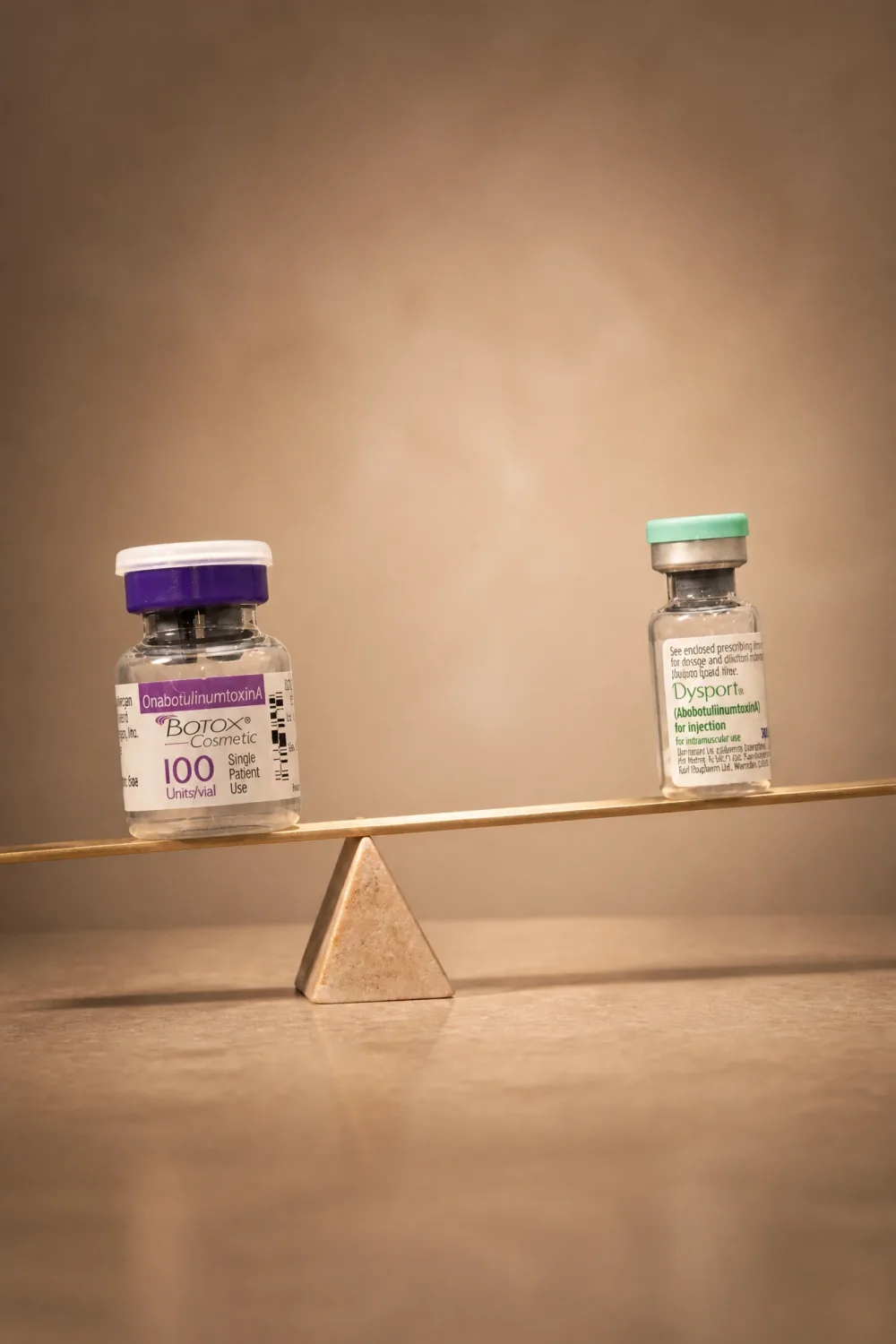
Forehead lines, crow’s feet at the corner of the eyes and the line between the brows deepen when you move your face. The neuromodulator relaxes the muscle behind them and the line softens. The effect usually lasts 3 to 4 months.
With us, it’s $12 a unit for Botox, $11.50 for Dysport, $8.50 at member pricing, taxes extra. We bill by the unit actually used.
A hollowing cheek, a sunken under-eye, lips that have lost their shape: in those cases there’s no muscle to relax. Matter is missing, and filler replaces it. The result is immediate and lasts longer, often 6 to 18 months depending on the area and product.
Filler starts from $325 for a half syringe, taxes extra. The exact plan is set after the assessment.
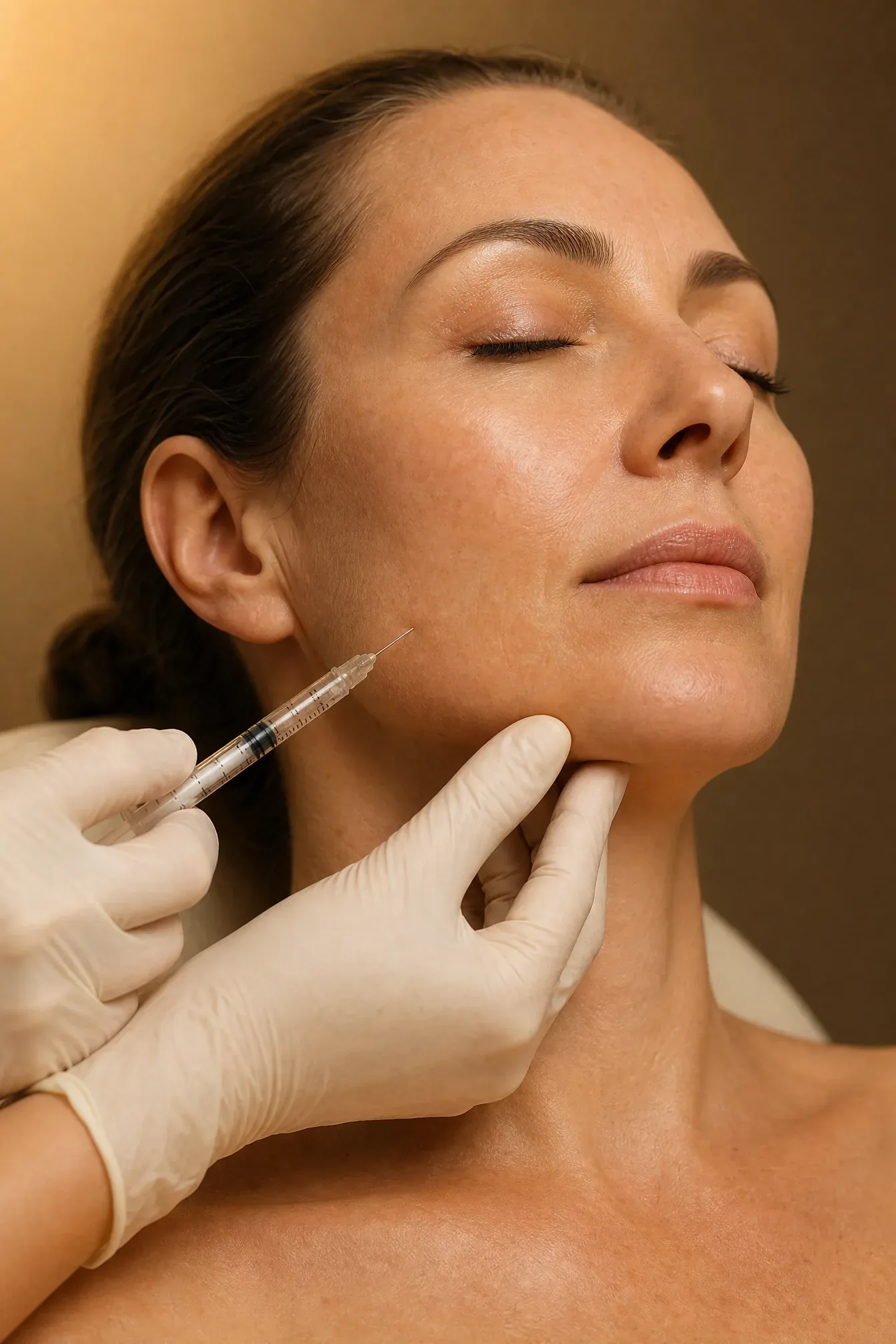
The simplest cue is in the mirror. If the line only shows when you move, that’s neuromodulator territory. If it’s there at rest, face relaxed, it’s more a matter of volume, and so of filler.
And if you have a bit of both? That’s common. We can then combine the two treatments sparingly, relaxing the expression and adding just enough volume. We won’t suggest both by reflex: each dose is decided for your face.
If you like the idea of steady, predictable upkeep on the expression side, our DC-Tox program is built for that. Either way, we start with an assessment, where we look at your face before proposing anything.

With us, filler starts from $325 for a half syringe, taxes extra. What drives the price, and why the cheapest option often costs more.

Under the eye, it all depends on the type of line: there at rest, or only when you smile. A mirror test is often enough to tell.

How a neuromodulator works, the difference between Botox and Dysport, the right time to start, and why a frozen look comes from dosing.
The best plan starts with an assessment. We look at your skin and answer your questions, no obligation.

Hi, I am Stella. Ask me about a treatment, a price or the clinic, and I will point you to the right place.
Stella answers from the site. She does not diagnose and does not book. The conversation stays 24 hours on this device, and the clinic keeps a copy.