Laser or Radiofrequency for the Face: Which One Answers What You See in the Mirror
Fractional laser works on the surface of the skin, radiofrequency on its support. How to tell which one answers what bothers you, and in what order.

Face laser before the holidays: how many weeks before December to start, what redness to expect, and how to count back from your first party.

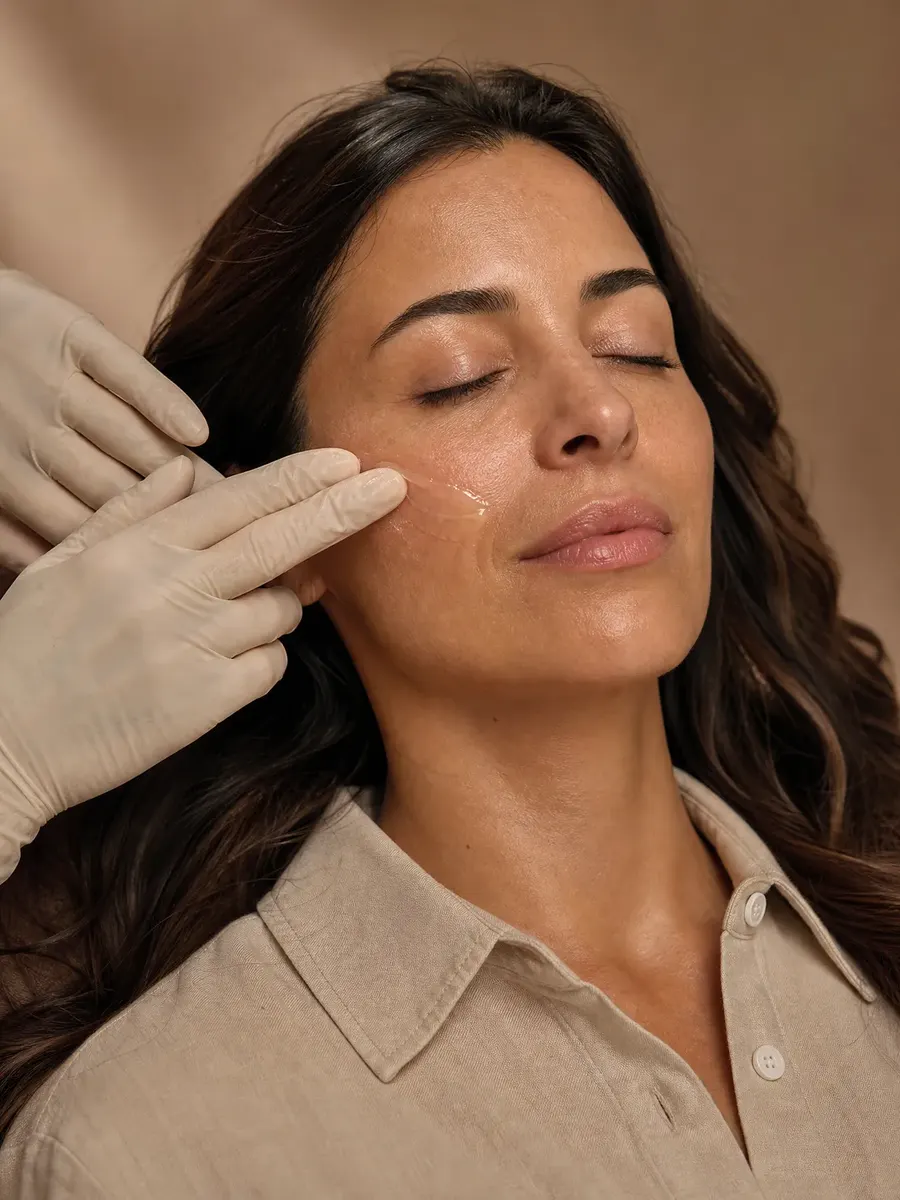
Count back from your first December event. LaseMD Ultra is spaced 3 to 4 weeks apart: a series of 3 therefore takes 6 to 8 weeks from the first appointment to the last. The redness itself lasts about 24 to 48 hours.
Here is the calculation, what you'll see on your skin from one session to the next, and what the holiday season adds: the sun on trips, and a calendar that fills up.
We often suggest a series of 3 to 5 sessions, and the improvement in your complexion builds gradually over the sessions. Your exact plan is set at the consultation, based on your skin and your goals. In the meantime, here is what a 3 to 4 week rhythm gives:
| Your plan | Sessions | First to last appointment |
|---|---|---|
| A glow for a single event | 1 | One appointment |
| A starter series | 3 | 6 to 8 weeks |
| A longer series | 5 | 12 to 16 weeks |
To put that on your calendar:

We get it: October flies, and nobody thought about their skin before the first gift to buy. A series of 3 needs 6 to 8 weeks, and a single session is still possible if your first event is closer. A glow is often visible within a few days, once the redness settles, but results vary from person to person.
What one session doesn't do is the gradual building of tone and texture, which plays out over several sessions. At the assessment, we tell you what is realistic for your date, and what is less so. A plan of one or two sessions before the first event, with the rest of the series in January, is a plan like any other: we build it with you.
LaseMD Ultra is a non-ablative laser: it treats the skin without removing it. According to the Mayo Clinic, recovery after non-ablative laser resurfacing is very short. At our clinic, a session takes 45 to 60 min, with a numbing cream beforehand for your comfort.
| What you see | How long | What helps |
|---|---|---|
| Redness and a sunburn-like feeling | About 24 to 48 hours | Keeping the skin hydrated, wearing sunscreen |
| Light flaking, sometimes | In the days that follow | Avoiding irritating active products for a few days |
| A clearer glow | Often within a few days, once the redness settles | Continuing the series, the complexion builds |
What weighs most on your calendar is the margin between the last session and the first event. We set it together.
A holiday trip to the sun is planned along with the sessions. We avoid tanning and direct sun exposure for about 2 to 4 weeks before and after each session. The skin must not be tanned at the time of treatment, and SPF 30 or higher is essential during recovery.
If you're leaving in December, tell us at the assessment, so we can place the sessions around the trip. If your summer tan hasn't quite faded, tell us that too: we look at the skin, not the calendar. For everyday sunscreen, the American Academy of Dermatology recommends SPF 30 or higher, broad-spectrum.
At the assessment, we look at your skin, then give you a plan that accounts for your dates. You leave knowing:
The full details of the treatment are on the LaseMD Ultra page. If your concern is dull skin rather than an event, the dull complexion page covers the other treatments too.
Count back from your first December dinner: three sessions means six to eight weeks between the first and the last.
For a series of 3, count 6 to 8 weeks from the first to the last appointment, plus a margin for redness. Count back from the date of your first event. Your exact plan is set at the consultation.
The redness lasts about 24 to 48 hours, sometimes with light flaking afterward. The margin between your last session and your event is confirmed at the assessment, based on how you react.
Yes. We avoid tanning and direct sun for about 2 to 4 weeks before and after each session, and the skin must not be tanned at the time of treatment. Tell us your travel dates from the start.
We often suggest 3 to 5 sessions. A glow is often visible within a few days after the first, once the redness settles, and the complexion improves gradually. Results vary.
The best plan starts with an assessment. We look at your skin and answer your questions, no obligation.

Hi, I am Stella. Ask me about a treatment, a price or the clinic, and I will point you to the right place.
Stella answers from the site. She does not diagnose and does not book. The conversation stays 24 hours on this device, and the clinic keeps a copy.