HIFU or Radiofrequency: What Actually Changes for Your Skin
Two ways of heating skin to firm it, two sensations and two depths. What each one targets, and how to tell which is meant for you.

Laser resurfacing works on the surface of your skin, radiofrequency works on its support. What each one fixes, what it will not, and how to choose.

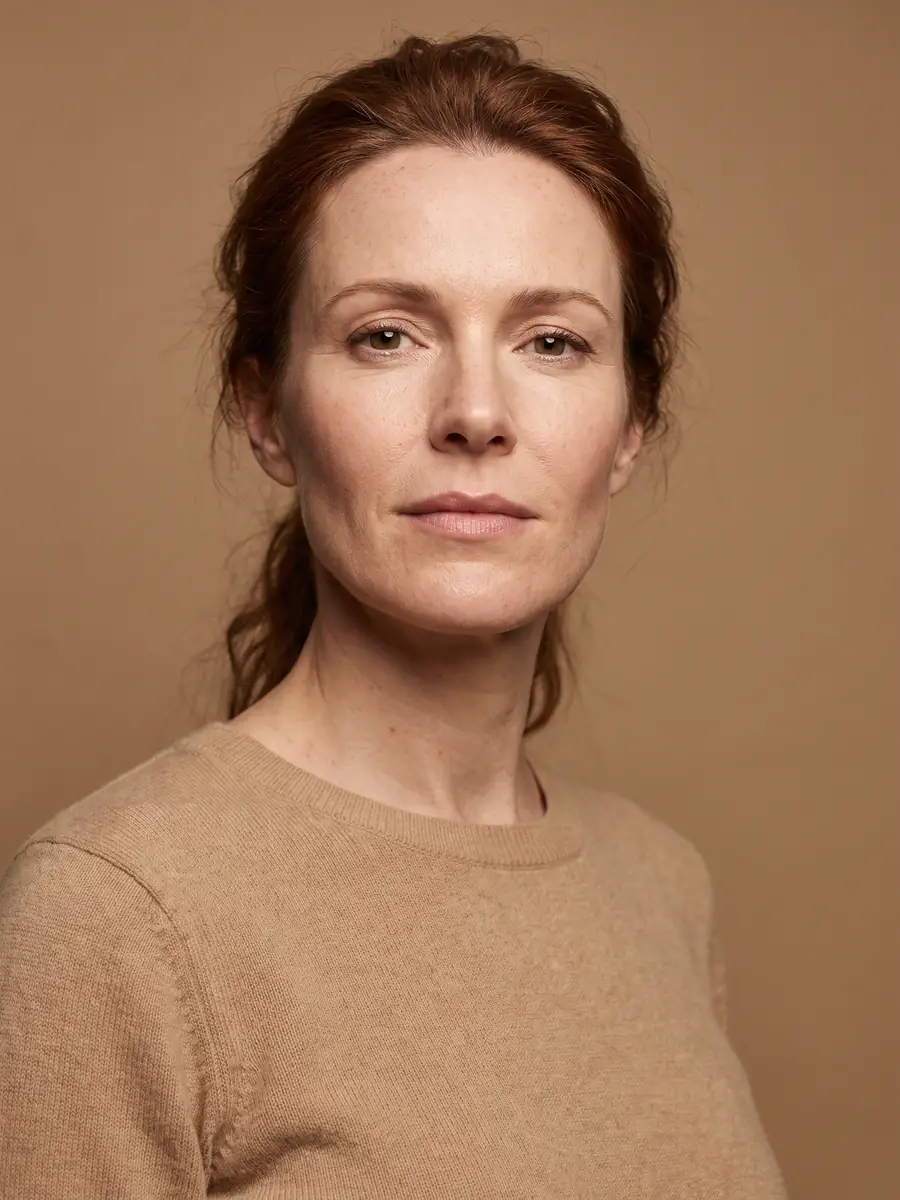
You want good skin. Everyone says it, and no two people mean the same thing. Some are looking at their complexion, their pores, a spot settling in on the cheekbone. Others are looking at the lower face, a jawline that has gone soft, a neck that no longer holds its line.
Those are two different problems, at two different depths. They do not respond to the same kind of energy, which is why you can walk away disappointed from a treatment that was performed perfectly well: the right device worked the wrong layer.
Here is how to tell them apart, and how downtime usually ends up making the decision for you.
Skin is not a sheet. There is the epidermis on top, which carries colour, texture, marks and radiance. And there is the dermis underneath, the mattress of collagen and elastin that keeps everything taut.
When the epidermis is struggling, you see it in the light. The complexion loses its bounce, pores read from further away, and summers leave brown spots that no longer fade by October. When the dermis loosens, you see it in the shape. The cheek drops, the jawline blurs, the neck softens.
A surface treatment lifts nothing. A structural treatment erases no spots. This is not about power or price: each type of energy does one job and not the other.
There is a quick way to place yourself. Take a photo in natural light, no makeup, and ask what bothers you first: the colour of the skin, or the line of the face. If you cannot choose, both have usually started, and we come back to that further down.
The table below sorts it out in ten seconds:
| What bothers you first | The layer involved | What answers it |
|---|---|---|
| Dull tone, visible pores | The surface | The fractional laser |
| Spots that stay after summer | The surface | The fractional laser |
| A cheek that drops, a jawline going soft | The structure | Radiofrequency |
| A neck that no longer holds the line | The structure | Radiofrequency |
| A bit of everything | Both | Both, in a set order |
The LaseMD Ultra is a non-ablative fractional laser. Both words matter.
Fractional means it does not treat the whole surface at once. It lays down a grid of micro-columns and leaves intact skin between them, so the area repairs itself from its own edges, and repairs faster. Non-ablative means it does not vaporize the top layer: it passes through and heats underneath, and the surface stays where it is.
The principle has a name, fractional photothermolysis. It was first described in 2004 in Lasers in Surgery and Medicine (Manstein et al.), and it is what made it possible to rework skin with far less recovery than lasers that remove the whole surface. The LaseMD Ultra applies it with a 1,927 nm thulium laser.
That second point clears up a confusion you will find almost everywhere online. Pages promising dramatic tightening from a laser are nearly always describing ablative CO2, which really does remove the surface layer and asks for one to two weeks of recovery. That is not the technology we use, so it is not the result to expect from us.
What the non-ablative laser does go after:
It also supports collagen production, so there is a firming effect. It is gradual and understated, though, and it is not the main job. If what bothers you in the mirror is a jawline on the move, you will find the result thin.
As for how it feels, this is not an ordeal. Most people describe warmth and mild tingling, close to sun exposure, and a numbing cream goes on before the session. The work is done as a series, with a few weeks between sessions to let the skin recover. The exact number is set at your assessment, because it depends on what we see on your skin rather than on a package decided in advance.

XERF produces no light at all. It runs a radiofrequency current through the tissue, and it is the tissue's own resistance that generates heat, deep down, in a controlled way.
According to its maker, Cynosure Lutronic, XERF combines two frequencies (2 MHz and 6.78 MHz) to heat at more than one depth, and reads the skin's resistance with each pulse to adjust the energy. Health Canada has cleared it for skin laxity of the face and neck.
That heat does two things. It tightens the collagen already there, right away. Then it triggers the making of new collagen over the following weeks and months. Hence a small visible effect as you leave, and an improvement that keeps building for months afterward.
In practice, that means the lower face regains tone, the jawline sharpens, and the neck follows. Here, the session covers the full face, including under the eyes, the neck and the décolleté: there is no zone to add along the way.
The session itself is unremarkable. We clean the skin, apply a conductive gel, then move the handpiece zone by zone, raising the heat gradually. No needle, no anesthesia, and the intensity is adjusted to your comfort throughout.
And because it heats through resistance rather than aiming at a pigment, radiofrequency does not depend on your skin tone. That is a fundamental difference from anything that works with light, and it has practical consequences we get to two sections down.
Its limit, on the other hand, is clean: no energy removes skin. With significant laxity and real excess skin, surgery is what delivers the result. Telling you otherwise would cost you a session for nothing.
| Fractional laser (LaseMD Ultra) | Radiofrequency (XERF) | |
|---|---|---|
| The energy | Light, a 1,927 nm thulium laser | A radiofrequency current, on two frequencies |
| The layer targeted | The surface: the epidermis and upper dermis | The structure: the deep dermis and what supports it |
| What improves | Tone, texture, pores, the look of spots | Firmness, the jawline, the neck |
| During the session | Numbing cream, warmth and prickling | No needle, no numbing |
| After | About 24 to 48 h of redness, sometimes light flaking | A light redness that fades, no downtime |
| The sun | Avoid tanning before and after | No seasonal constraint |
| Skin tone | Settings adapted to skin type | Does not depend on skin colour |
| The result | Gradual, session after session | A first effect, then 3 to 6 months of building |
This is where the choice gets made, far more often than on the theory of layers.
Radiofrequency asks nothing of you. Light redness may show up, it passes, and you go back to work. You can have it done on a Thursday and go out on Friday without anyone noticing a thing.
The laser asks for a few days. Expect redness and a sunburn-like feeling for roughly 24 to 48 hours, sometimes followed by light flaking. It is not dramatic, it covers with makeup, but it shows up close.
Worth knowing: no resurfacing is truly downtime-free, not even the non-ablative kind. A clinic promising you zero recovery days is setting you up for a bad Tuesday morning.
So the practical question is not which one is better. It is what your calendar says. A wedding in ten days, a presentation on Monday, family photos next weekend: that does not change the plan, it changes the order you run it in.
A second calendar constraint, and it only applies to one of the two.
A laser wants skin that is not tanned. You avoid tanning and direct sun for roughly 2 to 4 weeks before and after the session, and SPF 30 or higher becomes non-negotiable through recovery. That is exactly why skin treatments get planned for fall and winter: your skin is back to its own colour, and the weeks that follow are not beach weeks.
Radiofrequency carries no such constraint, since it targets no pigment at all. It runs year-round, July included.
The American Academy of Dermatology is blunt about it: tanned or sunburned skin does not get lasered, because the risk of a burn or a spot becomes real. So before a laser, we check three things:
Which gives you a fairly simple calendar: structure whenever you like, surface once the sun backs off.

In plenty of cases the honest answer is neither one nor the other: it is both, in a particular order.
Skin at forty-five can easily carry a complexion marked by past summers and, at the same time, a jawline starting to move. Treating one layer leaves the other perfectly visible, and that is often what makes people say a treatment did nothing when in fact it did its job.
We do not do them on the same day. Two kinds of heat on the same skin within the hour is pointless stress. We sequence them, and we let the skin settle in between.
The order is worth discussing, but one logic comes up often. Start with structure, because that is the one that takes months to build, and work the surface while collagen rebuilds underneath. When an event is pressing, flip it: do the surface early enough for the skin to calm down, and slot radiofrequency in almost anywhere, including late.
| Your situation | What we do first | What follows |
|---|---|---|
| No date pressing | Radiofrequency | The laser, while collagen rebuilds |
| An event in a few weeks | The laser, early enough for the skin to settle | Radiofrequency, even close to the date |
| Summer coming | Radiofrequency | The laser, in the fall |
Either way, a medical esthetician holds the handpiece. And the combined plan gets decided in consultation, on your skin, not in an article that has never seen it.
You do not need to arrive knowing whether your issue is surface or structure. That is what the assessment is for, and here is what we tell you about it before you ask.
We look at your skin quality with the 3D skin analysis. It shows the pigmentation sitting below the surface that the naked eye cannot see yet, the state of your texture, and where colour is collecting. That is what keeps us from treating one visible spot while ignoring the five coming up behind it.
Then we look at shape, at rest and in movement, because laxity reads far better standing up than in a straight-on photo. And we factor in your skin type, which changes nothing for radiofrequency but does change the settings of anything light-based.
Finally, we tell you what neither one will do. A deep fold, lost volume, a genuine descent of the tissues: those have different answers, and we name them even when they are not what we sell that day.
The right treatment is the one aimed at the layer that bothers you. Everything else is spending.
A little, and slowly. The LaseMD Ultra supports collagen production, so skin gains tone across a series of sessions. But if what bothers you is a softening jawline or a dropping neck, radiofrequency is what works that layer. Laser stays the better pick for complexion, texture and the look of spots.
No. It heats a volume of tissue and targets no pigment at all, so a brown spot never sees it coming. That is what makes it usable on every skin tone, and also why it will never replace a surface treatment.
Yes, but not on the same day and not without a plan. We let the skin settle between the two sessions, and the interval depends on which one came first and how your skin responded. That schedule gets set at your assessment.
Count on roughly 24 to 48 hours of redness and a sunburn-like feeling, sometimes followed by light flaking for a few days. Makeup covers it, but it shows up close, so plan the session around your week.
After a laser, yes, and it is not a detail. Avoid tanning and direct sun for roughly 2 to 4 weeks before and after, with SPF 30 or higher every day through recovery. After a radiofrequency session there is no such restriction, though daily sun protection remains a good idea year-round.
Two ways of heating skin to firm it, two sensations and two depths. What each one targets, and how to tell which is meant for you.
What radiofrequency can firm, what it will never lift, and the signs that say a surgical facelift is still the better answer for you.

How radiofrequency tightens skin and restarts collagen, who it is really for, and where surgery stays the better answer.
The best plan starts with an assessment. We look at your skin and answer your questions, no obligation.

Hi, I am Stella. Ask me about a treatment, a price or the clinic, and I will point you to the right place.
Stella answers from the site. She does not diagnose and does not book. The conversation stays 24 hours on this device, and the clinic keeps a copy.