Microneedling: How Many Sessions Before You See a Real Change, and Why Nobody Can Give You a Fixed Number
No magic number: microneedling is done in a series, at the pace your skin renews itself. What decides how many sessions you will really need.

Two ways to restart collagen: tiny needles or laser light. What sets them apart, and which one suits your skin type and your schedule best of all.


Microneedling and fractional laser share the same goal: restart collagen so the skin renews itself and its texture refines. Both mean 24 to 48 hours of redness with us. What most often decides between them is your skin type: the laser calls for more caution on darker skin, while microneedling targets no pigment at all.
You have skin that feels rough, visible pores or marks left by acne, and someone mentioned both options. Here's how each one works, what research says about acne scars, how they compare in a table, and what we look at during your assessment to choose.
Skin texture depends a lot on what's happening under the surface. With sun, age and old acne marks, collagen thins out and the surface turns uneven. To smooth it, we create a small, controlled injury: the skin repairs it and makes new collagen along the way.
The difference between the two treatments is the tool that creates that injury. Microneedling uses fine needles. Fractional laser uses light. The goal is the same, but how your skin experiences it changes, especially depending on its colour.
Microneedling creates very fine micro-channels in the skin with a pen of calibrated needles. Each micro-channel triggers the skin's natural repair and collagen production. Those channels also let the active chosen with you for the session go deeper.
Here, a microneedling session lasts 45 to 60 min, repeated every 4 weeks. Expect 24 to 48 hours of redness. Results build over a series of sessions. The price is $325, taxes extra.
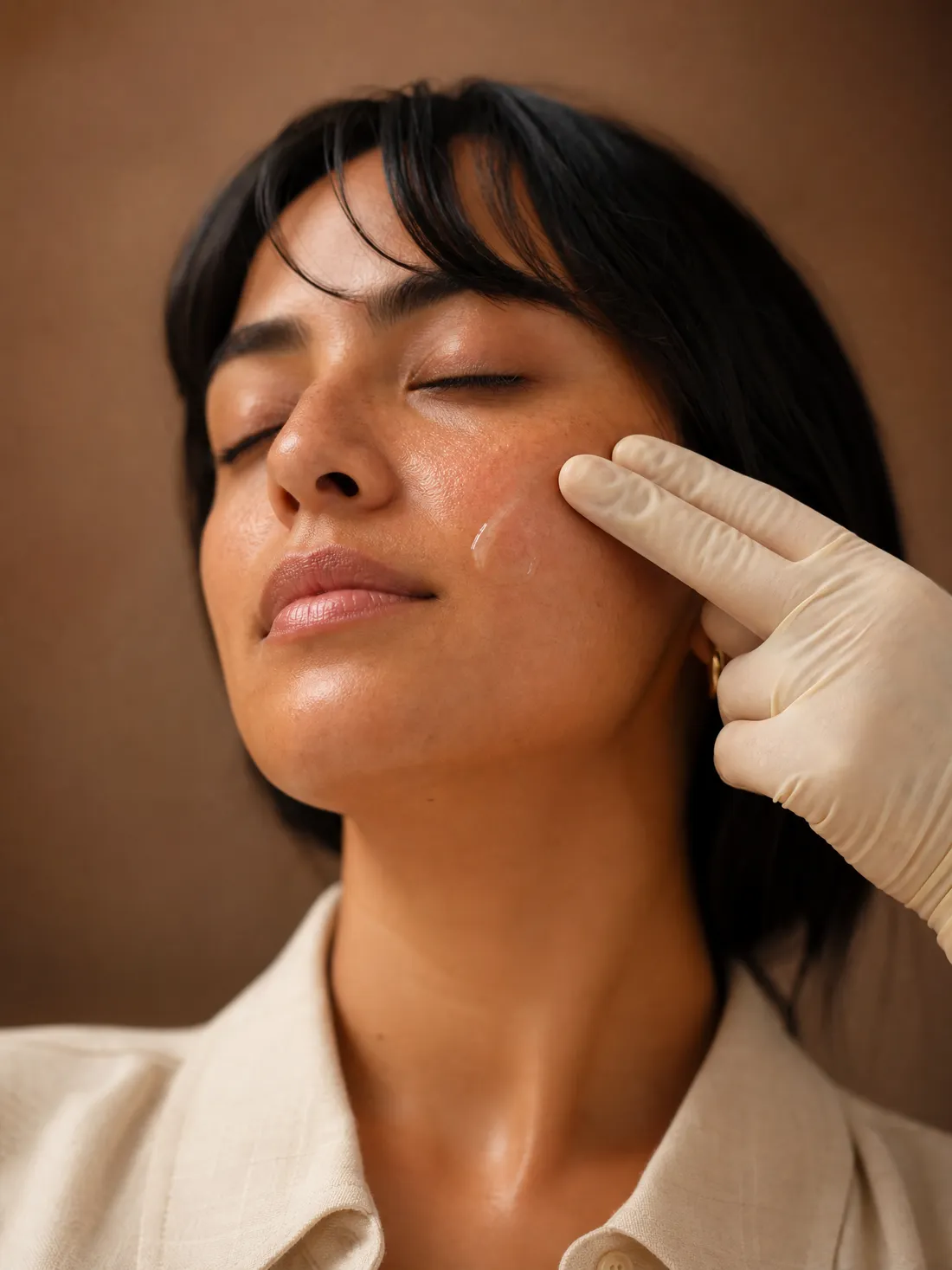
Microneedling involves no injection, but it isn't needle-free. We say so up front so you know what to expect, and we walk you through the sensation before we start.
LaseMD Ultra is a non-ablative fractional thulium laser. "Fractional" means it treats the skin in tiny columns, leaving intact skin between them, which speeds up healing. "Non-ablative" means it doesn't remove the surface layer: it heats beneath it and restarts cell turnover.
A session lasts 45 to 60 min, every 3 to 4 weeks, over 3 to 6 sessions. Redness also lasts 24 to 48 hours. Prices start at $500, taxes extra, and the treatment page lists the tiers for the face, and for the face and neck.
Do you choose by preference? Rarely first. We start with your skin colour.
A laser works through light, and melanin, the pigment that colours skin, absorbs part of that light. Darker skin has more melanin, so there's more risk the skin reacts with lighter or darker patches afterwards. LaseMD Ultra suits a range of skin types with personalized settings, but we stay more cautious with it on darker skin.
Microneedling targets no pigment. The needles work the same way whatever your skin colour. That's why we often suggest it first for olive or dark skin. The final choice is made at the assessment, never on a numbered rule.
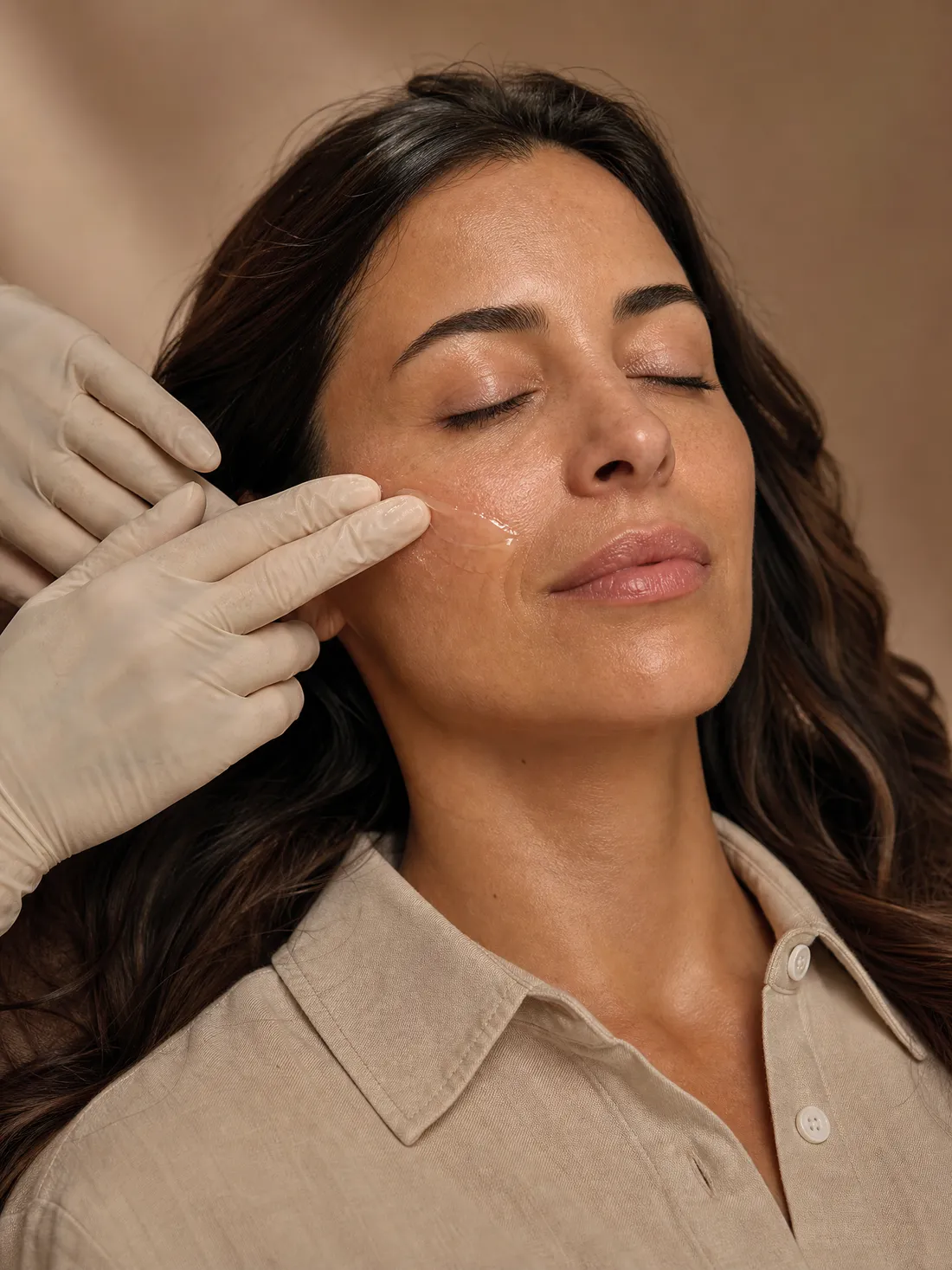
Pitted acne scars are the most common reason behind this question. Research mostly compares microneedling with fractional CO2 laser, an ablative laser that's more aggressive than the one we use. It isn't a device at our clinic: we mention it because it's the best-studied laser for these scars.
A systematic review with meta-analysis (Batool et al., Lasers in Medical Science, 2026) pooled 17 studies in adults. According to the summary published by EMJ, it found no significant difference between fractional CO2 laser and needling techniques in overall scar improvement. The laser was, however, linked to more dark marks after treatment.
A split-face trial (Ñanco Meléndez et al., Dermatology Practical & Conceptual, 2024) treated one side of the face with microneedling and the other with CO2 laser. Both sides improved.
These studies have limits: small groups, measurement methods that vary, and a laser different from ours. Mostly, they show microneedling isn't a second-rate option for pitted scars. We don't promise you a reduction percentage: we improve the look session by session, and rarely erase scars completely.
| Microneedling | Fractional laser (LaseMD Ultra) | |
|---|---|---|
| How it works | Micro-channels made by fine needles | Columns of heat made by light, without removing the surface |
| Redness with us | 24 to 48 h | 24 to 48 h |
| Pace | Every 4 weeks | Every 3 to 4 weeks, 3 to 6 sessions |
| Session length | 45 to 60 min | 45 to 60 min |
| Darker skin | No pigment targeted | More caution, personalized settings |
| Price | $325 | From $500 |
All prices are taxes extra. On redness, the two treatments are even with us: your skin type and starting point make the difference.
Microneedling targets no pigment. That's often what decides, even before preference.
There's a third option: Potenza, which adds radiofrequency at the tip of insulated micro-needles. Heat is delivered into the dermis, under the surface, on top of the micro-channels. A session lasts 60 min, every 4 to 6 weeks, at $749, taxes extra.
We suggest it when we want to work on texture and firmness together. It isn't a required step: to refine texture, microneedling or laser is often enough.
Yes. Our Collagen Bomb program does exactly that, combining the Ultra laser, Potenza radiofrequency and exosome microneedling: four sessions, one every four weeks, over about three months. Each step sets up the next. The program is $1,699, taxes extra.
The combination isn't for everyone. If your skin is darker, we can adapt the sequence. If your texture concerns are mild, a series of one treatment may be enough. We decide that together.
During the assessment, the medical aesthetician looks at your skin and runs a LINE VU 3D skin analysis. Here's what guides the choice:
If you have active acne, these treatments are add-ons: they don't replace medical treatment. Pregnancy, medication or irritated skin are also checked at the assessment. The uneven texture page sums up the options for what you see in the mirror.
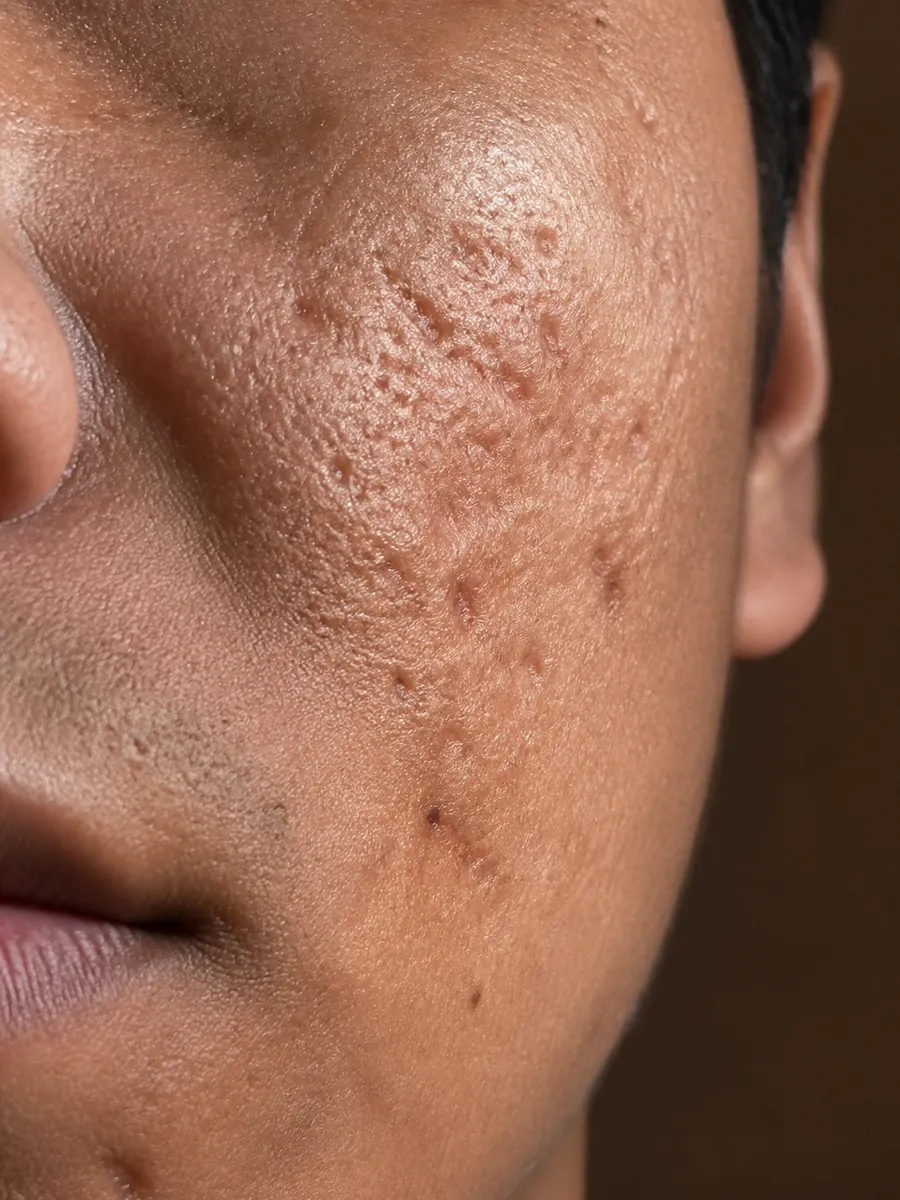
A review of 17 studies found no significant difference in overall improvement between microneedling and CO2 laser, a more aggressive laser than ours. The laser was linked to more dark marks after treatment. Both improve the look, rarely to the point of erasing.
It calls for more caution, because melanin absorbs part of the light. We assess it at your consultation, with personalized settings, or suggest microneedling instead.
Yes, that's what the Collagen Bomb program does, combining laser, Potenza and microneedling over about three months.
Most people tolerate both well, and the sensation varies from person to person. We talk it through before the session so you know what to expect.
The change is gradual and builds over the series. Collagen takes weeks to rebuild, so we judge after several sessions, not after the first one.

No magic number: microneedling is done in a series, at the pace your skin renews itself. What decides how many sessions you will really need.

Both prick the skin with fine needles, only one adds heat in the dermis. Which to choose for grain, pores, scarring or looseness, and where to start.
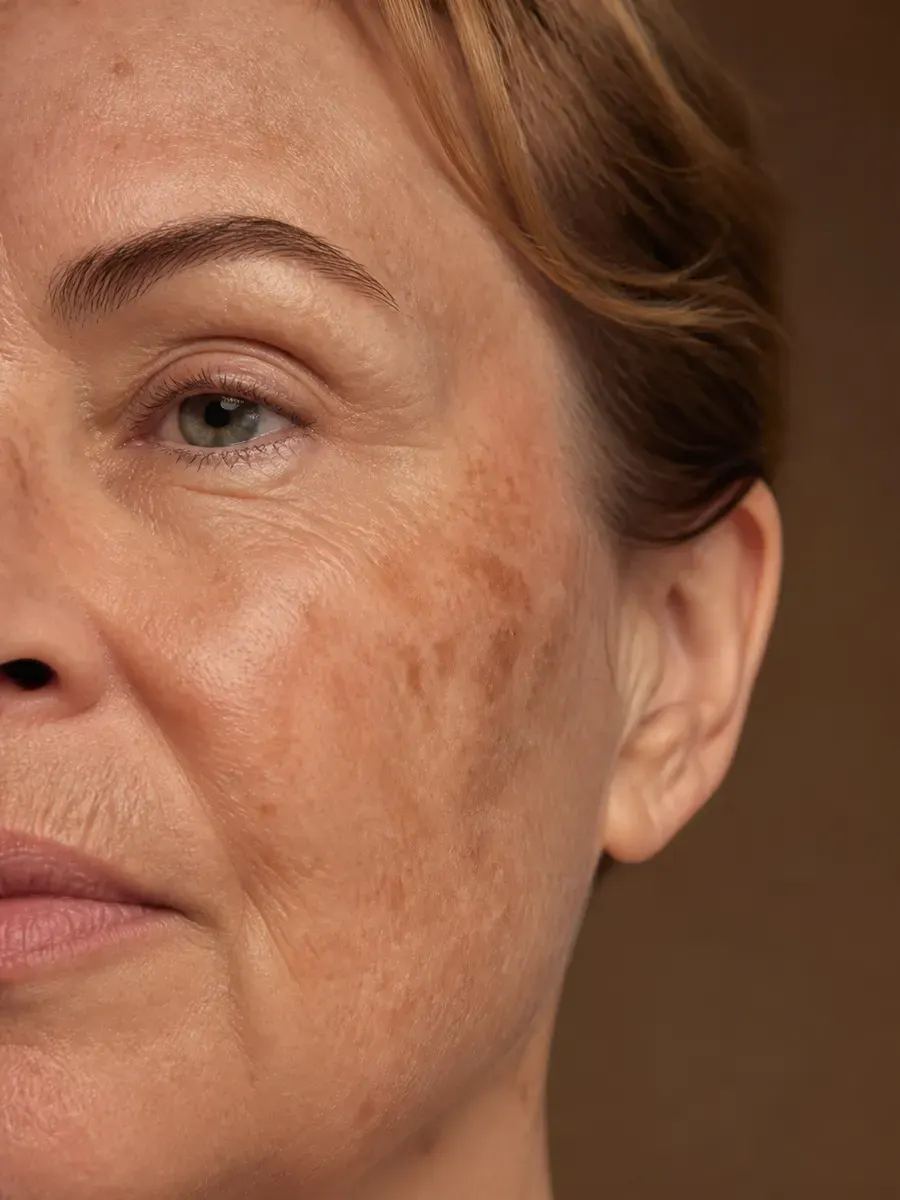
Brown spots more visible after summer: what the sun leaves on your skin, when to have a spot checked, and what November changes when you want to deal with them.
The best plan starts with an assessment. We look at your skin and answer your questions, no obligation.

Hi, I am Stella. Ask me about a treatment, a price or the clinic, and I will point you to the right place.
Stella answers from the site. She does not diagnose and does not book. The conversation stays 24 hours on this device, and the clinic keeps a copy.