PRP and Exosomes Together: What the Combination Adds for Your Hair
Why combine PRP and exosomes in one hair protocol, how the session goes, and our programs that bring both together.

Plan for 3 to 4 close sessions to kick-start regrowth, then about one maintenance session a year. Why a single session isn't enough.

For most people, 3 to 4 close sessions to start, then a maintenance session about once a year. The exact number depends on your type of loss, your stage, and how you respond to the first sessions.
Maybe you were hoping one session would settle it. That's a normal expectation, and we'd rather tell you now what the protocol involves. As a reminder, hair PRP is your blood spun to concentrate the platelets, which we then place back into the scalp. Here we explain why it takes several sessions, what you'll see at each step and how we set your plan.
PRP works through gradual stimulation. A dormant follicle doesn't wake up all at once; it needs several successive signals to restart.
During that interval:
Sessions too close together waste part of the effect. Too far apart, you lose the momentum of the previous session.
Why:
That's the basis of DC Prime, which includes four sessions over two to three months, three to four weeks apart, then an assessment to set maintenance.
Why:
That's the basis of DC Bloom, which includes three sessions three to four weeks apart. A scalp assessment comes first, because for women we check iron, thyroid and hormones before treating.
These numbers are averages. We set your plan at the assessment, based on your situation.
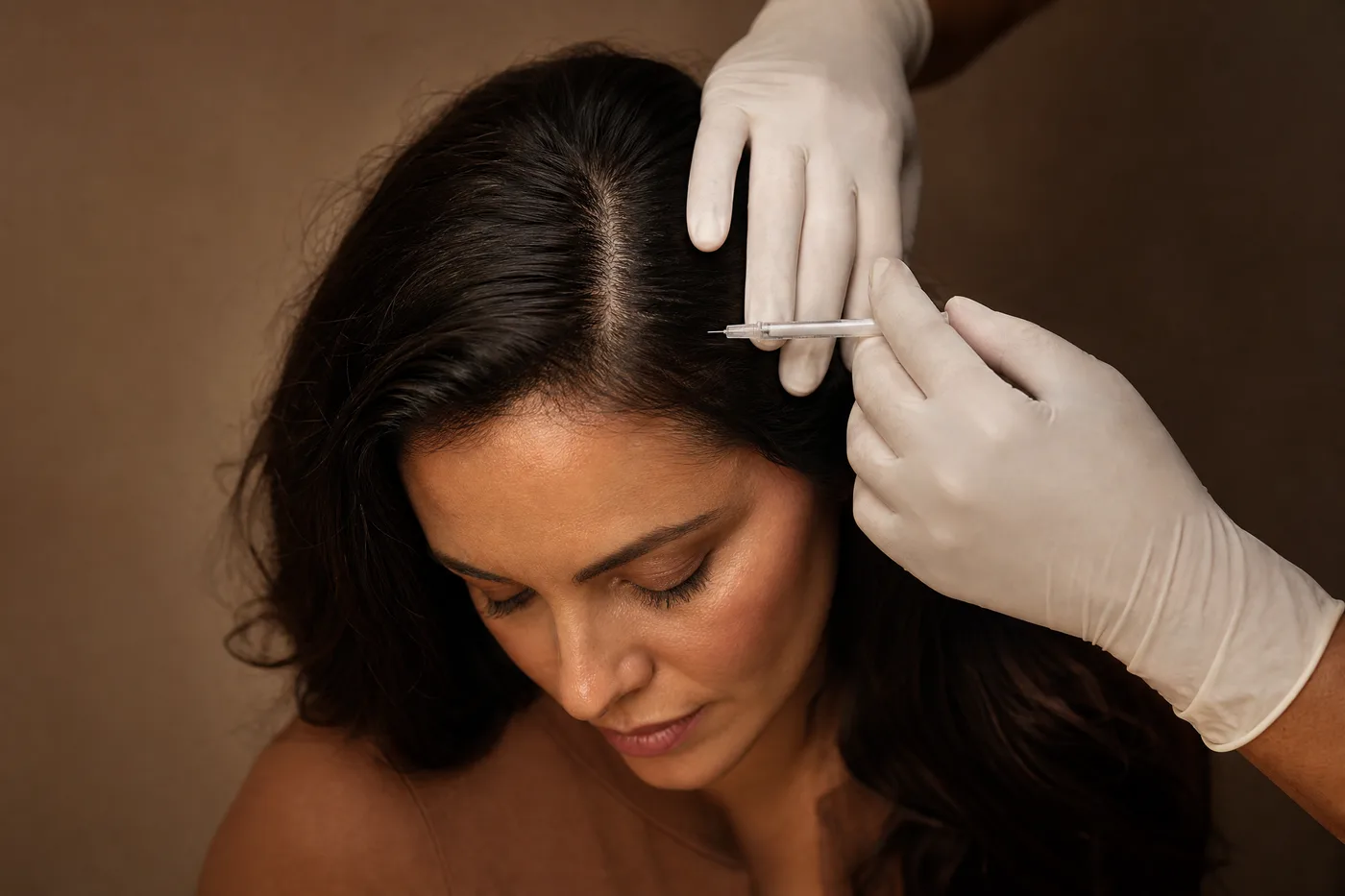
The DC Prime Exo version adds exosomes to all four sessions rather than just one.
A maintenance plan follows, based on your response. The DC Bloom Exo version adds exosomes to all three sessions.
The markers below describe a typical progression. They don't guarantee a result.
Yes. Without maintenance, hair gradually returns to its starting state over a year to eighteen months. Maintenance sessions are there to keep what the protocol helped you gain.
The first year: one to two sessions. After that: one session every six to twelve months, depending on your response.
PRP is made from your plasma, and the quality of that plasma varies with your lifestyle.
A balanced diet, with enough protein, iron, zinc and B vitamins, and 1.5 to 2 litres of water a day.
Sleep, 7 to 8 hours, at regular times. Regeneration happens at night.
Moderate physical activity, which improves circulation and tissue oxygenation.
Less stress. Permanently elevated cortisol directly slows hair growth.
Smoking, which reduces blood oxygenation and alters platelets. It's the factor that weighs the most.
Excess alcohol, which disrupts cellular regeneration and slows healing.
An unbalanced diet, which leads to deficiencies and background inflammation.
Chronic lack of sleep, which affects growth hormone production.
We know changing habits isn't easy, and nobody here will lecture you. We bring it up because it's the one way to improve the result that costs you nothing.
After three or four sessions, the result is below your expectations, the improvement stalls, or shedding comes back quickly between sessions? It's time to consider another approach.
Less rich plasma, with significant chronic stress, an underlying condition, medication that affects clotting, or habits that won't change.
Loss that's too advanced, with atrophied follicles, a fibrosed scalp or completely bare areas. In those areas, PRP has no follicles left to wake.
Genetics. The response varies from person to person, and nobody can predict it in advance.
PRP uses what's in your blood. Exosomes bring growth factors prepared in a laboratory.
What that changes:
Exosomes are not approved by Health Canada for hair regrowth, even though their use is common in clinics, and there's no very long-term data yet.
PRP, if:
Exosomes, if:
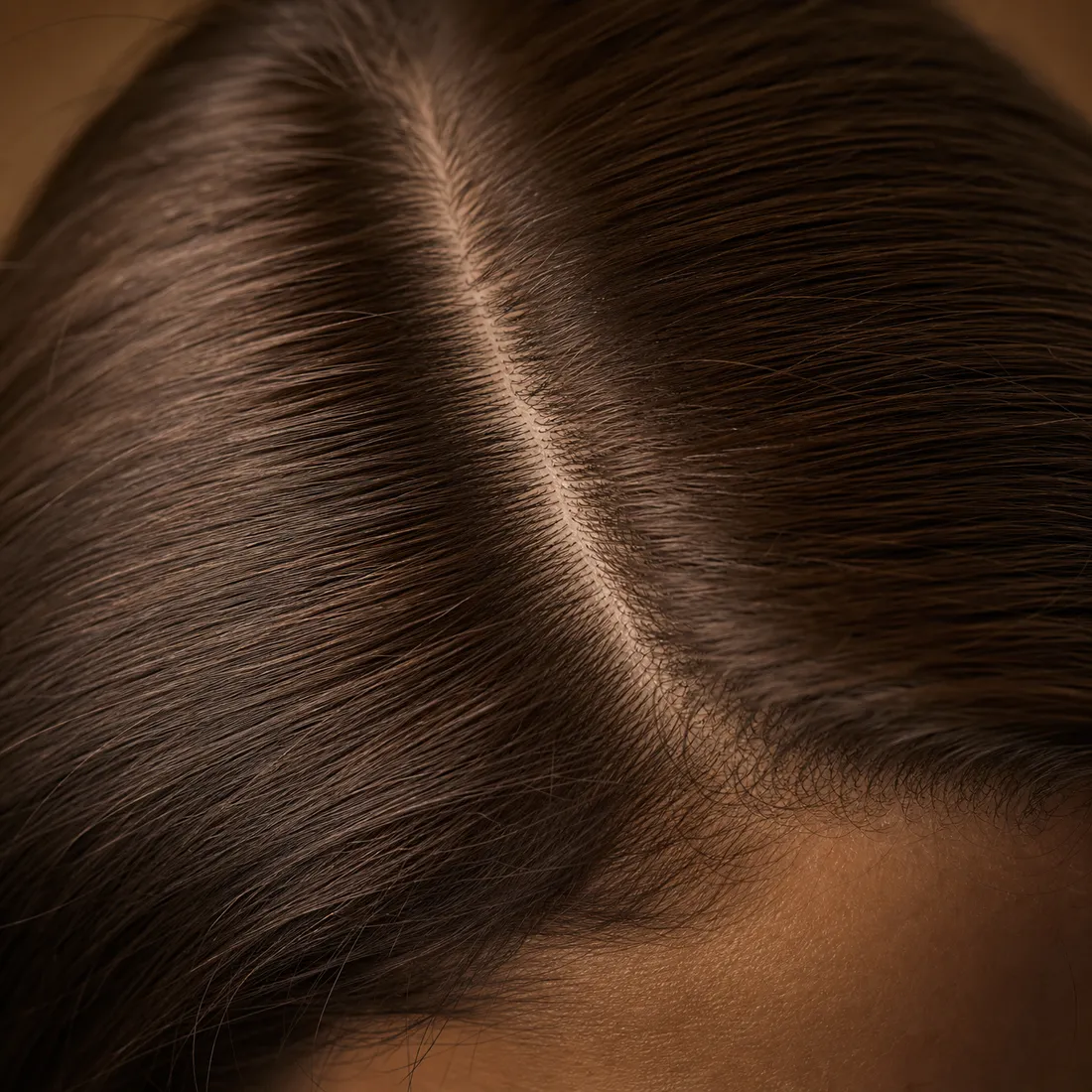
At the hair eligibility consultation, our nurse looks at:
Your hair: the stage of loss on the Hamilton or Ludwig scale, the quality of the remaining hair and the state of the scalp.
Your health: your habits, stress level, sleep, diet and medication.
Your expectations: the result you want, the time you have and your budget.
We reassess after each session and adjust what comes next based on your response.
Two weeks before, eat more protein, drink more water, and cut back on alcohol and tobacco.
48 hours before, don't take anti-inflammatories or aspirin without advice, and get a good night's sleep.
Between sessions, keep up your good habits, use gentle hair products and protect your scalp from the sun.
What to watch: how shedding evolves, changes in texture and new short hairs appearing.
At six months, we do a photo review, a density assessment and the maintenance schedule.
The biggest expense comes in the first year, with the full protocol. After that, one to two sessions a year is enough. Daily solutions never stop, and that's where PRP compares well.
Prices per session and per program are in our article on prices and on each program page. Taxes extra.
The number of sessions depends on you. Some people get an excellent result in three sessions, others need four, and others will respond better to exosomes. Either way, PRP takes a series of sessions, and the stage you start at matters more than the exact number.
To see where you stand, start with our hair page.
Why combine PRP and exosomes in one hair protocol, how the session goes, and our programs that bring both together.

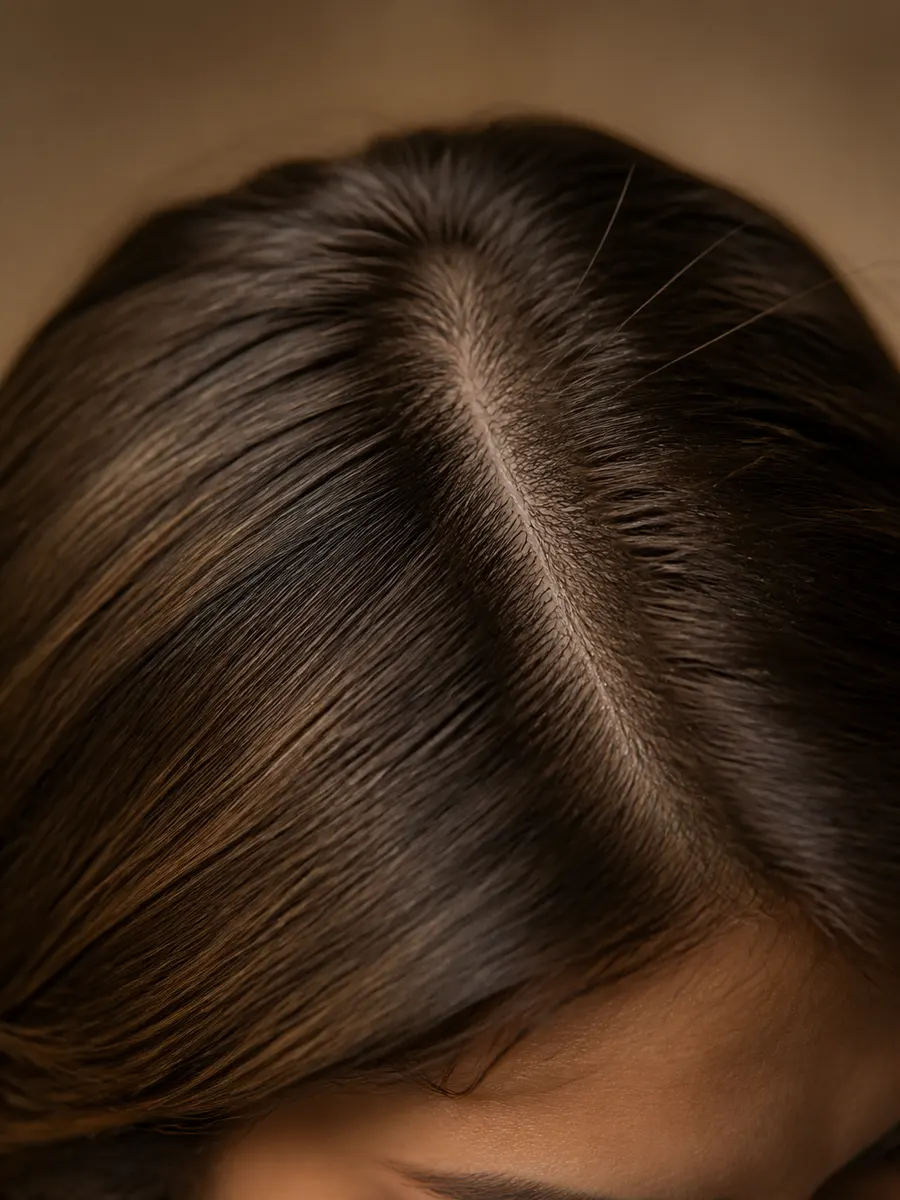
Hair PRP concentrates the growth factors in your platelets and places them back into the scalp to wake follicles that are still alive.

It depends mostly on the stage of the loss. What studies show on hair PRP, who it works best for, and when it isn't enough.
The best plan starts with an assessment. We look at your skin and answer your questions, no obligation.

Hi, I am Stella. Ask me about a treatment, a price or the clinic, and I will point you to the right place.
Stella answers from the site. She does not diagnose and does not book. The conversation stays 24 hours on this device, and the clinic keeps a copy.