What Age to Start Firming Treatments: What Changes at 25, 35 and 50, and What Can Still Wait
What skin does at 25, 35 and 50, when a firming treatment becomes useful, what can still wait, and why we will be the ones to tell you so plainly.

How a first visit unfolds, what the 3D skin analysis shows on screen, and what we tell you without your ever having to ask us for any of it first.


A first visit with us starts with a conversation, continues with a 3D skin analysis, and ends with a list of priorities. The evaluation with a 3D skin analysis is at no charge and with no obligation: you are not committing to any treatment plan when you leave.
You have never set foot in a medical aesthetics clinic, and two things may be holding you back: the fear of being sold something, and the fear of not knowing what to say. This article walks you through the visit in advance, so you arrive already knowing what will happen.
The visit starts sitting down, with no device. We ask what bothers you, in your own words. "I look tired", "my neck has changed", "my skin has lost its glow": that is enough. You don't need to know the name of a treatment or a technology.
We also ask about your medications and your skin history. The American Academy of Dermatology puts it this way: your medical history and skin health are taken into account to recommend what suits you. A detail that seems unrelated can change what we suggest, or what we advise against.
Who sees you depends on what brings you in. Devices and skin treatments are done by a medical aesthetician. An injection is always given by a nurse.
Our analysis device is a LINE VU. You place your face in front of it, and it photographs it under several kinds of light. According to a distributor's product page, it combines normal light, polarized light, ultraviolet and a lighting mode that brings out the relief of the surface.
Each light shows a different layer of what we look at. A spot you can't see in the mirror yet may show up under ultraviolet. The relief of a pore or a fine line stands out better under raking light than under your bathroom light.
That image is what tells us which device, which intensity, and in what order, before a first facial treatment.
We look at the screen together. You see what we see, and we explain what each image represents.
| What the screen can show | What the screen does not do |
|---|---|
| Spots, including ones you can't see yet | Make a medical diagnosis |
| Redness and skin tone | Tell you which skin disease you have |
| Pores, texture and the relief of fine lines | Replace a consultation with a doctor |
| A baseline image, to compare later | Promise a result |
The analysis is skin imaging. It does not replace a medical exam. If we see something that needs a doctor's opinion, we tell you, and we don't treat before that.
The 3D skin analysis is imaging, not a diagnosis: it helps choose the device, the intensity and the order, and it keeps a baseline image.
At the end of the analysis, we tell you things in this order:
We understand the worry. Many people arrive ready to say no. Here is what we won't do during your visit:
You leave with information. What you do with it next is yours, and "I'll think about it" is a normal answer.
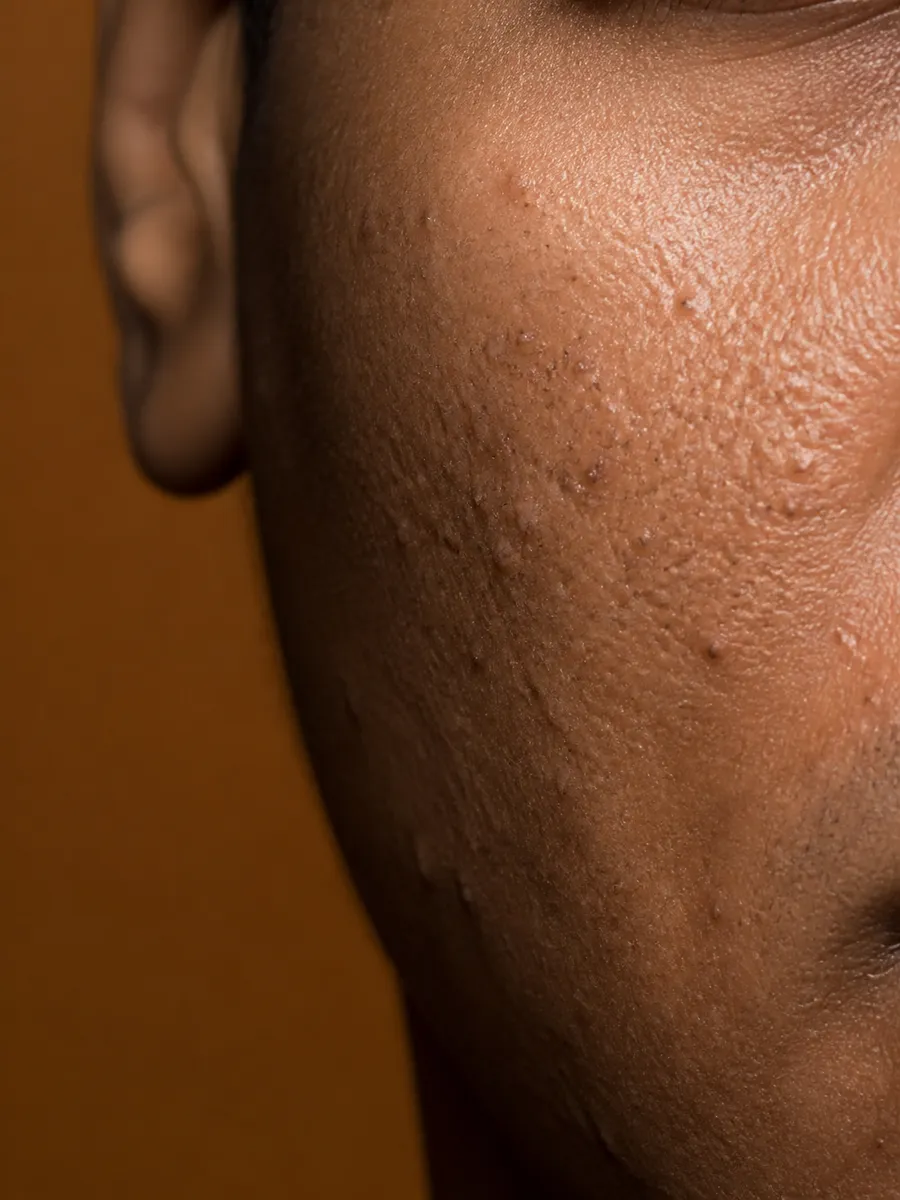
Most faces have more than one concern. Lower-face laxity and uneven texture, for example, are not treated with the same device. Instead of a list of five treatments, we give you an order: what comes first, what can wait, and what isn't worth it for you.
If firmness is what brings you in, the XERF page and the page on wrinkles and laxity give you something to read before you come.
We won't ask you to take our word for it. Here are facts you can check:
To book, the 3D skin analysis can be reserved online.
No. The evaluation with a 3D skin analysis is at no charge and with no obligation: you are not committing to any treatment plan.
No. It's skin imaging. It helps choose a treatment and keep a baseline image, not make a diagnosis.
For a device or a skin treatment, a medical aesthetician. For an injection, a nurse. If you don't know yet what suits you, that is exactly what the visit is for.
What skin does at 25, 35 and 50, when a firming treatment becomes useful, what can still wait, and why we will be the ones to tell you so plainly.
Radiofrequency or hyaluronic acid? Skin that has loosened and a face that has hollowed do not call for the same procedure. What each does, and what it does not.

Five things to check before trusting a medical aesthetics clinic with your face. 2027 Consumer Choice Award, best aesthetics clinic in Laval.
The best plan starts with an assessment. We look at your skin and answer your questions, no obligation.

Hi, I am Stella. Ask me about a treatment, a price or the clinic, and I will point you to the right place.
Stella answers from the site. She does not diagnose and does not book. The conversation stays 24 hours on this device, and the clinic keeps a copy.