Lines, volume or loose skin: name the problem before you pick a treatment
Three different problems that get mixed up constantly: expression lines, lost volume, and skin that has slackened. The right move depends on which one you have.

After years of neuromodulator, the product doesn’t build up and the effect stays reversible. The myths, and Health Canada’s safety benchmarks.


Does the neuromodulator stay safe when you get it for years? According to the available data, yes, as long as it’s well dosed and the sessions are spaced out. Its effects are temporary, they fade on their own, and the product doesn’t build up in the body.
You like the result, but you wonder what coming back every three or four months does to your face. We get it, and it’s a good question to ask before starting. Here we look at what changes in the muscle and in the skin, then at Health Canada’s safety benchmarks.
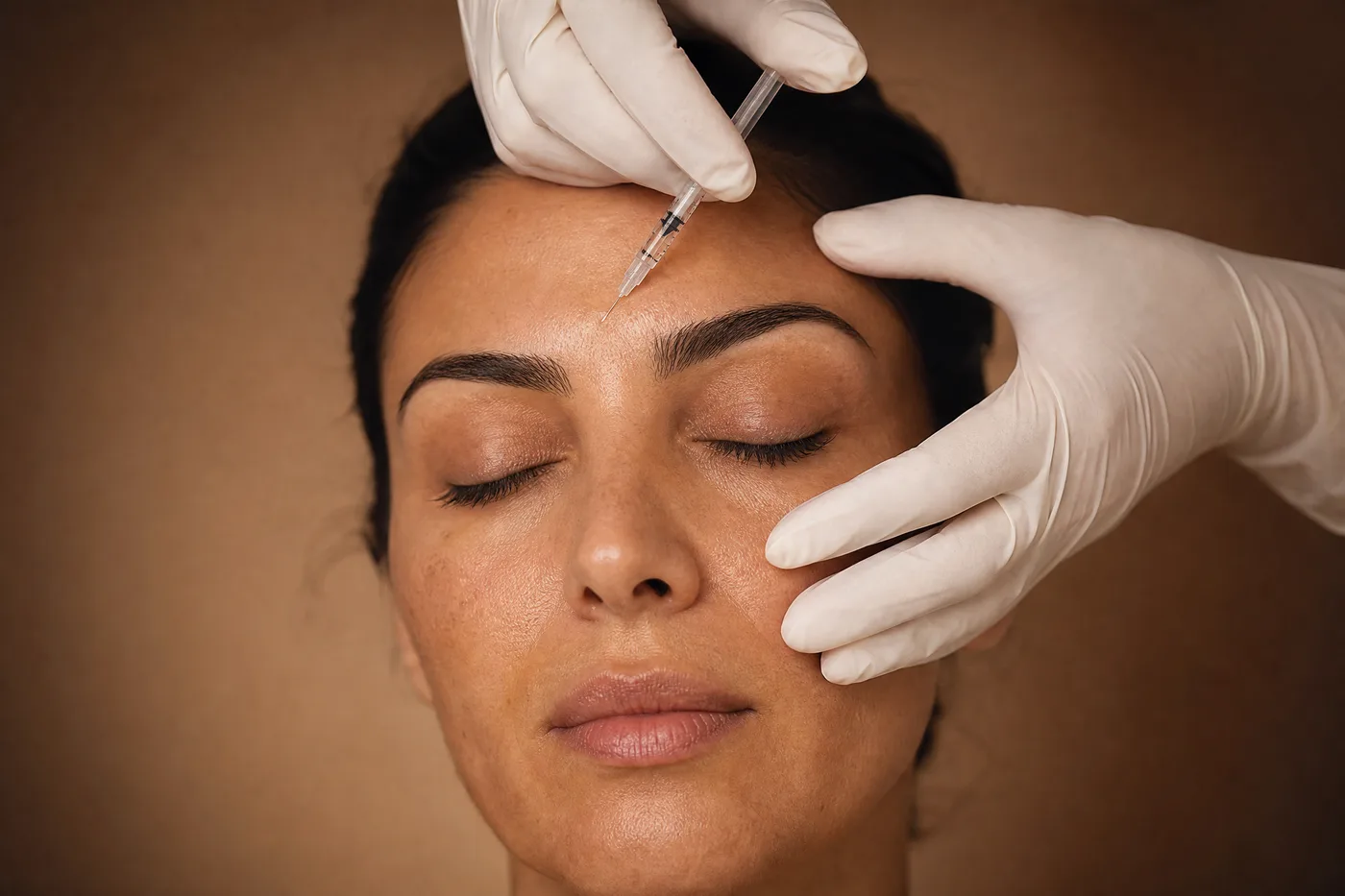
The neuromodulator is a type A botulinum toxin. It acts in a targeted, temporary way on the expression muscles. The effect lasts three to four months, then fades on its own.
And when the sessions are repeated over several years? The muscle and skin adapt a little, and those changes stay reversible.
Does the product end up building up in the body? No. Does the effect become permanent after a few years? No again.
What is established:
What is false:
Have you seen a frozen face and worry you’ll end up there? That frozen look comes from overdosing, not from the number of years of treatment. Well dosed, the effect fades on its own.
Health Canada's benchmarks for safe use over time:
These three signs are not emergencies. Mention them to your nurse, because they change the dosing next time.
See someone promptly if you notice unusual muscle weakness, difficulty swallowing, vision changes or an allergic reaction. These situations are rare, and they should never be ignored.

At the clinic, follow-up happens at every session:
The rest comes down to a few choices:
Whether you’re just starting or have been getting injections for a few years, the simplest step is to talk about it at an assessment. We place your expectations there before proposing a plan.
Sources: the product's official monograph and Health Canada data.

Three different problems that get mixed up constantly: expression lines, lost volume, and skin that has slackened. The right move depends on which one you have.

Under the eye, it all depends on the type of line: there at rest, or only when you smile. A mirror test is often enough to tell.

What the neuromodulator can and can’t do, what keeps it safe, and how to keep a natural result instead of a frozen face.
The best plan starts with an assessment. We look at your skin and answer your questions, no obligation.

Hi, I am Stella. Ask me about a treatment, a price or the clinic, and I will point you to the right place.
Stella answers from the site. She does not diagnose and does not book. The conversation stays 24 hours on this device, and the clinic keeps a copy.