Lines, volume or loose skin: name the problem before you pick a treatment
Three different problems that get mixed up constantly: expression lines, lost volume, and skin that has slackened. The right move depends on which one you have.

What the neuromodulator can and can’t do, what keeps it safe, and how to keep a natural result instead of a frozen face.


The neuromodulator can soften lines that deepen when you move and give you a more rested look, for about 4 months. It doesn’t restore volume and doesn’t erase deep lines already etched in. When it comes to safety, the person injecting matters more than the product.
Hesitating because you’ve seen frozen faces, or because the word "toxin" scares you? We get it. We explain what the product can and can’t do, then how to choose the person who injects you.
Lines are a natural part of how a face changes, but their effect often goes beyond appearance. They can:
Before asking whether the product works, ask whether it answers what bothers you about your face.
On social media, you mostly see spectacular results. The neuromodulator has clear limits, though.
What it can do:
What it cannot do:
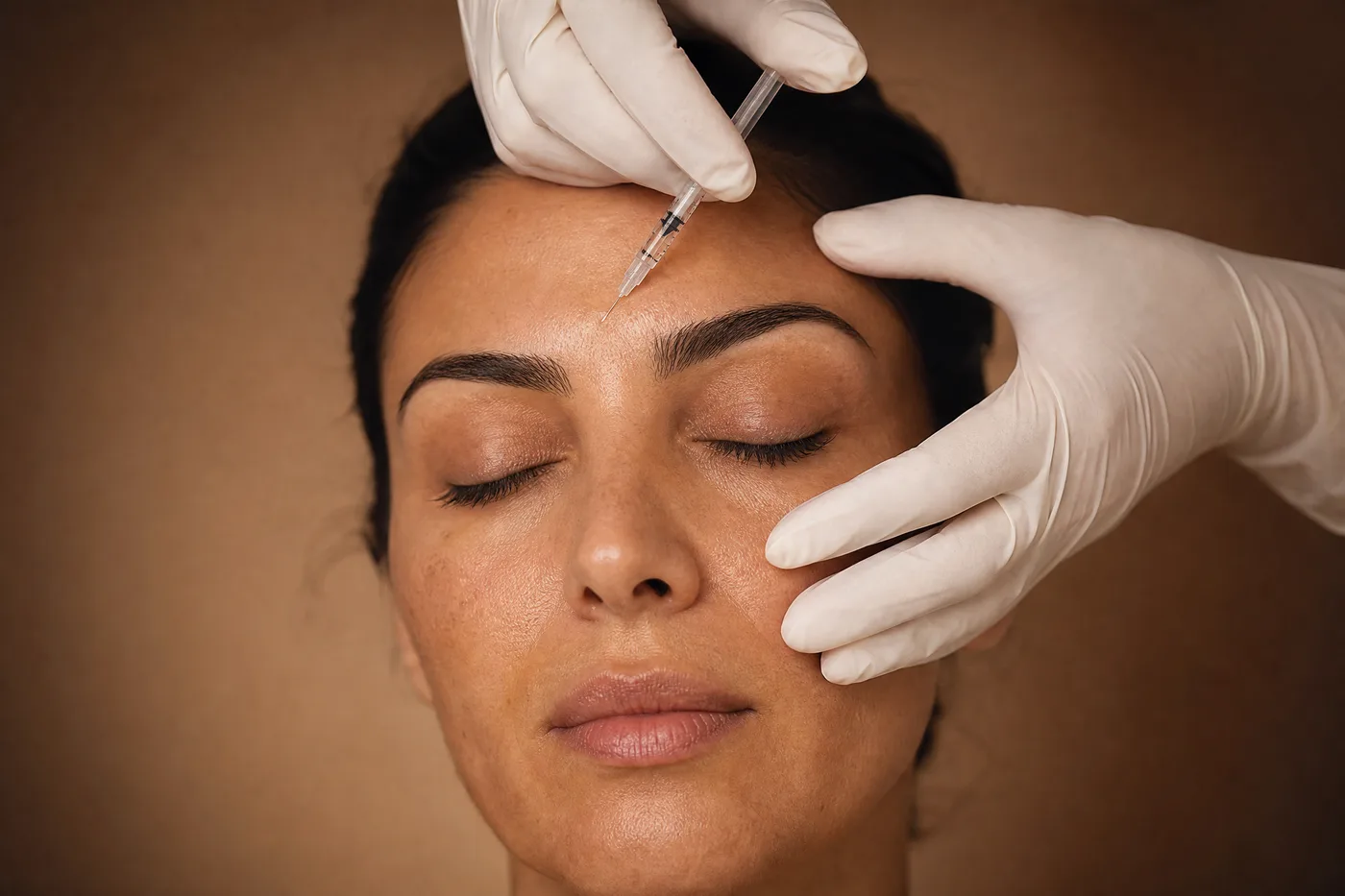
Possible indications are assessed in a medical consultation.
What we often hear afterwards: a boost in confidence that takes people by surprise.
"But it’s still a toxin, isn’t it?" It’s a fair question, and we hear it often. After millions of injections, the data are reassuring on several points.
What reassures:
The risks to know:
Everything above assumes that the person injecting you is allowed to do it and knows what they’re doing.
In the United States. In 2024, American health authorities recorded 22 people hospitalized across 11 states after injections of counterfeit or mishandled botulinum toxin. Four needed a ventilator. The people affected reported blurred or double vision, difficulty swallowing, dry mouth, weakness and shortness of breath. These cases had one thing in common, the setting of the injections. They were given by unauthorized people, often somewhere other than a care facility, with products bought online.
In Quebec. In spring 2024, Quebec’s College of Physicians and its Order of Nurses made public the practices they were seeing in aesthetic medicine. They named:
In the wake of that, the College put an end to the collective prescriptions that allowed assembly-line injecting. These findings come from two professional orders, based on the complaints they receive.
The product has a floor cost for the clinic. It’s set by the manufacturer and it doesn’t move. When a posted price drops well below that cost, something else has been cut, most often one of these four things:
A drooping eyelid (ptosis), marked asymmetry or product diffusing where it shouldn’t have gone rarely gets fixed right away. You often have to wait for the effect to fade, three to four months, sometimes more, seeing a result in the mirror that you didn’t choose.
If this section worries you a little, that’s intended. We’re not trying to draw you to us. We want you to arrive with questions, here or anywhere else, and if a clinic won’t answer them, we’d advise you to go elsewhere.
Here, it is nurses who inject, never an esthetician. You will know who you are seeing before you walk in.

The product isn’t for everyone. Don’t go ahead if:
Not sure whether one of these applies to you? That’s what the assessment is for. It’s free, and it can conclude that this isn’t for you today.
Don’t want to "look done"? We understand, and a few habits help a lot.
It’s probably a good time to start if:
The neuromodulator doesn’t replace healthy habits or proper skincare. It adds to what you already do to take care of yourself.
Thinking about it? It all starts with an assessment, where we look at your face in movement before talking about units. See the full page on Botox and Dysport, or write to us from the contact page.
---
Sources for the claims above

Three different problems that get mixed up constantly: expression lines, lost volume, and skin that has slackened. The right move depends on which one you have.

After years of neuromodulator, the product doesn’t build up and the effect stays reversible. The myths, and Health Canada’s safety benchmarks.

Under the eye, it all depends on the type of line: there at rest, or only when you smile. A mirror test is often enough to tell.
The best plan starts with an assessment. We look at your skin and answer your questions, no obligation.

Hi, I am Stella. Ask me about a treatment, a price or the clinic, and I will point you to the right place.
Stella answers from the site. She does not diagnose and does not book. The conversation stays 24 hours on this device, and the clinic keeps a copy.