Botox: the long-term effects, without the myths
What science actually documents after years of neuromodulator, the myths to set aside, and Health Canada’s safety benchmarks.

Two injectables, two different jobs. The neuromodulator relaxes movement, filler restores volume. How we choose with you, without selling you both by reflex.


People often ask as if they had to pick a side: “Botox or hyaluronic acid?” In truth, these are two tools that don’t do the same work. One calms a movement, the other fills a hollow. Choosing well starts with knowing which one answers your line.
The neuromodulator, often called Botox, is a purified protein that temporarily relaxes the muscle under an expression line. Hyaluronic acid fillers are a gel placed under the skin to restore volume where it’s missing.
One relaxes, the other fills. That’s the whole difference, and it’s what decides.
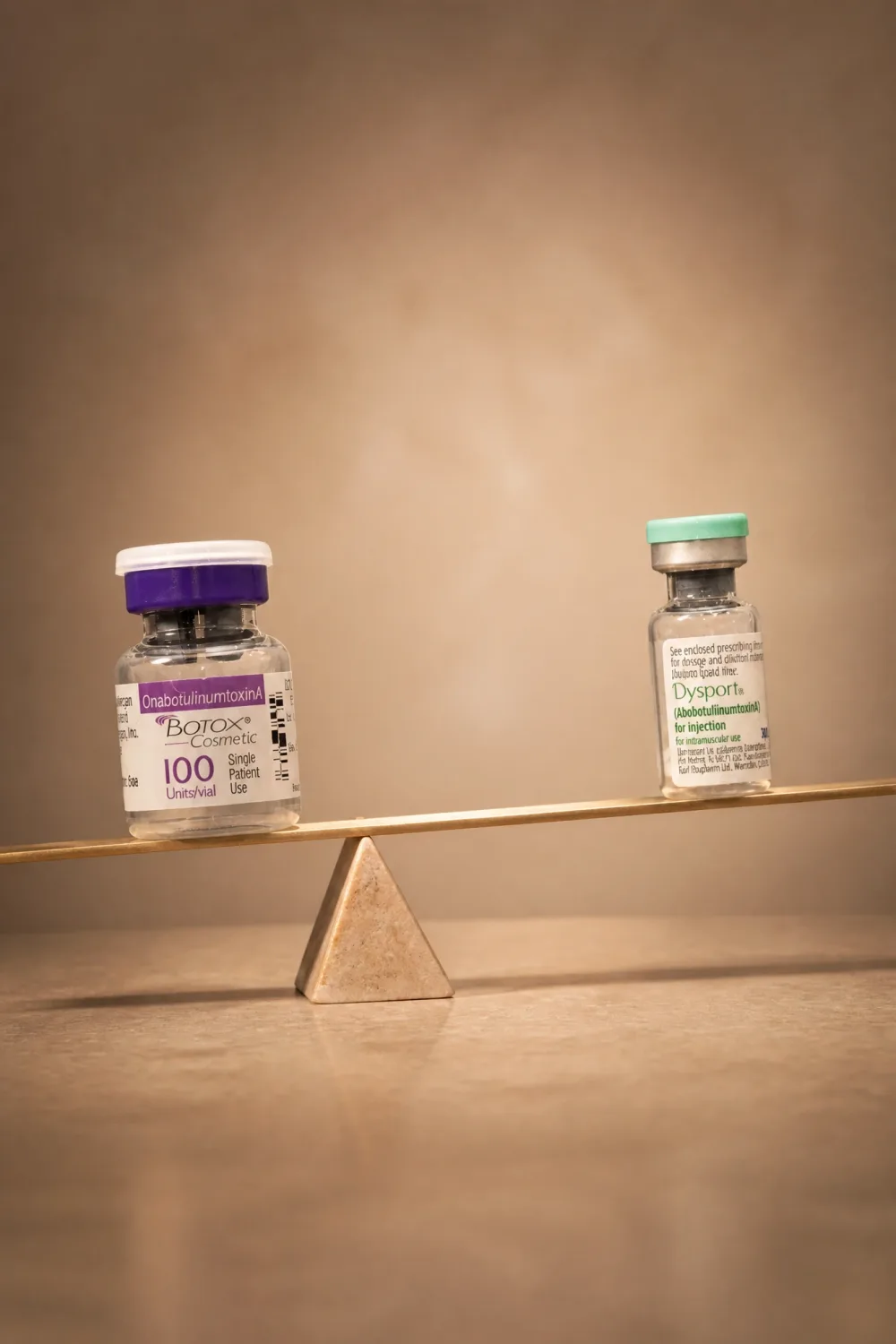
Forehead lines, crow’s feet at the corner of the eyes, the line between the brows: they deepen when you move your face. The neuromodulator relaxes the muscle behind them, the line softens, and the effect usually lasts 3 to 4 months.
With us, it’s $12 a unit for Botox, $11.50 for Dysport, $8.50 at member pricing. Taxes extra, billed by the unit actually used.
A hollowing cheek, a sunken under-eye, lips that have lost their shape: there’s no muscle to relax there, there’s matter missing. Filler replaces it. The result is immediate and lasts longer, often 6 to 18 months depending on the area and product. Filler from $325 for a half syringe, taxes extra, with the exact plan set after the assessment.
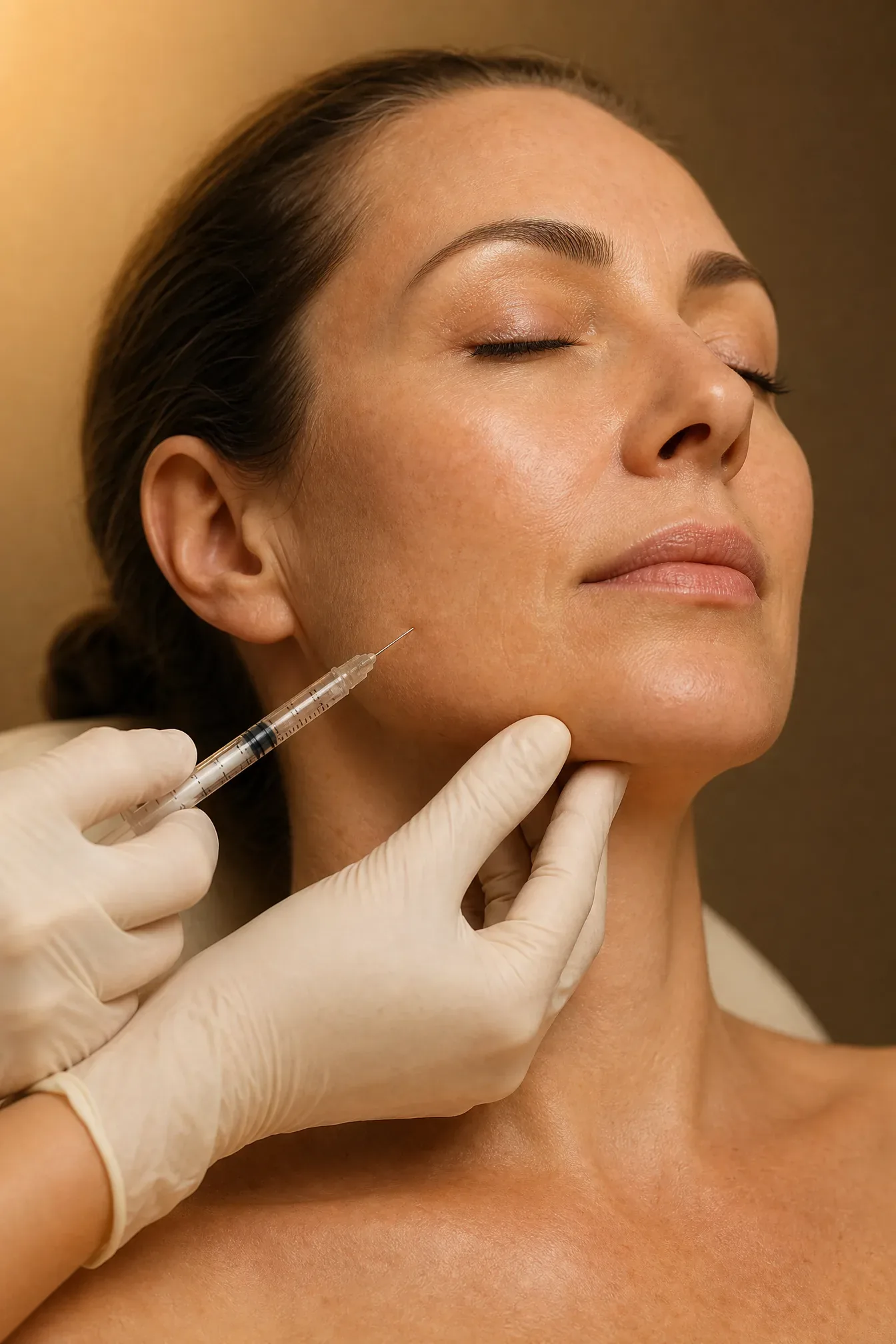
A simple cue, in the mirror: if the line only shows when you move, that’s neuromodulator territory. If it’s there at rest, face relaxed, it’s more a matter of volume, so of filler.
Often the nicest result blends the two sparingly: relax the expression, add just enough volume. Never a single recipe, always to suit your face.
If you like the idea of steady, predictable upkeep on the expression side, our DC-Tox program is built for that. A good plan always starts with an assessment, where we look at your face before proposing anything.

What science actually documents after years of neuromodulator, the myths to set aside, and Health Canada’s safety benchmarks.

What really drives the price of a filler, our starting rates, and why the cheapest often costs more.

Under the eye, it all depends on the type of line. A mirror test is often enough to see which of the two treatments is yours.
The best plan starts with an assessment. We look at your skin and answer your questions, no obligation.

Hi, I am Stella. Ask me about a treatment, a price or the clinic, and I will point you to the right place.
Stella answers from the site. She does not diagnose and does not book. The conversation stays 24 hours on this device, and the clinic keeps a copy.