Tighten or Fill? Radiofrequency vs Filler, and How to Tell Which Your Face Needs
Radiofrequency or hyaluronic acid? Skin that has loosened and a face that has hollowed do not call for the same procedure. What each does, and what it does not.

Tight cheeks, redness, makeup that catches: what research measures on facial skin in winter, and the simple habits dermatologists recommend.


You wash your face on a November morning and the skin pulls. Your cheeks flush outdoors. Foundation catches where it glided in September. Nothing changed in your routine, yet your skin is not the same.
Here is what is known about that change, the habits that help, and the point where it is no longer a seasonal matter.
Most people describe the same thing, in the same order:
None of this means your skin has changed. It means the air around it has.
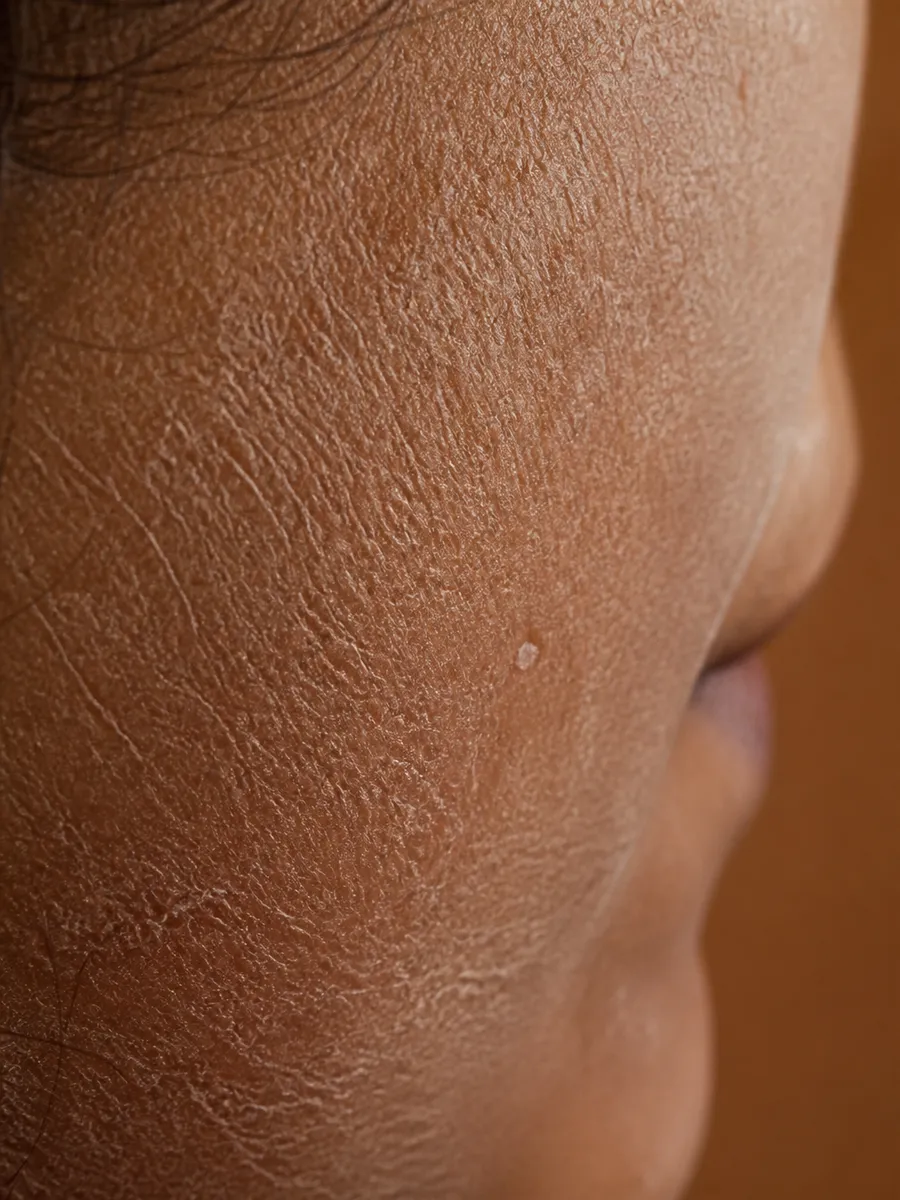
A Danish team, in Copenhagen, measured the skin of 80 healthy volunteers, in winter and then in summer (Engebretsen et al., British Journal of Dermatology, 2018). It looked at two places: the cheeks and the back of the hand.
On the cheeks, in winter, the skin held less natural moisturizing factor, the substances that keep water in the top layer. Its surface was also more textured under the microscope. That fits what you feel.
Two limits are worth stating plainly:
According to this study, cheek skin is different in winter, and hand skin is not different in the same way.
So there is one solid lead: your face reacts to the season, and not the way the rest of your body does.
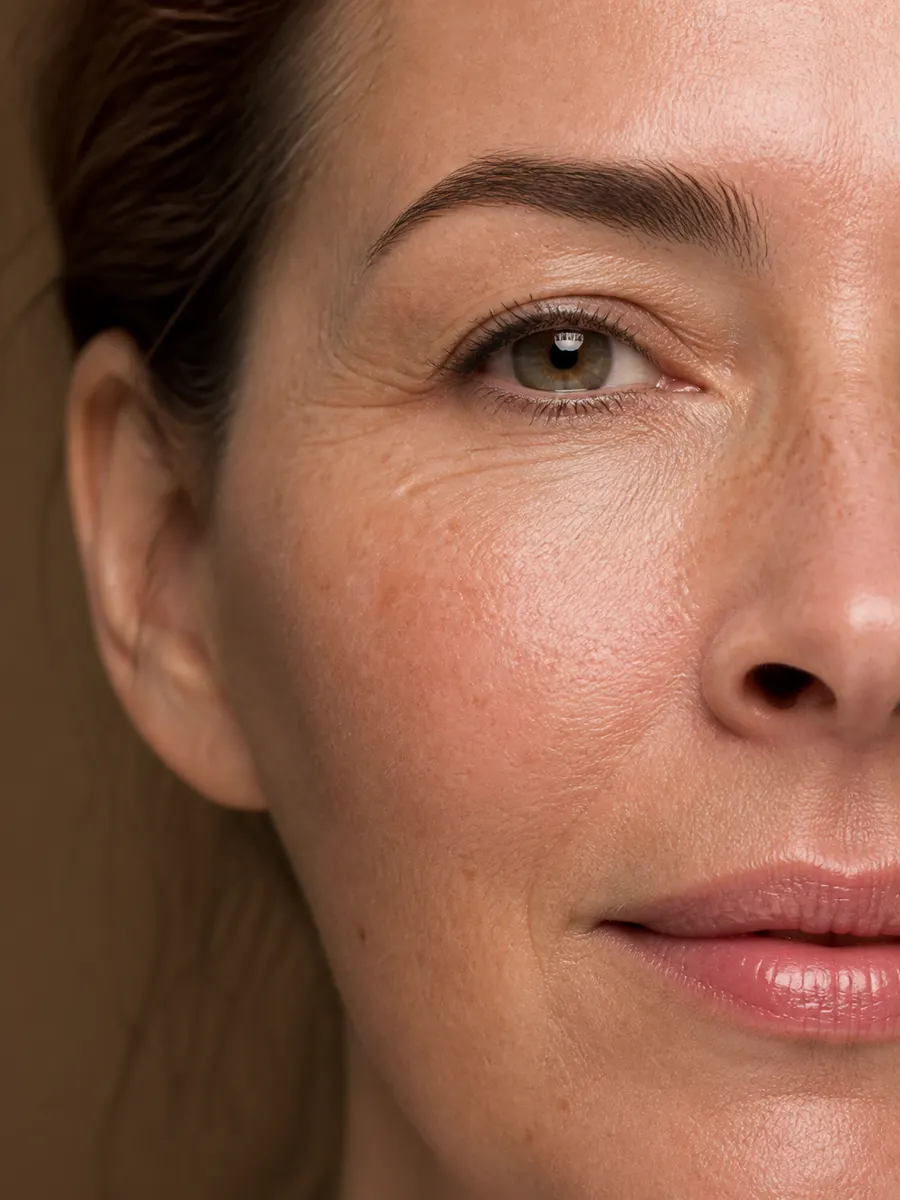
According to the American Academy of Dermatology (AAD), several winter habits add to the cold air:
A word on redness: a cheek that flushes between outside and inside is common. If it stays red, or if it burns, go to the last section.
The AAD publishes a list of tips to soothe dry skin. Here are the ones that apply to the face, and what they change:
| What bothers you | The habit | What it does |
|---|---|---|
| Tightness after the shower | A short shower with lukewarm rather than hot water | Avoids stripping the skin of its oils |
| Skin that catches and looks dull | A fragrance-free moisturizer, applied right after the shower or washing | Keeps water in the skin while it is still damp |
| Dry air at home | A humidifier | Makes the air less drying, especially at night |
| Cheeks that flush outdoors | A scarf, gloves, whatever shields you from dry cold | Limits direct contact with wind and cold |
One last habit that is easy to forget in November: sunscreen. The AAD recommends SPF 30 or higher, broad-spectrum, to protect against the sun. The pages we consulted do not speak about winter in particular. The sun does not take a break.
Skin can be well hydrated and still look flat or uneven: the grain is more visible, the complexion lacks light. A moisturizer does not always answer that.
If that is you, the skin texture and quality page explains what plays a part, and what we look at during the assessment. For the tight feeling itself, the dehydrated skin page goes further.
The habits above help most people. That said, the AAD is clear: if dryness persists despite them, get it assessed.
See a doctor or a dermatologist if:
It is not for us to say what lies behind these signs, and we will not. That is a doctor's job.
One last thing for anyone thinking about a treatment this winter: fragile skin can delay a clinic treatment. That is decided at the assessment, by looking at your skin, never from a general rule. If you are thinking of an appointment, our article on facial laser before the holidays explains how we count the weeks.
Cold, wind and dry indoor heat dry the skin. A Danish study measured less natural moisturizing factor on the cheeks of Danish volunteers in winter than in summer. It does not say what happens to you, but it points the same way as what you feel.
The AAD recommends SPF 30 or higher, broad-spectrum, to protect against the sun. The page we consulted does not cover snow or winter in particular.
Yes, it is one of the points on the AAD's list: a short shower with lukewarm water is preferred, followed by a fragrance-free moisturizer right away.
If dryness persists despite simple habits, or if the skin becomes red, burning or cracked, have a doctor assess it. The AAD says so too.
Radiofrequency or hyaluronic acid? Skin that has loosened and a face that has hollowed do not call for the same procedure. What each does, and what it does not.

Five things to check before trusting a medical aesthetics clinic with your face. 2027 Consumer Choice Award, best aesthetics clinic in Laval.

Our website has just been rebuilt. What you can now do yourself, the four current offers, and what is not ready yet.
The best plan starts with an assessment. We look at your skin and answer your questions, no obligation.

Hi, I am Stella. Ask me about a treatment, a price or the clinic, and I will point you to the right place.
Stella answers from the site. She does not diagnose and does not book. The conversation stays 24 hours on this device, and the clinic keeps a copy.