Radiofrequency With or Without Needles: Which One for Your Skin?
Needle-free radiofrequency firms the jawline and neck; microneedling radiofrequency rebuilds skin texture. How to tell which one is for you.

What heat, light and ultrasound can tighten without injecting anything, what none of them does, and how to tell whether you are a good candidate.

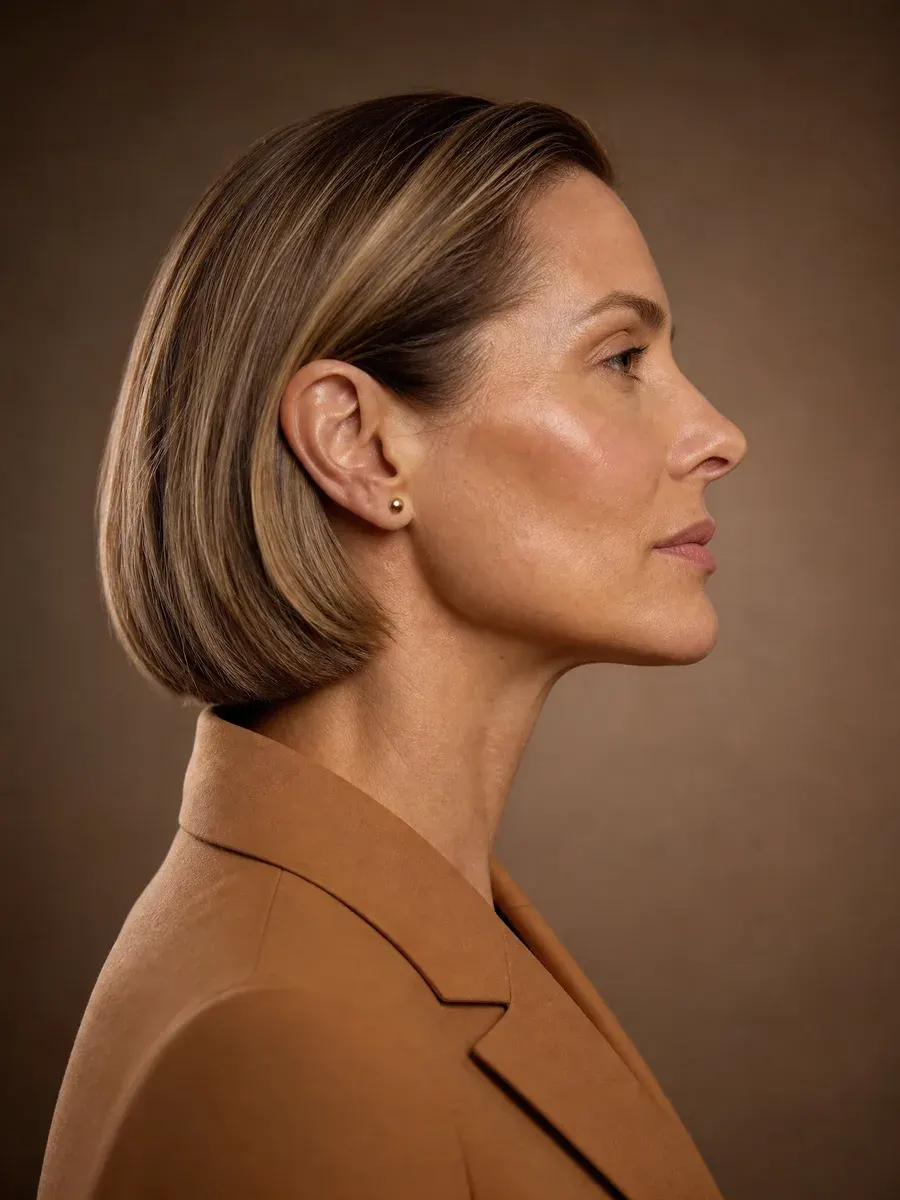
Can you firm the face without injecting anything? Yes, up to a point: heat, light and ultrasound can tighten skin that has lost its spring. None of these methods restores volume, softens an expression line or removes skin.
This article sorts what is truly needle-free, what is called "non-surgical" but uses needles, and what the research lets us say. It is written by a medical esthetician, and it also says what going without injections cannot do.
Without injections, you can give tension back to skin that has lost it. You can't give it back what has disappeared underneath.
Many people who come to see us don't want injections, on principle: nothing added, nothing changed, staying themselves. It is neither a fear nor a whim, and we don't try to talk anyone out of it. Injections have their uses, a nurse places them, and for many people they are the right answer. It is a choice, and it deserves respect both ways.
In this article, "without injections" means three precise things: no needle deposits a product, nothing is added under the skin, and the face isn't changed in its proportions. What does that make possible?
A face doesn't loosen for one reason. Three things combine:
Each method below mainly answers the first. To see which weighs most in your case, read about facial laxity.
Here are the main families, side by side. The middle column matters: some methods sold as "non-surgical" use needles.
| Family | What it does | Needle? | What it doesn't do |
|---|---|---|---|
| Radiofrequency (heat) | Heats the dermis to tighten collagen and stimulate its renewal | No | Doesn't remove skin or restore volume |
| Microneedling radiofrequency | Same principle, with fine needles that injure the skin so it repairs itself | Yes, with nothing injected | Not "needle-free", even though nothing is deposited |
| Focused ultrasound | Heats points deep down | No | We don't offer it |
| Lasers and light | Mainly work on texture, glow and spots | No | Little effect on marked laxity |
| Surface treatments (peels, HydraFacial) | Smooth and hydrate the top layer | No | Don't tighten deeply |
| Thread lifts | Support the tissue mechanically | Yes | We don't offer it |
| Surgical facelift | Removes excess skin and repositions tissue | Yes, and a scalpel | Requires an operation and recovery |
Ultrasound and threads exist, which is why we name them. We don't offer them, so we don't recommend them. The difference between devices is covered in our comparisons, for example monopolar radiofrequency or microneedling.
XERF is the radiofrequency device we use to firm. It is made by Cynosure Lutronic, and its listing names facial lines and wrinkles, eyebrow lift, and facial and neck laxity (manufacturer). No needle enters the skin: the heat passes through the surface, which cooling protects.
A medical esthetician uses it on the whole face and the neck. The décolleté, we don't offer yet. For how the device heats, the treatment page describes it: we won't repeat it here.

The principle is simple to state. A radiofrequency current passes through the surface and heats the dermis, the layer that gives skin its hold. The skin reacts to that heat as to a small injury: it repairs itself. In the Austin et al. review, tissue analyses show changes consistent with repair and with the making of new collagen and new elastin.
That explains the pace. The body rebuilds slowly, so the effect sets in over several weeks, not in one evening. It also explains the upkeep: skin keeps aging after the treatment, and the repair has to be maintained.
Two things protect your comfort. The device measures the skin at each pulse and adjusts the energy, and cooling protects the surface. The person holding it chooses the depth and the intensity, zone by zone. You feel the heat build, and you tell us if it's too much.
We tell you up front, because it prevents disappointment:
In these three cases, what answers is sometimes an injection (a neuromodulator or a filler, placed by a nurse), sometimes surgery. We explain it at the assessment, without pushing either way. You can decide to stay injection-free, and we then look with you at what is possible within that frame. Let's take them one at a time, because that's where expectations go wrong most often.
Volume. A face that hollows doesn't only lack tension: it lacks substance under the skin. Tightening skin over a hollow makes it sharper, not fuller. If what bothers you is a hollow under the eyes, at the temples or in the cheeks, a device won't fill it, and we'd rather tell you before the first session.
The expression line. It forms where a muscle folds the skin, again and again. Heat doesn't stop that movement. Radiofrequency may improve the quality of the skin around it, but it doesn't replace what acts on the muscle.
Excess skin. Radiofrequency tightens what is there, it removes nothing. When there is a lot, the skin is in excess, and only a surgical facelift answers.
That said, this isn't a failure of the method. It is its limit, and knowing it lets you choose with full information.
If your case calls for combining a device and an injection, the wait between the two depends on the order, and it is confirmed at the assessment.
The level of evidence for radiofrequency is modest, and we'd rather say so.
A systematic review of 121 articles (Austin et al., Lasers in Surgery and Medicine, 2022) reports that radiofrequency improved skin laxity, elasticity and overall appearance. The authors also note that satisfaction was higher among people who wanted modest rejuvenation.
An older review (Araújo et al., Anais Brasileiros de Dermatologia, 2015) concludes that radiofrequency appears effective, but that the studies differ from one another, the ideal settings remain unclear and the level of evidence is low.
What follows is a realistic expectation: a probable effect, gradual, of varying size. Our team sees a firming effect in the people treated, but here we stick to what the studies report.
Three observations give you a first idea, even before the assessment:
If your situation is more advanced, we tell you at the assessment, even if it means this isn't the right treatment for you. Particular conditions, such as pregnancy, certain medications or damaged skin, are also checked at the assessment. You then leave with a clear answer, whether it leads to our device, another method or a surgical consultation.
Here is what the clinic tells you up front, without you having to ask:
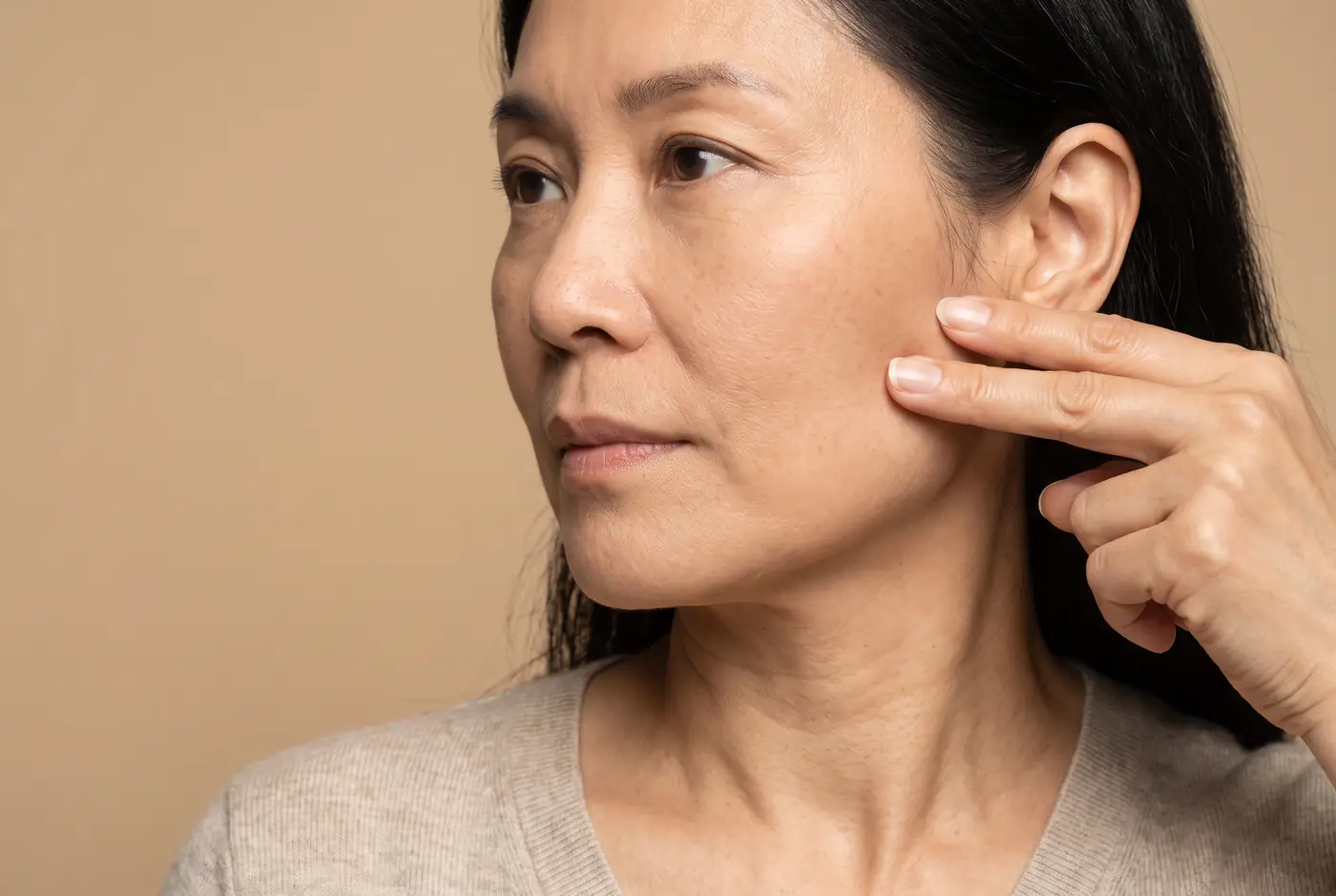
Yes, with a radiofrequency that heats through the skin. The microneedling version uses needles, even though it injects nothing.
They are two different things, and no study cited here compares them. Radiofrequency works on skin tension. An injection works on volume or muscle. Depending on what bothers you, one or the other answers better.
Two sessions at minimum, then upkeep every year. The assessment spells out what suits your skin.
No, not when there is marked excess skin.
No downtime. Some light redness may show up after the session.
Needle-free radiofrequency firms the jawline and neck; microneedling radiofrequency rebuilds skin texture. How to tell which one is for you.

One clinic says one session, another says eight, and both can be right. It depends on the type of radiofrequency. Our schedule for XERF.

Fractional laser works on the surface of the skin, radiofrequency on its support. How to tell which one answers what bothers you, and in what order.
The best plan starts with an assessment. We look at your skin and answer your questions, no obligation.

Hi, I am Stella. Ask me about a treatment, a price or the clinic, and I will point you to the right place.
Stella answers from the site. She does not diagnose and does not book. The conversation stays 24 hours on this device, and the clinic keeps a copy.