Microneedling or RF Microneedling: Which One Is Right for Your Skin
Both prick the skin with fine needles, only one adds heat in the dermis. Which to choose for grain, pores, scarring or looseness, and where to start.

Needle-free radiofrequency firms the jawline and neck; microneedling radiofrequency rebuilds skin texture. How to tell which one is for you.

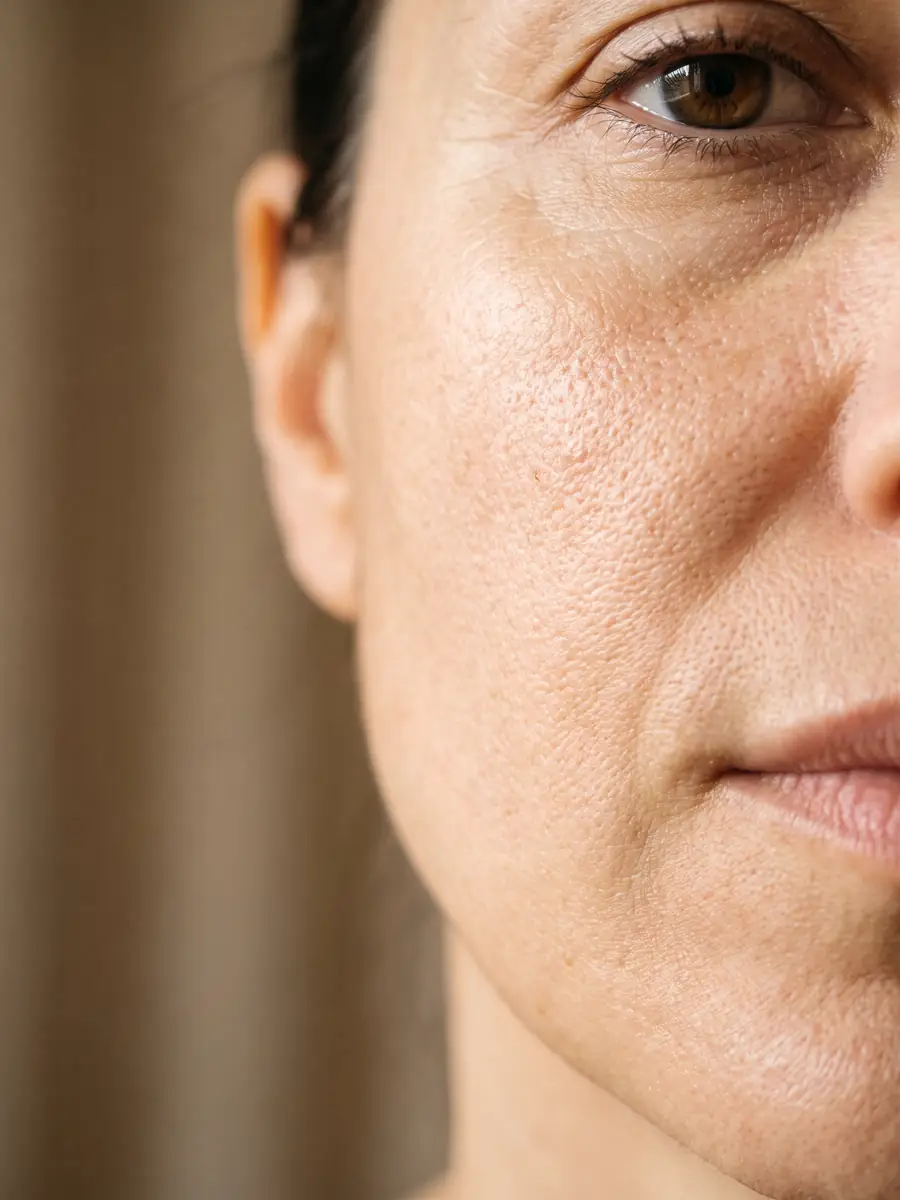
You type "radiofrequency for the face" and two very different things come up. On one side, a handpiece gliding over the skin with gel, piercing nothing. On the other, a tip covered in fine needles that go into the skin.
The short answer: needle-free radiofrequency is mainly for laxity (the jawline, the lower face, the neck), and microneedling radiofrequency is mainly for texture (the skin surface, pores, acne scars). If you know which of the two bothers you in the mirror, the choice is nearly made. Here is how each one works, how to place yourself, what each asks in downtime, and when we do both.
Radiofrequency is an energy that targets no pigment. It passes through tissue, meets its resistance, and that resistance produces heat. Heated collagen contracts, then the skin responds to that controlled heat by building new collagen over the following months.
The principle is the same in both cases. What changes is how the heat gets into the skin.
With no needle, the energy enters through the surface and heats a volume of skin, in successive passes. That is what XERF does. With micro-needles, fine insulated needles carry the energy below the surface and release it point by point, at the chosen depth. That is what Potenza does.
| Needle-free (XERF) | With micro-needles (Potenza) | |
|---|---|---|
| What it mainly targets | Laxity: the jawline, the lower face, the neck | Texture: the skin surface, pores, acne scars |
| How the heat arrives | Through the surface, into a volume of skin | Through the needle, point by point below the surface |
| Is the skin pierced? | No | Yes, with no product injected |
| Session length | 90 min, full face and neck | 60 min |
| Number of sessions | Two, then one upkeep session a year | A series, every 4 to 6 weeks |
| Downtime | None | Redness and mild swelling for 24 to 48 hours |
Session length, downtime and number of sessions come from our treatment pages.
When a volume of skin is heated evenly, you are working on its structure. Collagen fibres tighten right away, which gives the lifting effect people often notice on the way out. The firmness is mostly won over the following months, while new collagen is being built.
It makes sense when the oval of the face is softening, when the jawline blurs into the neck, or when the skin of the neck loses tone. Here, a session covers the full face, including the area around the eyes, and the neck.
It has two limits. It removes no skin: on advanced laxity with real excess skin, surgery does better, and we tell you so at your assessment rather than sell you sessions. It also does not rebuild a damaged skin surface. It improves skin quality over time, but for scars or marked pores, we choose the other one.

Here, two mechanisms add up. The needles create micro-channels, which starts the skin's repair the way microneedling does. The radiofrequency released at the tip of the needles adds heat right below the surface, without having to cross it.
So you work deep and at the surface in the same session. That is what makes it useful for anything that catches the light: an uneven surface, visible pores, depressed acne scars, fine lines.
Does the heat change anything compared with microneedling alone? A preclinical study published in 2020 (Hong et al.) compared the two on 32 mice whose skin had been aged with UVB rays. In the group treated with microneedling radiofrequency, wrinkles decreased in depth and number, and skin roughness dropped significantly. It is an animal model: a hint pointing the right way, not proof in humans.
This route firms as well, but by rebuilding the quality of the tissue rather than by tightening a volume all at once.
People often ask us: does "no injection" mean no needle? No. Microneedling radiofrequency pricks the skin. It leaves nothing behind, no product and no active ingredient. The needle only carries the heat, as in microneedling.
If what you want to avoid is a product injected into your face, it suits you. If it is the needle itself that scares you, and you are far from alone, needle-free radiofrequency is the one for you.
Take a mirror, in daylight.
What laxity looks like:
What texture looks like:
The first list points to needle-free radiofrequency, the second to the microneedling version. Do you recognize yourself in both? That is common, and the section on combinations, further down, is for you.
Needle-free radiofrequency answers laxity, microneedling radiofrequency answers texture. Most of the faces we see at the assessment have a bit of both.
In practice, this is often what decides, more than the technology.
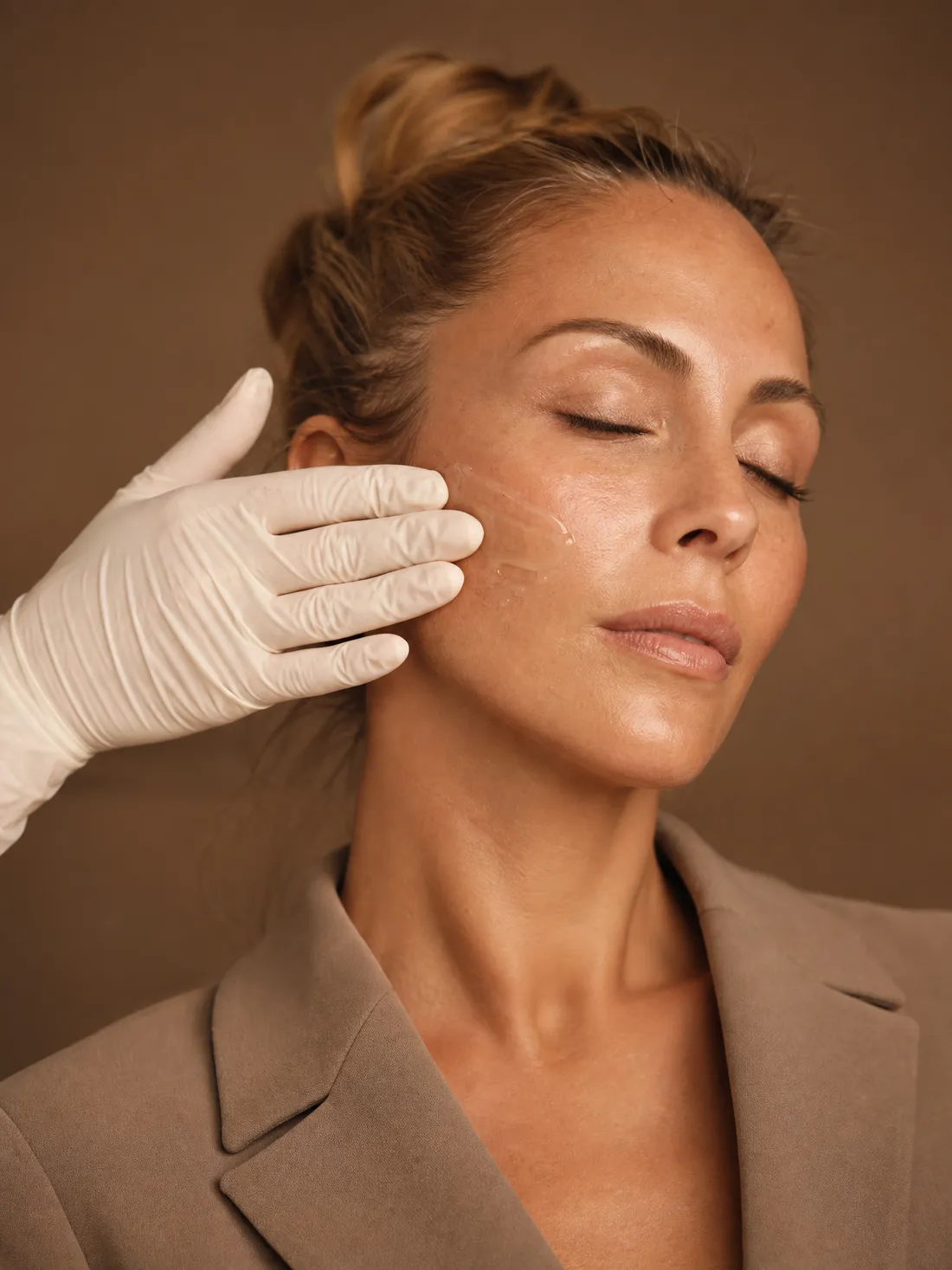
Needle-free. The sensation is heat building, a bit like a warm massage, and the intensity is adjusted to your comfort throughout. There is no downtime: you go on with your day. A face and neck session lasts 90 min. We do two, then one upkeep session a year, because aging keeps going.
With micro-needles. The session lasts 60 min. The skin is red on the way out, with mild swelling, for 24 to 48 hours. You do not have to stay home, but you avoid booking it the day before an evening out. Sessions are spaced 4 to 6 weeks apart, and the result settles over a few weeks to three months.
Neither one requires time off work.
Skin that is losing firmness often has a surface that thickened at the same time, so we regularly do both. We start with what bothers you most, let the result settle, then reassess. Doing everything in the same month does not give a better result, and you would no longer know what worked.
The two are not done on the same day, because skin heated deep down needs to be left to work. The spacing is decided at your assessment, based on what your skin has had and how it responded.
You do not have to arrive with your own diagnosis. The 3D skin analysis photographs your face under several lights, including a raking light that brings out the relief, and a second camera looks at your neck. It often shows that what someone calls "wrinkles" is actually laxity, or the other way around.
We also tell you when the answer is neither one. Marked laxity with excess skin belongs to surgery. Lost volume in the cheeks is not fixed by heating collagen. Uneven pigment calls for a different treatment.
Both devices are at the clinic, and a medical esthetician performs the sessions. So we have no reason to steer you toward one over the other, except choosing the right one for what you came in to fix.
You feel the needles and you feel the heat. The area is prepared to make the session comfortable, and the intensity is adjusted. Most people find it tolerable, with some zones more sensitive, like the forehead and along the jaw. Needle-free radiofrequency does not prick: most people describe a comfortable warmth.
After a microneedling radiofrequency session, expect redness and mild swelling for 24 to 48 hours, sometimes with light flaking. After a needle-free session there is no downtime, and light redness goes away quickly.
Not really. It improves overall skin quality over a series of sessions, but it does not reshape a depression. A scar needs the tissue itself worked, point by point: that is the ground of the microneedling version, or of microneedling on its own.
Yes, in both cases. Radiofrequency does not target melanin, it heats tissue through its resistance, so it carries none of the pigment risk some lasers have on darker skin. Your skin type is still noted at the assessment, because it changes other things in the plan.
Yes, and it is common when skin is losing firmness and the surface has thickened. We do not do them on the same day and we do not stack them: we treat what bothers you most first, then reassess. The order and spacing are decided with you.

Both prick the skin with fine needles, only one adds heat in the dermis. Which to choose for grain, pores, scarring or looseness, and where to start.

One clinic says one session, another says eight, and both can be right. It depends on the type of radiofrequency. Our schedule for XERF.

Fractional laser works on the surface of the skin, radiofrequency on its support. How to tell which one answers what bothers you, and in what order.
The best plan starts with an assessment. We look at your skin and answer your questions, no obligation.

Hi, I am Stella. Ask me about a treatment, a price or the clinic, and I will point you to the right place.
Stella answers from the site. She does not diagnose and does not book. The conversation stays 24 hours on this device, and the clinic keeps a copy.