Firmer Skin Before the Holidays: When to Start Radiofrequency and What to Expect by Christmas
Two sessions and a result that builds over time: an honest radiofrequency calendar for the holidays, based on the date you start.

Redness and warmth first, then the rare ones: what the literature reports, what depends on the settings, and what we tell you before we start.

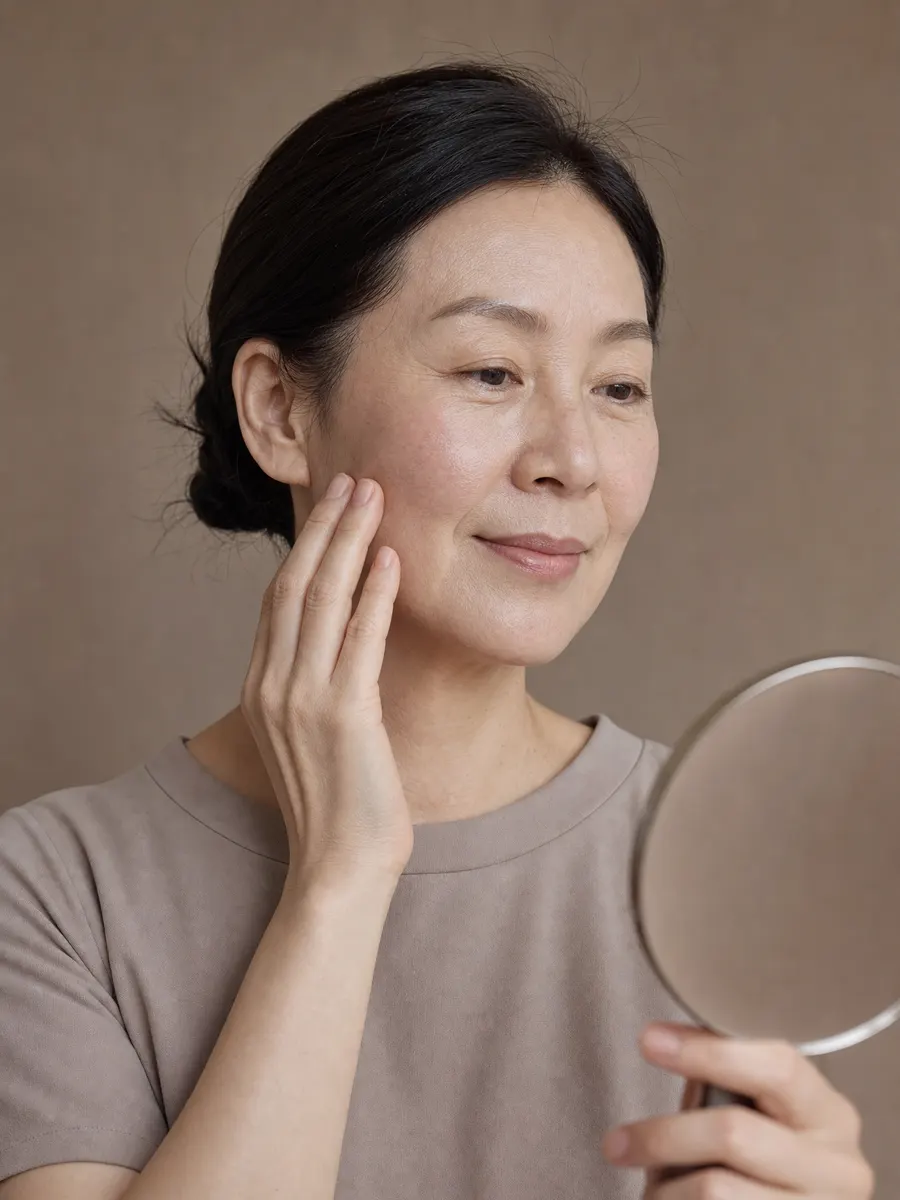
You've read that radiofrequency can burn, or hollow out the face, and you want to know what really happens. The short answer: warmth during the treatment and redness that lasts a few hours are common; a small burn is possible but rare; a hollowed face has not been measured in the studies we read.
This article ranks the effects from most common to rarest, says where each piece of data comes from, and what changes the risk.
Radiofrequency heats the skin in depth. During the treatment, you feel warmth. When you leave, your skin may be pink.
For XERF, the clinic sums it up this way: no downtime, back to your usual activities the same day, temporary redness is possible. When it comes, it lasts a few hours.
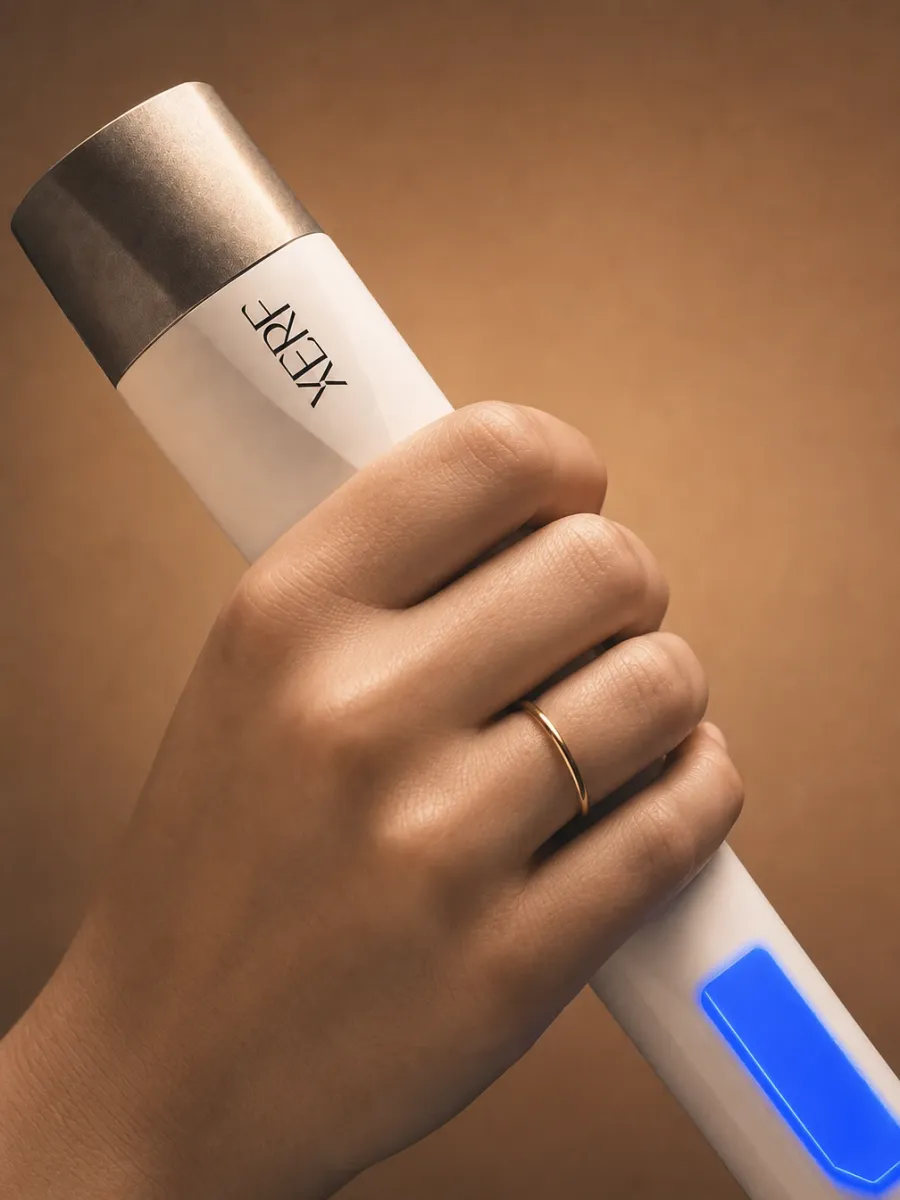
The heat has to reach the deep layers without harming the skin it passes through. According to the manufacturer (Cynosure Lutronic), XERF uses two frequencies (6.78 and 2 MHz), built-in cooling that protects the surface during each pulse, and a reading of the skin's resistance at every pulse to meter the energy.
These mechanisms lower the risk, they don't remove it. A radiofrequency burn happens when too much energy concentrates in one spot: the settings and the way the handpiece is moved are what prevent it.
| Effect | What the studies we read report | How long |
|---|---|---|
| Warmth during treatment | Expected, it is how the treatment works | The length of the session |
| Redness | 18 people out of 26 in a 2026 study; 5 out of 32 in a 2025 study | A few hours |
| Mild swelling | 3 people out of 26 (2026 study) | Less than 24 hours |
| Small burn | 3 out of 32 (2025 study), healed without a mark; none out of 26 (2026 study) | Variable, to be checked |
| Dark mark or change in sensation | No cases in the 2026 study, which looked for them | n/a |
These figures come from two small studies, with no control group, on devices that are not XERF. They give an order of magnitude, not a probability for you.
In the 2026 study: no burns, no dark marks, no change in sensation in 26 people. In the 2025 study: three small burns out of 32.
The idea gets around: heat would melt facial fat, and the face would look hollow. We found no study that measures it for XERF.
A 2026 study (Kim, Plastic and Reconstructive Surgery Global Open) ran the opposite test: 25 slim women, five low-energy monopolar radiofrequency sessions, and an ultrasound before and after. Cheek fat thickness increased by 1.6 mm on average at 18 weeks. Its limits are significant:
So we don't cite it to say radiofrequency adds volume. It only shows that the opposite fear isn't backed by the measurements available. We draw no conclusion either way.
The risk doesn't depend only on the device. What moves it:
Here, a medical esthetician sets up XERF: the device meters the energy at every pulse, and she chooses the depth and intensity based on your skin and what you feel. A session lasts 90 min, enough time to cover the full face and neck without rushing.

Redness that fades within the day is expected. Call us if you notice:
We'd rather see a mark for nothing than hear about it three weeks later. We don't give home-care instructions in an article: we tell you what to do once we see you. How the session feels is covered in the article does it hurt, and the full details on the XERF page.
No study we read measures it for XERF. A small 2026 study on another radiofrequency even measured slightly thicker cheek fat after the sessions, with major limits. We can't draw a conclusion.
It's possible, but rare. In a 2025 study, three people out of 32 had a small burn, which healed without a mark. Built-in cooling and the settings are there to prevent it.
According to the clinic, a few hours, when it comes.
Write or call us the same day. The team wants to see it, and will tell you what to do based on what it sees.
We found no study comparing the two. A home device heats far less, and nobody adjusts it to your skin: their risks can't be compared with figures.

Two sessions and a result that builds over time: an honest radiofrequency calendar for the holidays, based on the date you start.

Tightening the neck without surgery: what XERF radiofrequency does to neck skin, and what needs something else, like vertical cords under the chin.

How long XERF radiofrequency results last: what the clinic and the Cleveland Clinic say, and how the yearly upkeep session helps keep the result.
The best plan starts with an assessment. We look at your skin and answer your questions, no obligation.

Hi, I am Stella. Ask me about a treatment, a price or the clinic, and I will point you to the right place.
Stella answers from the site. She does not diagnose and does not book. The conversation stays 24 hours on this device, and the clinic keeps a copy.