Will Radiofrequency Make a Difference for You? No Injections, No Surgery
Too early, too late or right on time: how to tell whether facial radiofrequency suits you, and when only surgery answers.

XERF radiofrequency firms without injecting anything: no muscle blocked, no volume added. What changes on your face, and what stays exactly as it is.


No, radiofrequency does not change your features. It blocks no muscle and adds no substance, so your expression stays yours and so do your proportions. What it changes is the firmness of the skin and, a little, the definition of the jawline, gradually.
If you are against injections on principle and don't want anything added to your face, that question comes before all the others. Here is what XERF does, what it doesn't do, and what research says about one more delicate point: facial fat.
Look closely and the worry comes down to three specific things. Volume that goes beyond what the face had, an expression that no longer moves as it did, and proportions that no longer look like yours. There is no judgment here: these are the effects you notice on others and want to avoid for yourself.
The table shows where radiofrequency stands on each one.
| What you worry about | What it relates to | With radiofrequency |
|---|---|---|
| Added volume | A substance injected under the skin | Nothing is injected |
| A frozen expression | A neuromodulator, given by a nurse, that acts on the muscle | No muscle is blocked, your expressions stay whole |
| Changed proportions | A piece added to the face | Nothing is added. One point is worth examining: fat (see below) |
XERF sends a current that heats the dermis, the deep layer of the skin, to tighten the collagen already there and restart its production. That is all. It contains no product, it does not reach the muscle to relax it, and it does not replace lost volume.
That has a direct consequence. An expression line, the one that deepens when you laugh or frown, comes from muscle movement. Radiofrequency does not relax it, which is what keeps the way you move your face. Conversely, a hollow caused by volume loss cannot be filled with it.
What moves is how the skin holds. The lower face and the neck are treated, full face and neck, under-eye area included. The effect builds gradually; it does not happen overnight.

According to the clinic, results can last up to 12 to 24 months after a full series, and they vary from person to person. Facial sagging describes what is going on in these areas too.
It needs to be said plainly. If you expect a visible change all at once, this is not the right treatment. Radiofrequency shows mostly in what you no longer see: a jawline that holds better, skin that is less slack. Some people find that too discreet.
And if there is a marked excess of skin, no energy removes it. Only surgery does. To place radiofrequency among the ways of firming without injections, see our guide. At the assessment, we tell you where you stand before starting.
This is the point where precision matters. Two pieces of work point in different directions, and neither is about XERF.
The two don't necessarily contradict each other: the devices, settings and faces are not the same. So we draw no firm conclusion, and we promise neither a face that hollows nor the opposite. It is a question for the assessment: we look at your face, its fat and its structure, before recommending anything.
A natural result depends on dosing, and it happens in two places. According to the manufacturer, Cynosure Lutronic, the device measures the skin's impedance, its resistance to the current, and uses it to adapt the energy, while cooling protects the surface. The person holding it then chooses the depth (three settings) and the intensity (ten levels), area by area.
Here is what we check before the first session:
Facial treatments at the clinic are done by a medical esthetician. A nurse is involved only if an injection is added, and only if you decide so.
That people find you look well, without guessing you had a treatment.
That is the standard we hold ourselves to. It is nothing spectacular: we are not after a before and after that stands out, we are after a face that holds better and stays recognizable.

No. It does not act on the muscle. You keep smiling, frowning and raising your eyes as before.
The literature is divided: one review reports a reduction in facial fat, while a study of lean women observes the opposite, with another device. It is checked at the assessment, based on your face.
The goal is that people find you look well. The change is gradual, with no added redness or swelling on top of a face that already changes from day to day. We can't promise that nobody will notice anything.
Yes, it is even consistent: radiofrequency does not erase them, since it does not relax the muscle. It works on the firmness of the skin.
The treatment is gradual and adds nothing to your face. What can be adjusted, and how, is discussed at the assessment, before the session and after.

Too early, too late or right on time: how to tell whether facial radiofrequency suits you, and when only surgery answers.
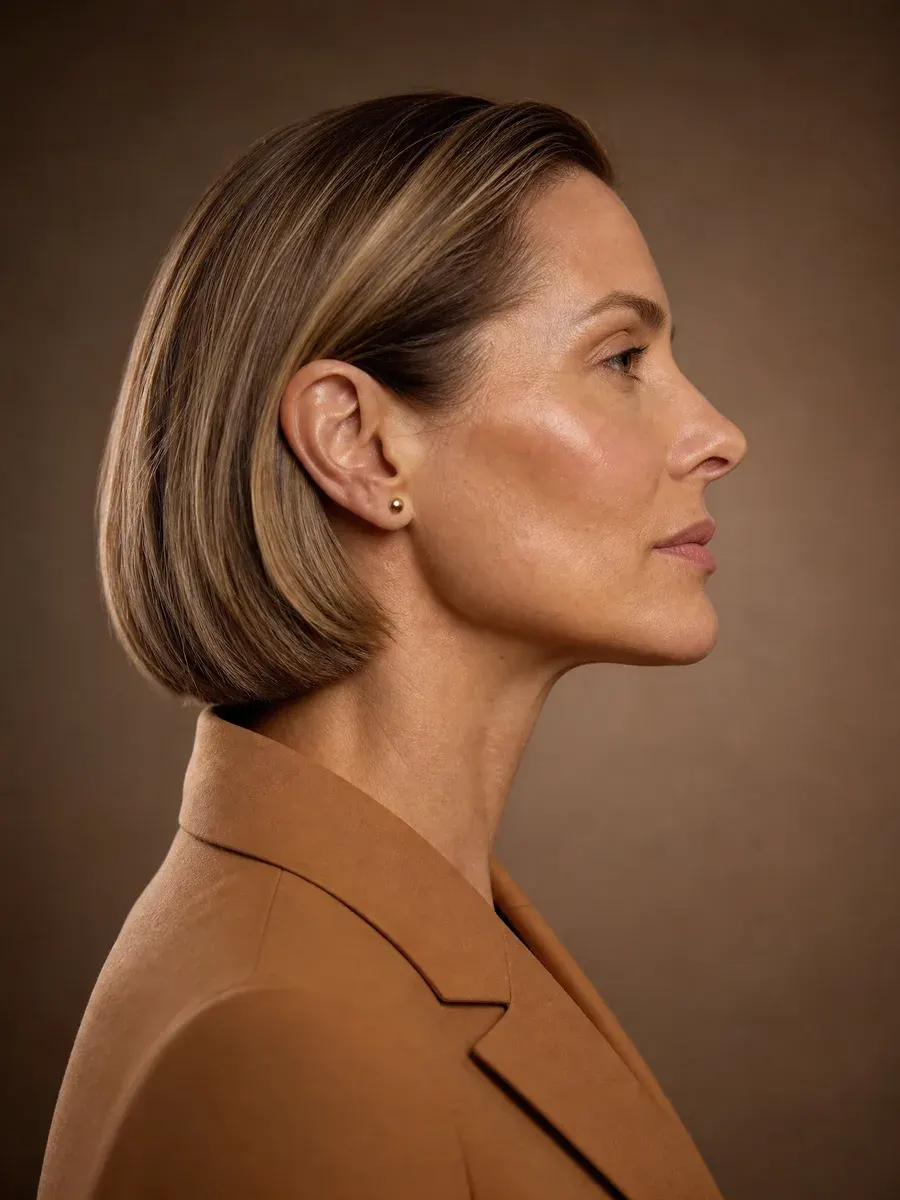
What heat, light and ultrasound can tighten without injecting anything, what none of them does, and how to tell whether you are a good candidate.
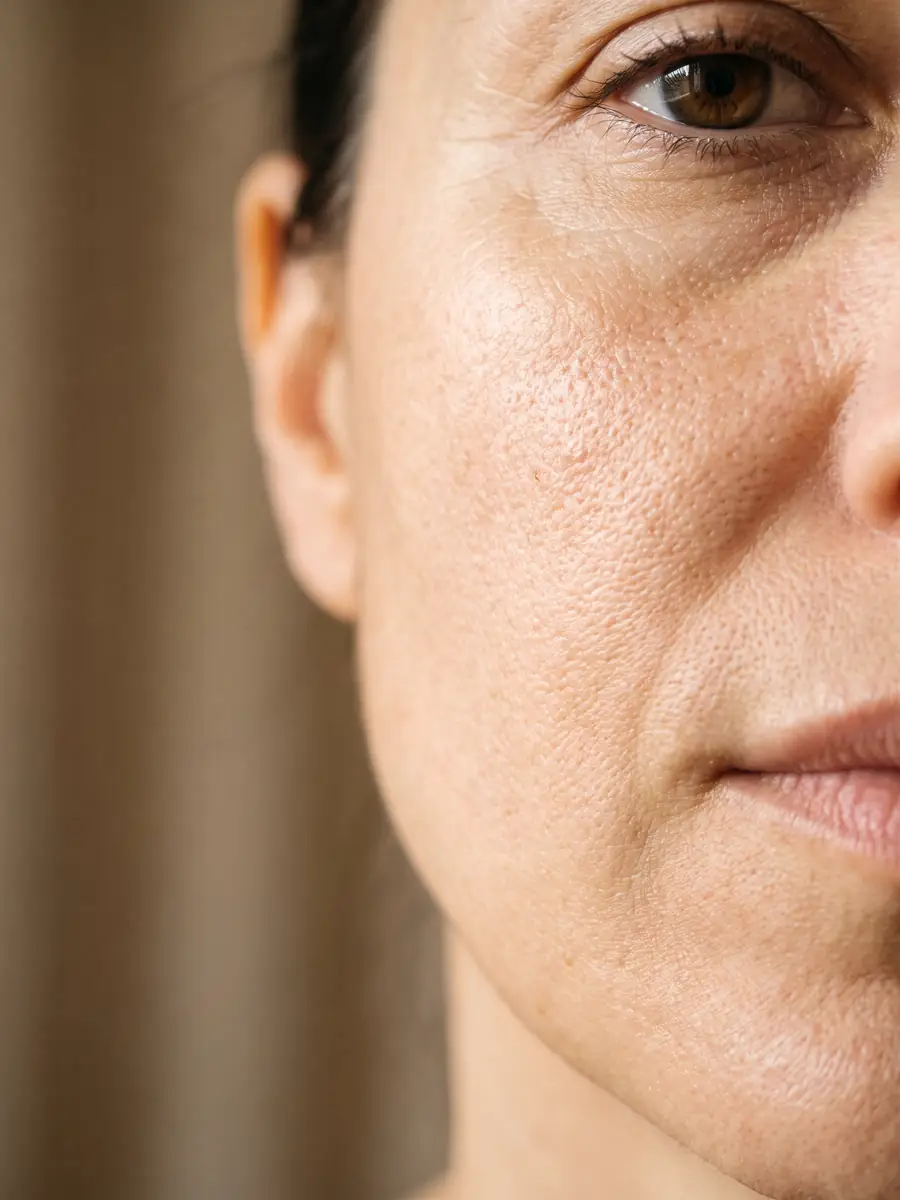
Needle-free radiofrequency firms the jawline and neck; microneedling radiofrequency rebuilds skin texture. How to tell which one is for you.
The best plan starts with an assessment. We look at your skin and answer your questions, no obligation.

Hi, I am Stella. Ask me about a treatment, a price or the clinic, and I will point you to the right place.
Stella answers from the site. She does not diagnose and does not book. The conversation stays 24 hours on this device, and the clinic keeps a copy.