Best Tattoo Removal Clinic in Laval: Five Things to Check Before You Choose
Laser tattoo removal in Laval: the device, who uses it, session count, price and what we turn down. Our answer to each one.

Black fades most easily. Red, orange, yellow, green and blue go through the colour handpiece, and more sessions. Why that is, and what to expect for a coloured tattoo.

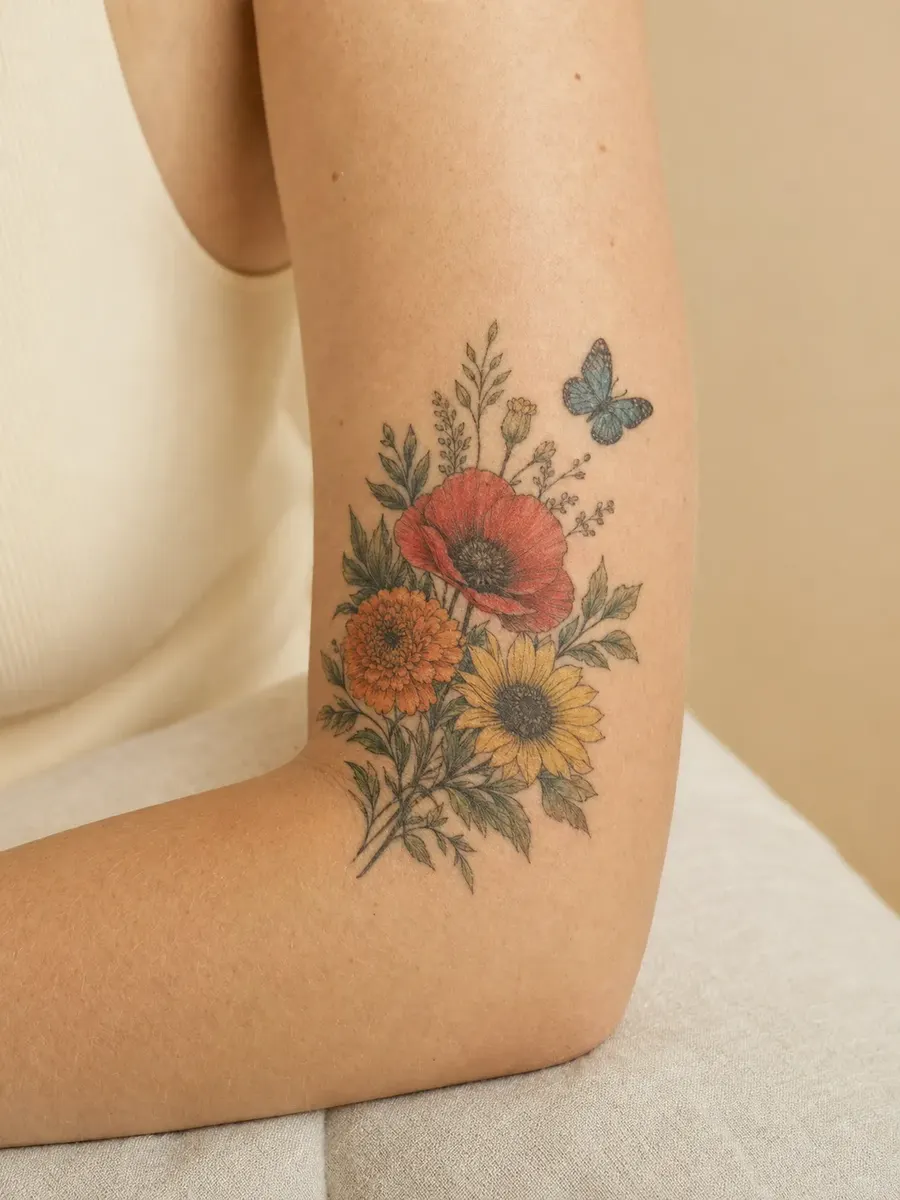
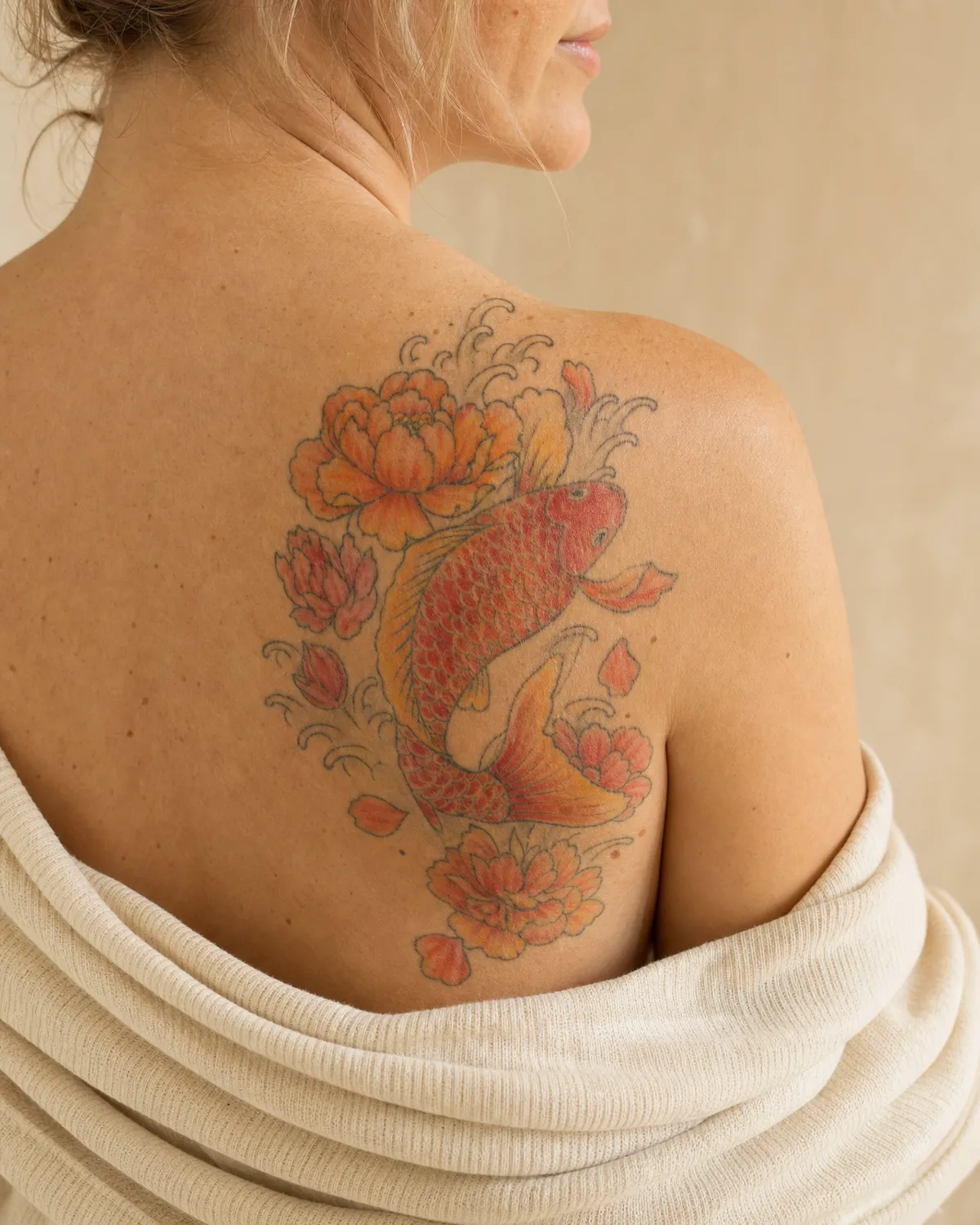
Black fades most easily. Red, orange, yellow, green and blue can be treated here too, with the colour handpiece, and yellow, green and blue need more passes than black. White and pastel ink are a case apart: they respond poorly everywhere and can even darken.
You have read that colours fade badly, and your tattoo has some. Here is why colours behave differently from black, what the colour handpiece changes and what it does not, then how we estimate what comes next for your design.
The laser breaks ink into fine particles, which the body clears between sessions. Black and dark grey absorb the laser's light well, so they break up more easily. That is true everywhere, whatever the device.
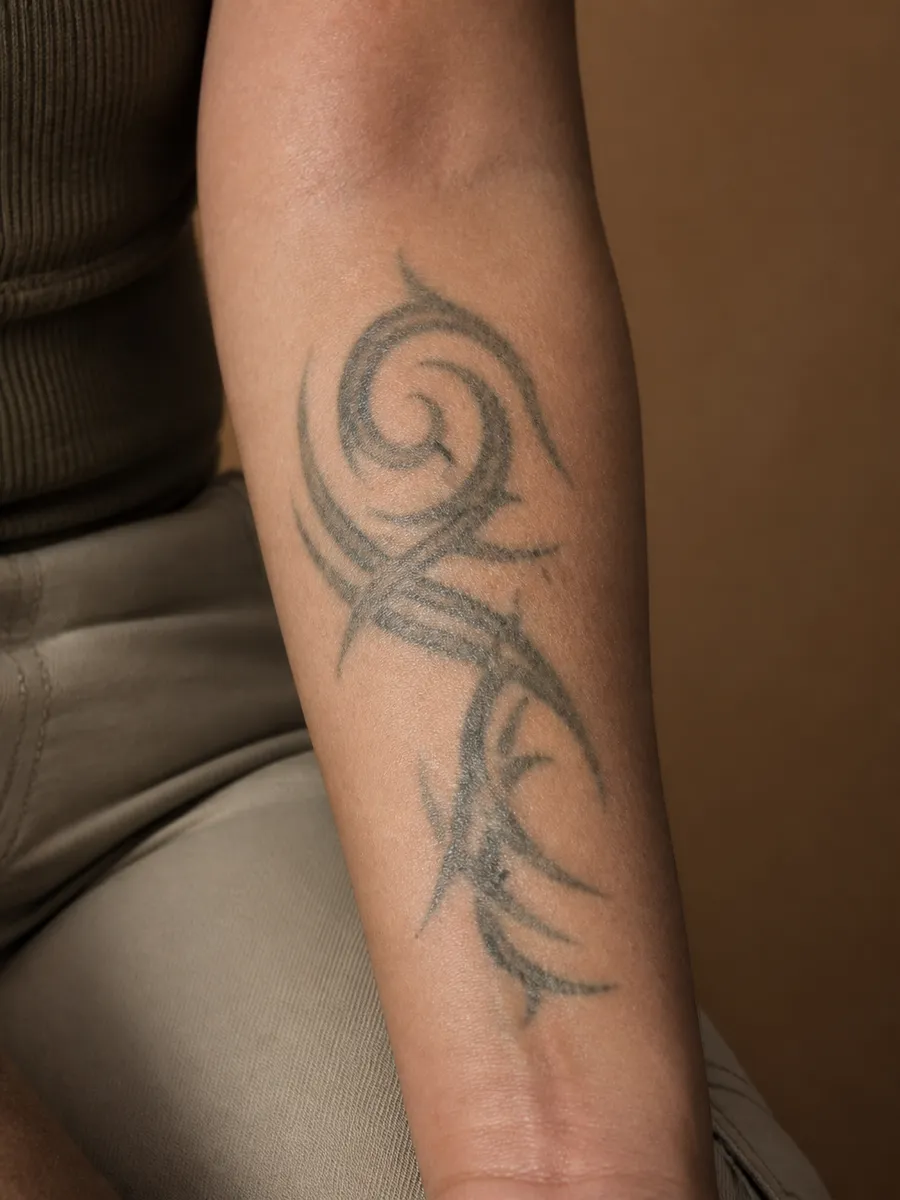
These two inks are the benchmark. Even a black tattoo most often takes 8 to 10 sessions, sometimes more, spaced 6 to 8 weeks apart. Light shading can clear in 1 to 4 sessions.
A coloured ink absorbs some colours of light and sends others back, like a piece of clothing. Yellow, green and blue send part of the laser's light back instead of absorbing it. Less of it is left to break up the ink.
A laser with a single wavelength therefore cannot see every colour. That is why many clinics cannot take on certain shades.
| Ink colour | How it reacts | What it means for you |
|---|---|---|
| Black, dark grey | Absorbs the laser's light well | Fades most easily, with any device |
| Red, orange | Need a different wavelength from black | The colour handpiece; the estimate is given at the assessment |
| Yellow, green, blue | Sends part of the light back | The colour handpiece, and more passes than black |
| White, pastel | Responds poorly everywhere | May darken instead of fading, and we tell you before starting |
Does your tattoo have several colours? Each one has its own row in this table, and it is the whole design we assess.

The colour handpiece brings a different wavelength to the session than the one used for black. It is built for inks that send back the light of the first setting. It is part of our PicoSure picosecond laser.
With it, we treat black, grey, red, orange, yellow, green and blue. Sessions are performed by a medical esthetician, under medical supervision, after an assessment.
If a clinic has already told you it could not treat the colour of your design, the reason may come down to the device. It is worth having the tattoo assessed again.
Even with the colour handpiece, yellow, green and blue hang on and need more passes than black. We do not quote a percentage per colour. The clinic's range stays at 8 to 10 sessions, sometimes more, and colour is one of the things that pushes toward the upper end.
Colour matters elsewhere too. In 2009, American dermatologists proposed the Kirby-Desai scale, which counts ink colour among the criteria for estimating the number of tattoo removal sessions. For the other factors (size, density, depth), our article on the number of sessions goes through them.
A trace can remain on dense, old or coloured ink. Nobody can guarantee you clear skin.
Black and dark grey absorb the laser's light well. Yellow, green and blue send part of it back: even with the colour handpiece, they need more passes.
White ink and pastel shades respond poorly to the laser, whatever the clinic. They can even darken instead of fading.
We tell you before the first session, not at the third. If your design has whites or pastels, that is the first thing we look at during the assessment.
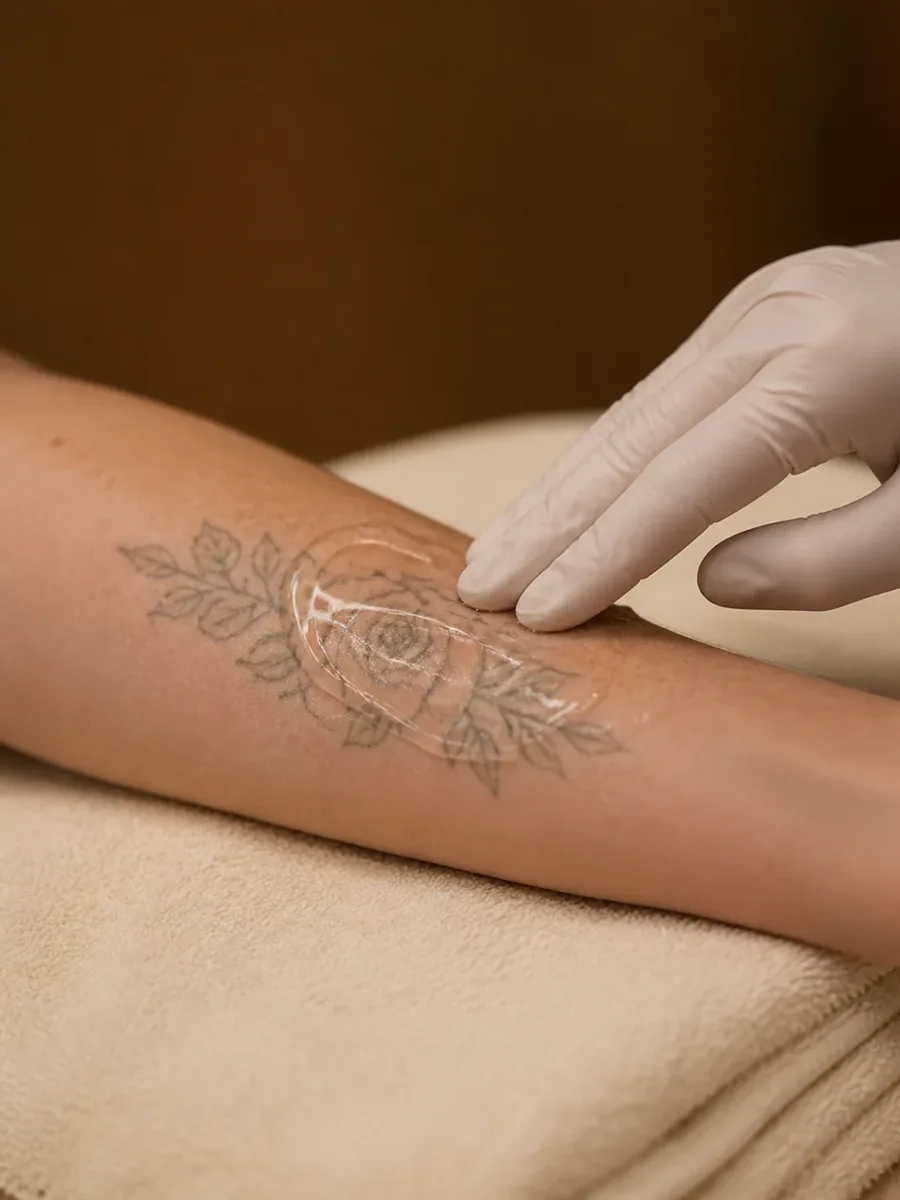
A photo is not enough. At the assessment, we look at the size, the inks and the depth, then tell you how many sessions to aim for. We go over:
You leave with an estimate of the number of sessions, not a promise of complete removal. At every appointment, we tell you where you stand. The price follows the size of the tattoo, and it is posted on the tattoo removal page.
Red is treated with the colour handpiece, like orange. Black is the one that responds best, everywhere. We have no verified figure to compare the two, and we will not give you an invented one: the number of sessions for your design is given at the assessment.
If the design contains yellow, green or blue, we plan for more passes than for a black design. The device also has to be able to treat each colour, which is not the case everywhere. The total stays within 8 to 10 sessions, sometimes more, and we estimate it for your design at the assessment.
Yes. White ink and pastels respond poorly to the laser and can darken instead of fading. That is why we talk to you about it before starting.
No laser and no clinic can guarantee it. A faint shadow can remain, especially on dense, old or coloured ink. We tell you where you stand at every session.
Laser tattoo removal in Laval: the device, who uses it, session count, price and what we turn down. Our answer to each one.
Most often 8 to 10 sessions, sometimes more, 6 to 8 weeks apart. What changes that number for your tattoo, and why websites disagree.
The best plan starts with an assessment. We look at your skin and answer your questions, no obligation.

Hi, I am Stella. Ask me about a treatment, a price or the clinic, and I will point you to the right place.
Stella answers from the site. She does not diagnose and does not book. The conversation stays 24 hours on this device, and the clinic keeps a copy.