Laser or radiofrequency: which one fixes what you see in the mirror
Laser resurfacing works on the surface of your skin, radiofrequency works on its support. What each one fixes, what it will not, and how to choose.

The numbers vary wildly from one site to the next, sometimes tripling. Here is what actually changes your number of sessions, and the honest range to expect.

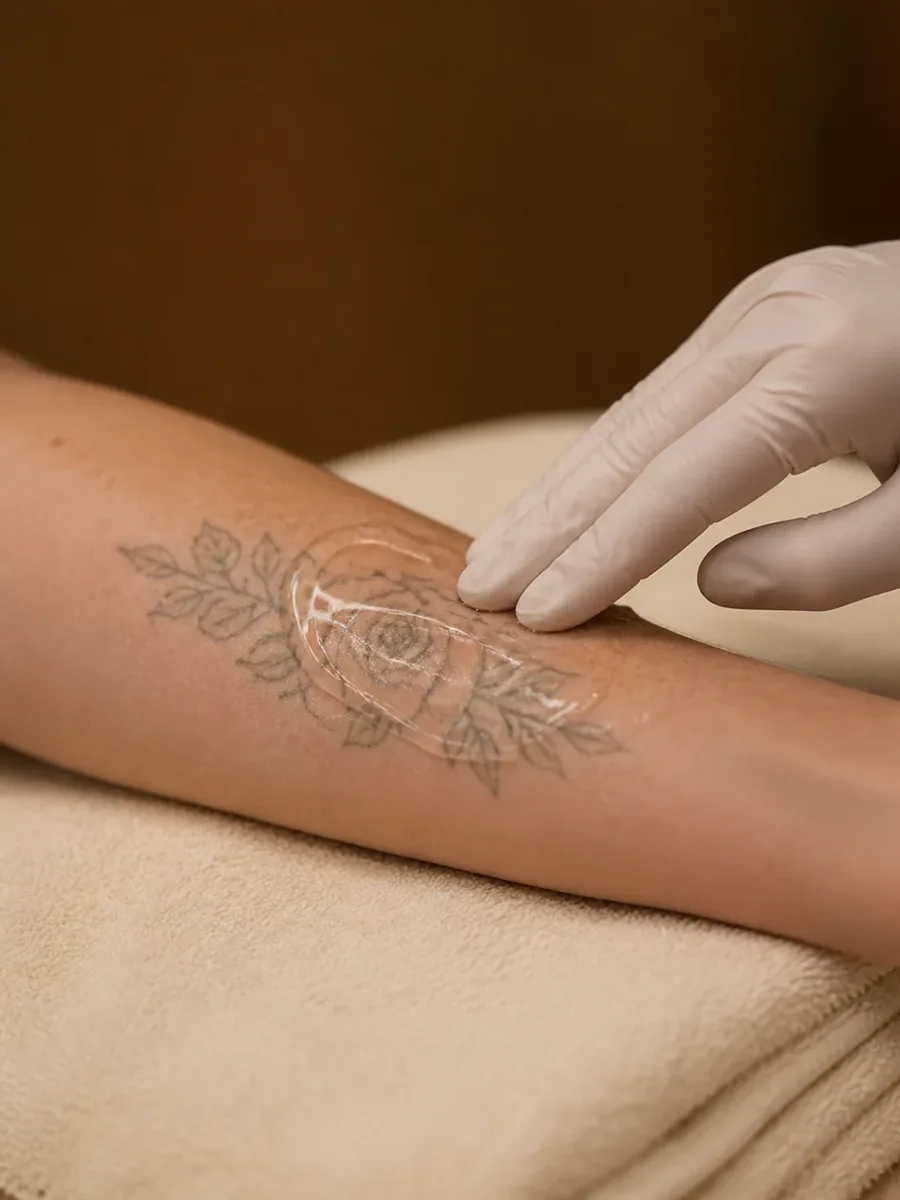
You typed "how many sessions for laser tattoo removal". Here is the answer, right away, before anything else: most often 8 to 10 sessions, sometimes more, spaced 6 to 8 weeks apart. Light shading alone can go in 1 to 4. The rest of this article explains why that number changes so much from one site to the next, and what, in YOUR tattoo, pushes it toward the low end or the high end of that range.
The laser doesn't erase anything in one pulse. It breaks the ink into particles small enough for your own immune system to clear, much the way it would clear any other debris under the skin. That work happens in stages, a little more with each session, never all at once: that's the basic mechanism of laser tattoo removal, before we even get to your specific tattoo. The picosecond laser we use works, according to its manufacturer, by shock wave rather than heat: that's what lowers the risk of marking the skin around the tattoo, but it doesn't change the fact that fragmenting all the ink still takes several passes.
Type the same question into three different sites and you'll get three different answers: one clinic says three sessions, another says eight, a third says fifteen. None of them says where the number comes from, or why it differs so much from the next site's.
Part of the explanation is the source. Picosecond laser manufacturers publish ranges based on their own clinical trials: tattoos selected for the study, often medium-sized, professionally applied ink deposited evenly, treated with optimal settings. Those are good conditions, not the average of what walks into a clinic. A real caseload mixes amateur tattoos, older ink, areas where the skin responds differently, sometimes several colours in the same design. The manufacturer's number is therefore, most of the time, lower than what's actually observed, and it isn't a number we borrow as our own.
Here it is at a glance, what explains the gap between the two sources:
| What a manufacturer states | What we see in clinic | |
|---|---|---|
| Where the number comes from | Its own clinical trials, on cases selected for the study | Hundreds of different tattoos, every size and skin combined |
| The typical tattoo behind it | Medium-sized, professional ink, evenly applied | Anything: small or large, amateur or professional, sometimes several colours |
| The result stated | Often a low range | Most often, 8 to 10 sessions |
The other part is what reassures. A small number gets bookings; an honest number, less so. We'd rather give you the range we actually see, and what moves it, than a number that gets you to sign and disappoints you by the second session.
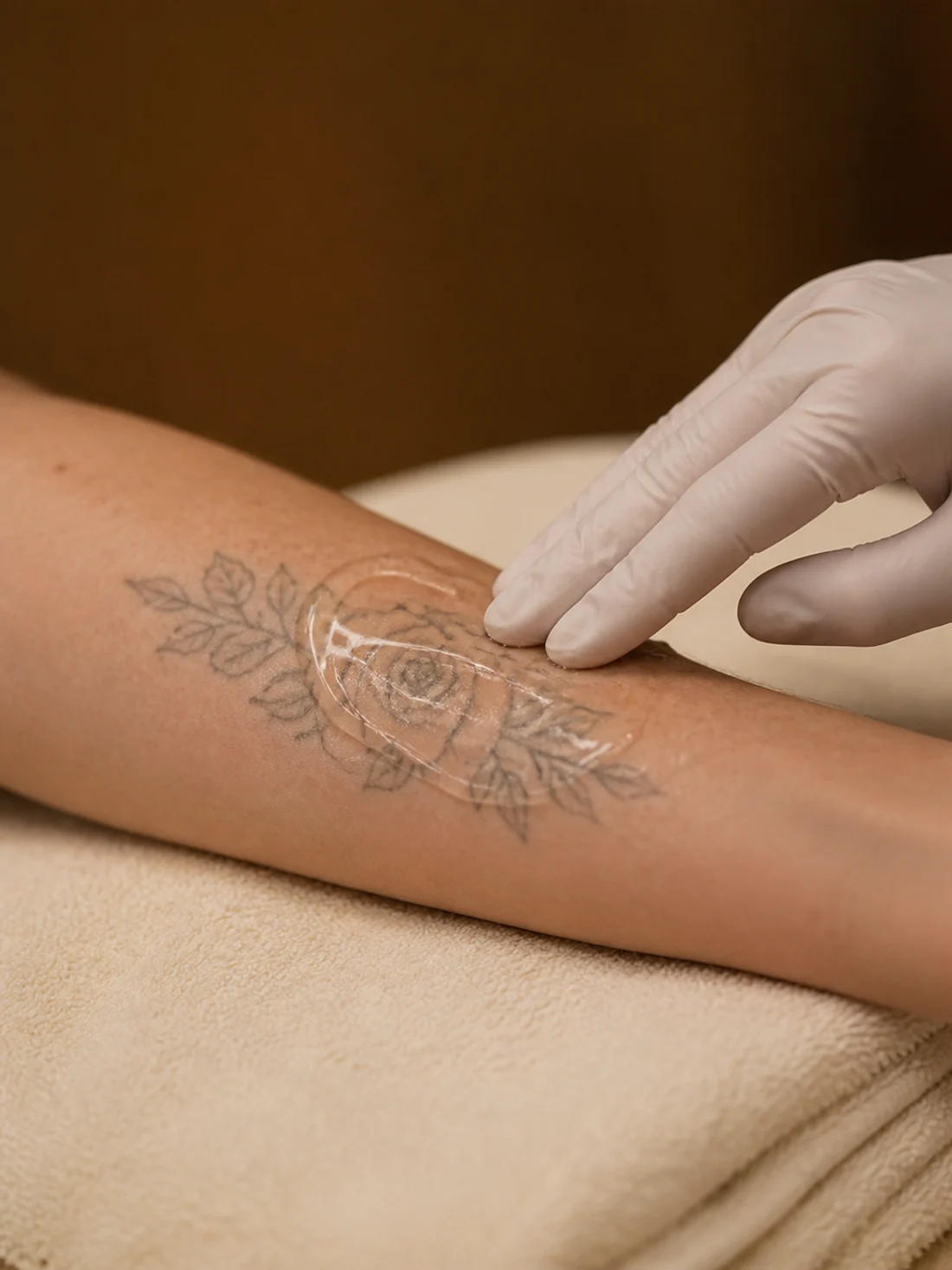
The number we give you at the assessment doesn't come from a generic chart: it accounts for your specific tattoo, on four points. These aren't criteria we made up: in 2009, American dermatologists proposed a scale, known as the Kirby-Desai scale, that scores a tattoo on this kind of criteria (colour, amount of ink, location, scarring, skin colour) to estimate the number of sessions. We don't hand you a score, but we look at the same things.
Each laser pass can only deliver a limited amount of energy to a given area, to protect the skin. A small tattoo a few centimetres wide clears in fewer visits than a piece covering a whole forearm or a full back, even if the ink itself isn't any harder to treat.
A professional tattoo artist deposits ink at an even depth, often in greater quantity, for a crisp, lasting line. That's exactly what makes a well-done tattoo look sharp at first, and also what demands more sessions to remove later: more ink to break up, packed in more densely. A tattoo done by an amateur, often more superficial and uneven, can respond faster, though that isn't a rule. You can see it at the assessment: a professional's even, dense ink feels different, by touch and by eye, from a lighter line done at home.
Black and dark grey absorb the laser's light well and fade the most easily, whatever the device. Yellow, light green and blue reflect part of that light instead of absorbing it: they need a different wavelength, so a dedicated handpiece, and even with the right device, they take longer than black. We treat black, grey, red, orange, yellow, green and blue with the colour handpiece on our PicoSure picosecond laser; many clinics, lacking the right device, simply can't take on some of those shades. White and pastel inks respond poorly everywhere and can even darken instead of fading: we tell you that before a session, not after.
| The ink | How it responds to the laser | What it changes for you |
|---|---|---|
| Black, dark grey | Absorbs the light well | Fades the most easily |
| Red, orange | Needs the colour handpiece | Not every clinic can take it on |
| Yellow, light green, blue | Reflects part of the light | The colour handpiece, and more time than black |
| White, pastel | Responds poorly, can darken | We tell you before the first session |
Ink placed deeper in the skin, or sitting there for years, doesn't always respond the way recent, more superficial ink does. An old tattoo may have already started fading on its own, which helps; it may also have migrated deeper, which complicates the work. Neither is automatically faster: it's something we look at tattoo by tattoo, at the assessment. A very recent tattoo may also need to wait until the skin has finished healing from getting tattooed before we start removal.
On top of these four factors is something no chart can predict: how your own body responds. Your immune system is what clears the fragmented ink, session after session, and that speed varies from person to person, much like how quickly a bruise heals.
The same factors, at a glance:
| What we look at | What helps | What takes more sessions |
|---|---|---|
| Size | A small tattoo a few centimetres wide | A piece covering a forearm or a back |
| The ink | An amateur line, lighter and more superficial | Professional ink, dense and even |
| Colour | Black and dark grey | Yellow, light green, blue |
| Depth and age | An old tattoo that has already faded a little | Ink placed deep, or that has migrated |
| Your body | Fast clearing of the ink | Slower clearing, which varies from person to person |
Each session takes 15 to 30 min. What takes time is what happens BETWEEN appointments: the laser breaks up the ink, then it's the body's job to clear it, work that takes six to eight weeks. Coming back sooner doesn't make the ink leave any faster; it just leaves the skin less time to heal and the body less time to finish its work, with more risk of irritation for a result that won't be any better.
We don't shorten the time between sessions, but if you have more than one tattoo, we can treat several at the same appointment.
The laser breaks up the ink in a few minutes. For the six to eight weeks that follow, your body is the one carrying it away.
The design doesn't fade all at once. In the early sessions, the outlines stay sharp and the black starts turning grey: the tattoo still reads perfectly. Around the middle of the course, the solid fills go porous, a bluish veil settles under the skin, and that's often where things slow down a little, while the body catches up with the deeper layers. That isn't a setback; it's the normal way the ink leaves. It's also the point where we get asked the most: "did it stop working?" No: the body is still doing the work, just more slowly on the deepest layers.
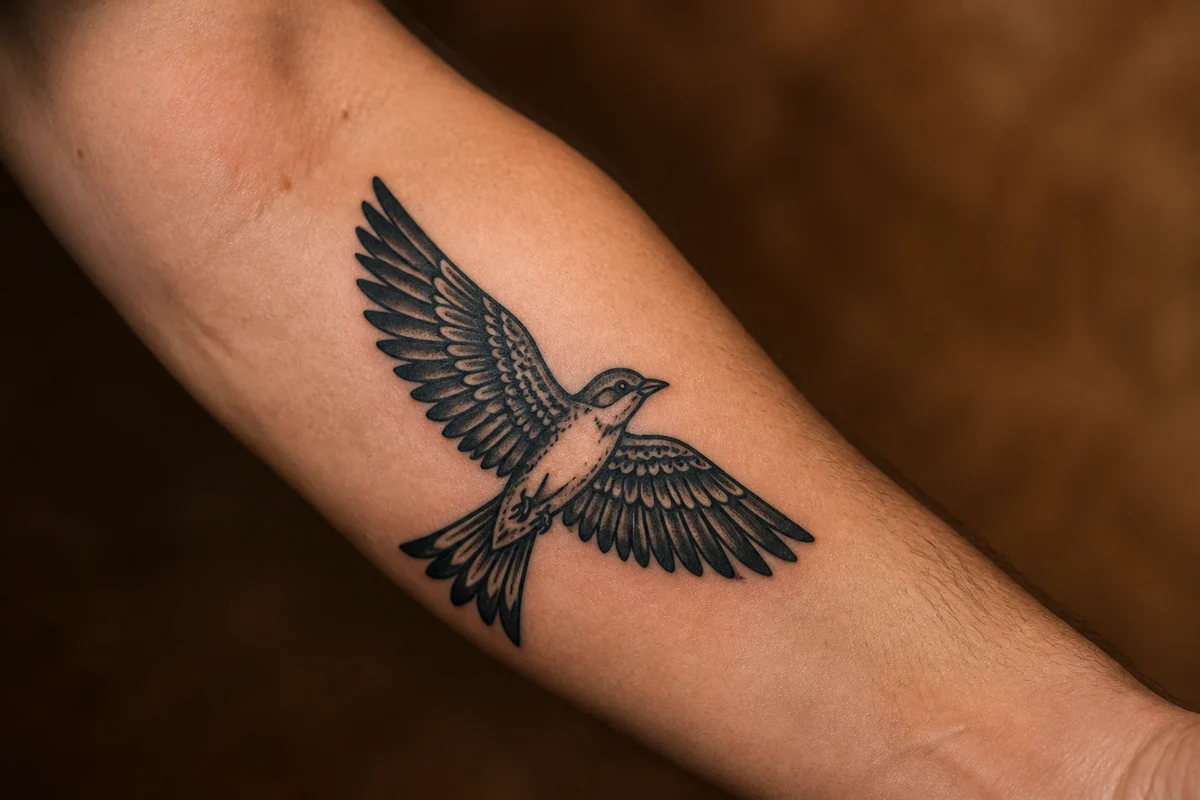 Before session 1The ink is dense and the outlines are sharp.
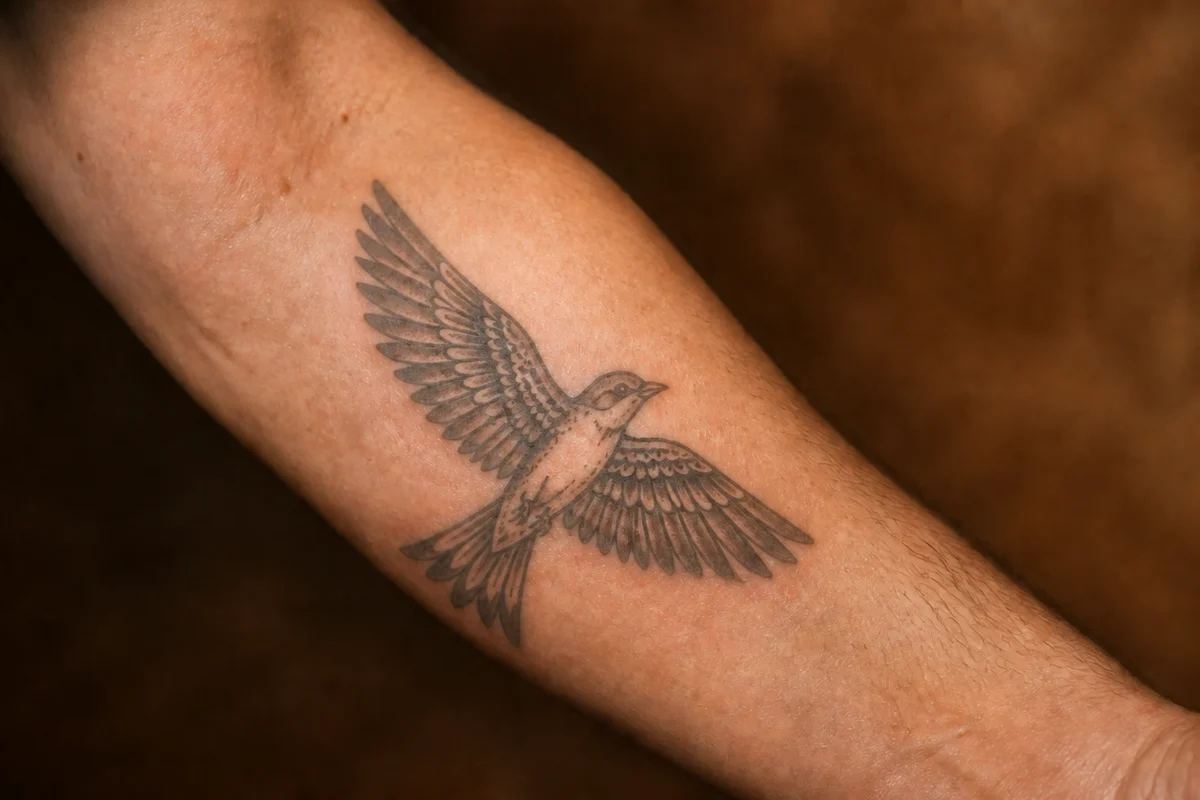 After 2 or 3 sessionsThe black turns grey and the solid fills go porous. The design still reads in full.
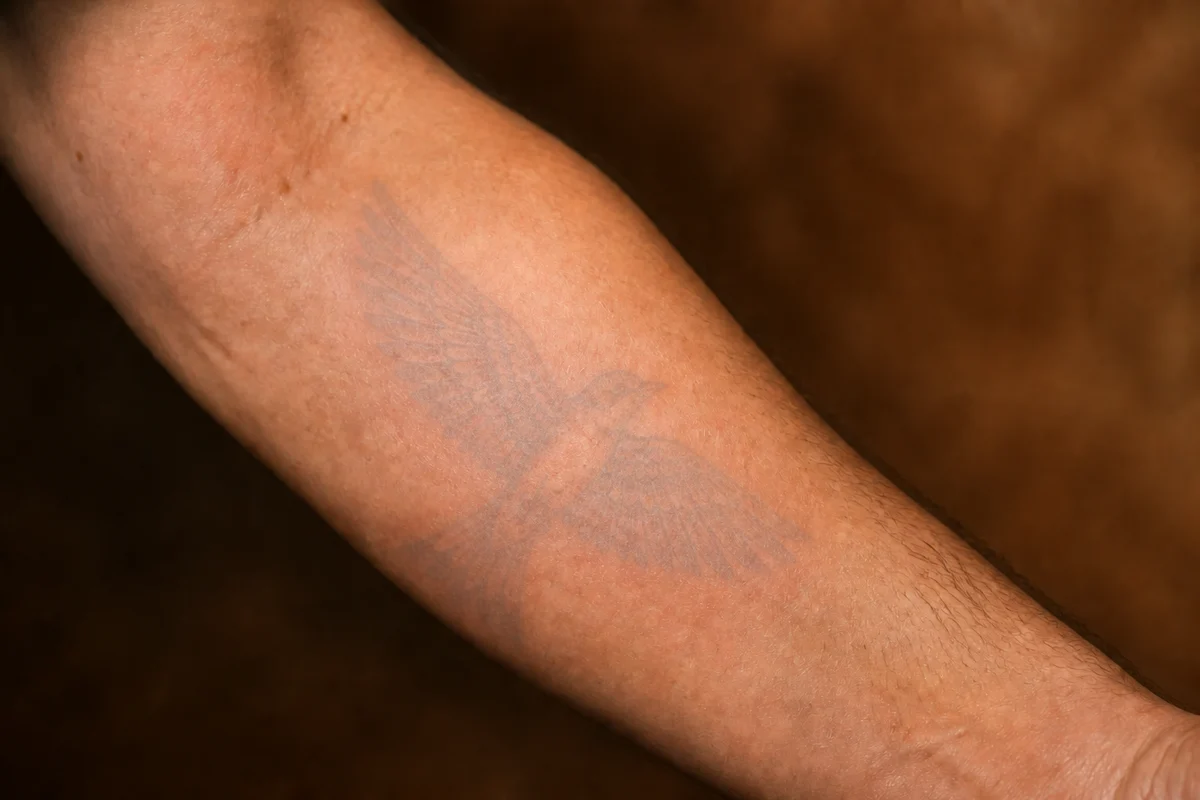 After 5 or 6 sessionsThe design no longer reads from a distance, but a bluish veil stays under the skin. This is where it slows down.
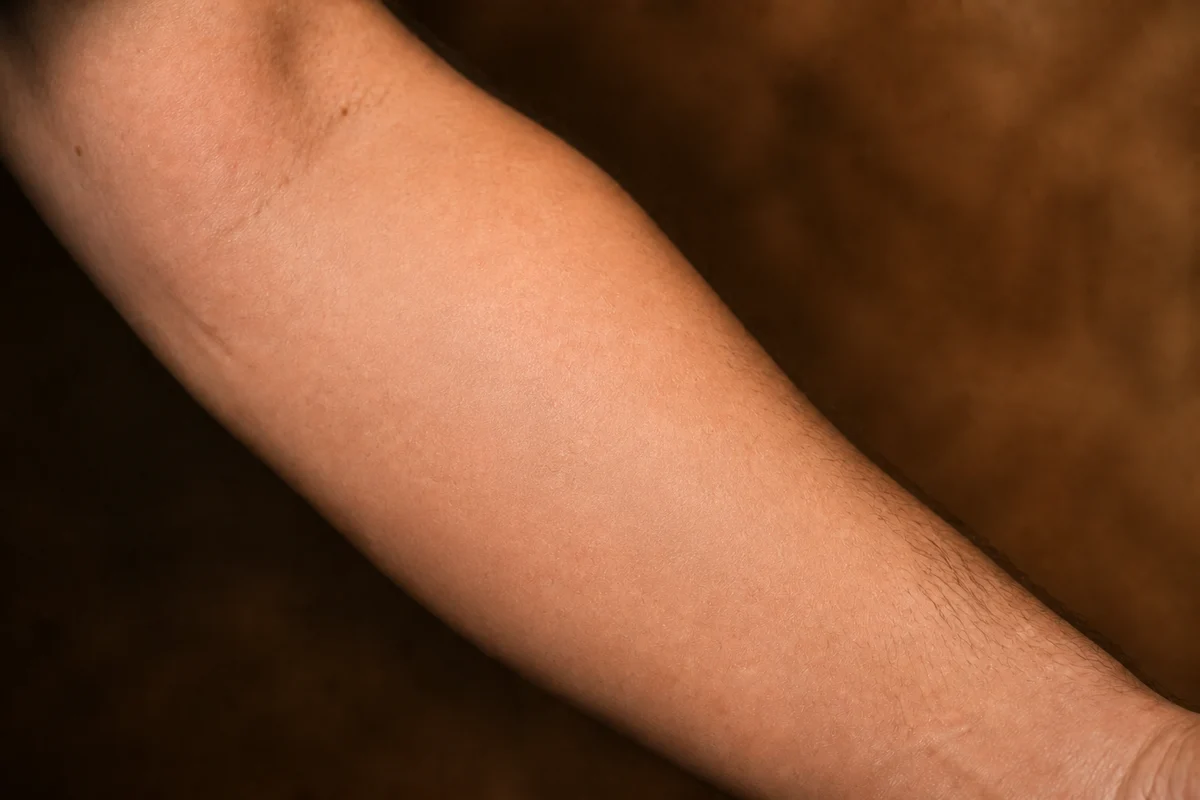 After 8 to 10 sessionsThe skin is clear, sometimes after more than ten sessions: that is the end of the road, not session three.
An illustration, not a patient photograph, and the pace shown is that of a professional black tattoo. Count on 8 to 10 sessions, sometimes more depending on the ink and how deep it sits. A trace can remain: nobody can guarantee you blank skin. We estimate it at the assessment and tell you plainly where you stand at every visit.
By the final sessions, the skin genuinely clears, sometimes after more than ten visits: that's the end of the road, not session three.
No laser, no clinic, can promise complete removal in a fixed number of sessions decided ahead of time. Very dense, very old or coloured ink can leave a faint shadow even after a dozen visits, and that's a possibility we name at the assessment, not after the fact. Light shading, on the other hand, often clears in one to four sessions: not every tattoo takes the same road.
At the assessment, we look closely at your tattoo, then give you a number of sessions to aim for that's yours, not a general average. You leave knowing:
What we also won't do is show you a photo taken early in someone's course and pass it off as the typical result. Session three never looks like session ten, and you deserve to know that going in, not discover it along the way.
If you're not sure complete removal is the right answer for you, the unwanted tattoo page also covers what exists alongside full removal.
The sensation feels like small elastic bands snapping against the skin. Cooling or a numbing cream can be applied to improve your comfort, and the procedure is done under medical supervision, after your tattoo has been assessed. Most people describe the session as tolerable rather than painful, especially on smaller areas.
No, and it isn't a matter of patience on our part: the body needs six to eight weeks to clear the ink fragmented by the previous session. Coming back sooner doesn't speed anything up, it only exposes the skin to more risk for a result that won't change. That same interval sets the rhythm for the whole course, session after session.
Often, yes. A professional tattoo artist deposits ink at an even depth and in greater quantity, which gives a crisp result at the start but takes more work to remove. An amateur tattoo, more superficial and often uneven, can respond faster, but it isn't an absolute rule: it's confirmed at the assessment, by looking at the actual density and depth of your ink.
Yes. Without the dense solid fills of a classic tattoo, light shading usually has less ink to break up, and can clear in one to four sessions rather than eight to ten. That's the exception to the general range, not the rule.

Laser resurfacing works on the surface of your skin, radiofrequency works on its support. What each one fixes, what it will not, and how to choose.

2027 Consumer Choice Award, best aesthetics clinic in Laval. The five things to check before choosing where to get laser hair removal, and our answers.
Laser and IPL don't target hair the same way. What each can do, what it can't, and which skin tone it suits, without selling you the one we happen to offer.
The best plan starts with an assessment. We look at your skin and answer your questions, no obligation.

Hi, I am Stella. Ask me about a treatment, a price or the clinic, and I will point you to the right place.
Stella answers from the site. She does not diagnose and does not book. The conversation stays 24 hours on this device, and the clinic keeps a copy.