Laser Tattoo Removal: How Many Sessions It Actually Takes
The numbers vary wildly from one site to the next, sometimes tripling. Here is what actually changes your number of sessions, and the honest range to expect.

Laser tattoo removal in Laval: the five things to check before choosing your clinic, and our answers. 2027 Consumer Choice Award.

You typed "best tattoo removal clinic Laval". You landed on ten sites that all call themselves the best, and none of them tells you on what grounds. So let's start with the only thing someone other than us has said: Clinique DC received the 2027 Consumer Choice Award in the "Best aesthetics clinic in Laval" category, given by an organization outside the clinic, by city and by category.

An award doesn't replace your judgment. "The best" isn't declared, it's checked: so here are the five things to look at before trusting anyone with your skin to remove ink, and for each one, what you can verify about us, in numbers, names and photos. At the end, you decide.
Tattoo removal is a series of appointments spread over several months, not one session that fixes everything. What makes the difference at the end is neither the decor nor the name on the door. It's five things, all of them checkable before the first session:
| What to look at | What it changes for you |
|---|---|
| The device, and its handpiece for colours | Whether your ink can actually go, every colour included |
| Who does the treatment | How your skin and ink are read, so the outcome |
| The number of sessions promised | Whether you're told the truth before you pay |
| The price, readable before you come | What it costs in total, with no surprise at the counter |
| What they tell you they won't do | Whether you'll be sold a removal that won't work on you |
Let's take them in order.
The laser doesn't cut anything. It breaks ink into particles small enough for your own body to clear, session after session. Older devices, called Q-switched, do this with longer pulses, which means more heat transmitted around the treated spot. We use the PicoSure picosecond laser, whose much shorter pulses act through a shock wave rather than heat: that's what limits the risk of marking the skin around the tattoo.
Black and dark grey respond well to almost any decent laser. Yellow, light green and blue, though, reflect part of that light instead of absorbing it: they need a different wavelength, so a dedicated handpiece, which not every device has. We treat black, grey, red, orange, yellow, green and blue with our device's colour handpiece.
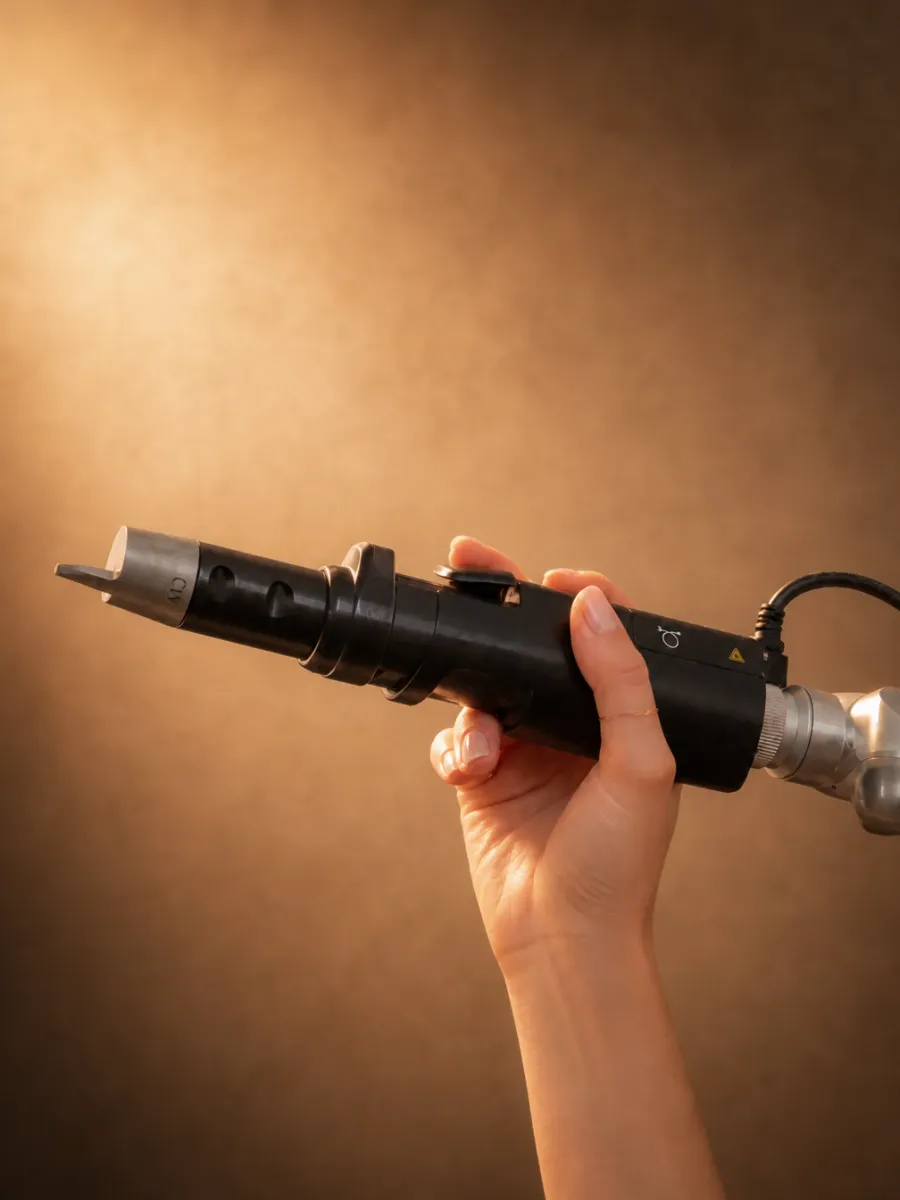
The point to remember: a clinic with only an old laser, or no colour handpiece, won't be able to treat everything you bring in, and it won't always say so before starting. Ask for the device's name, and whether it has a colour handpiece. With us, the answer is written on the technology page, with its photo.
The same device gives different results depending on who sets the energy and reads your skin. We don't treat ink without first looking at its size, depth and colours: that's what tells us how many sessions to aim for, and what it's honest to expect. That assessment can also conclude that removal isn't right for you, on that skin tone or that ink: in that case, we tell you, rather than starting anyway.
Here, the handpiece is held by a medical esthetician, or by a nurse trained on the laser. The team was trained by our founder, Sarah-Donia Cherif, a nurse who was a trainer for Cynosure Lutronic, the maker of most of our devices, while she was already running the clinic: the manufacturer sent her to show other clinics how to set up their machines. You can read who is on the team, with real names and real photos, before you come.
This is the most honest criterion for judging a clinic, and the easiest to check: were you told the truth about how long it takes before you paid? Ink doesn't leave in three sessions, even if that's what the page trying to get you to book says.
Most often, it takes 8 to 10 sessions, sometimes more, spaced 6 to 8 weeks apart: the time it takes for the skin to heal and the body to clear the fragmented ink. A simple shading can go in 1 to 4. That number is the same on the tattoo removal page and here, because it comes from the same source, and this article breaks down the four factors that change your number. A session lasts 15 to 30 min.
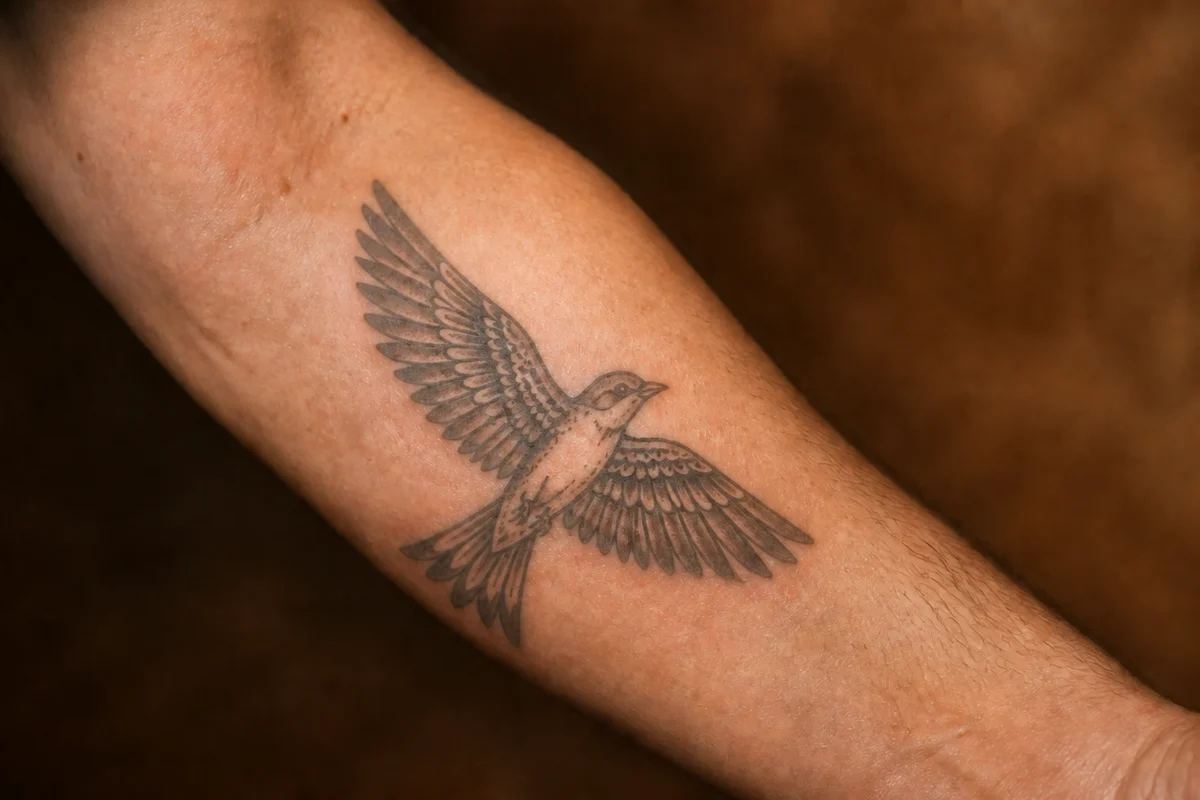
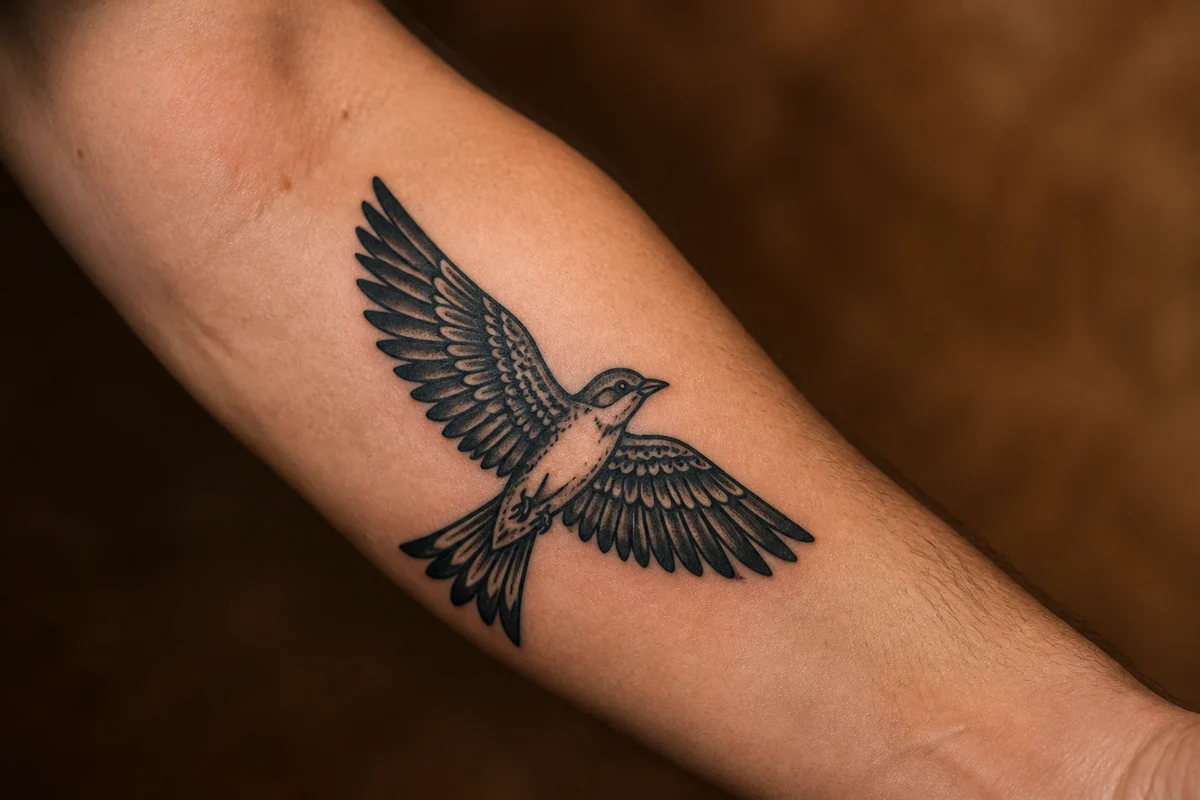 Before session 1The ink is dense and the outlines are sharp.
 After 2 or 3 sessionsThe black turns grey and the solid fills go porous. The design still reads in full.
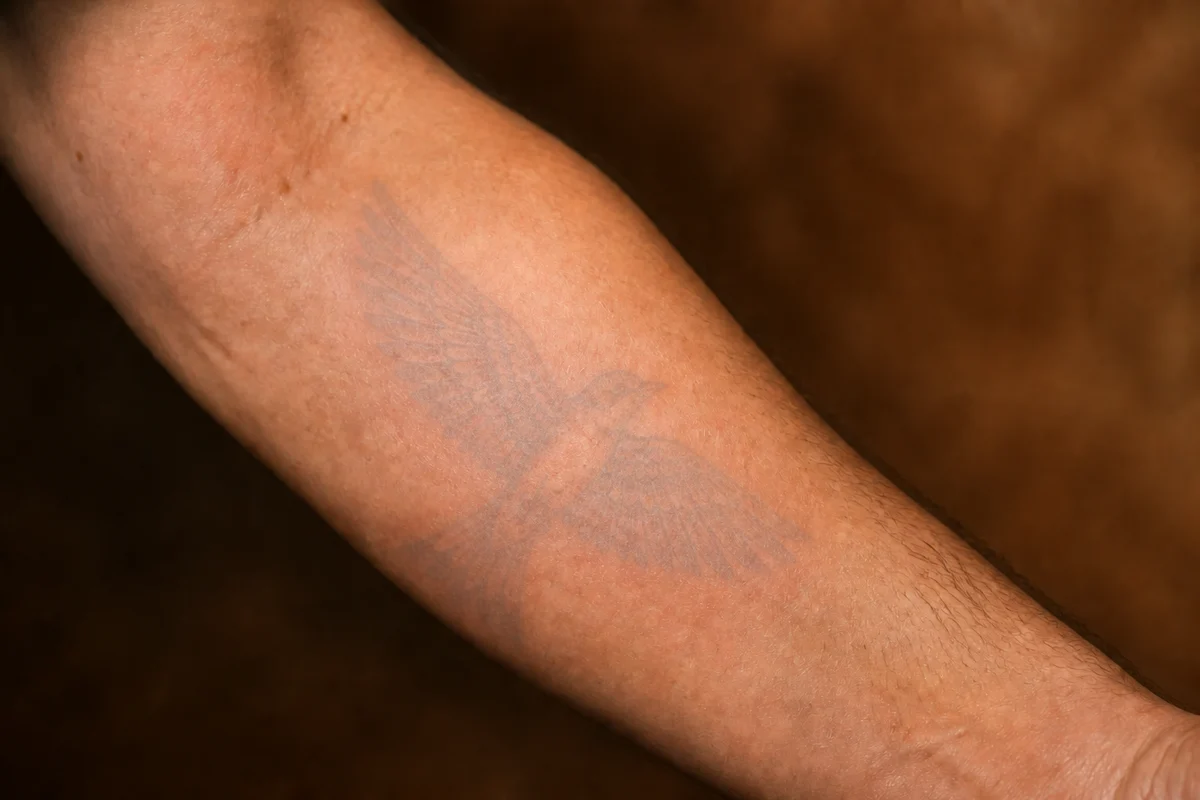 After 5 or 6 sessionsThe design no longer reads from a distance, but a bluish veil stays under the skin. This is where it slows down.
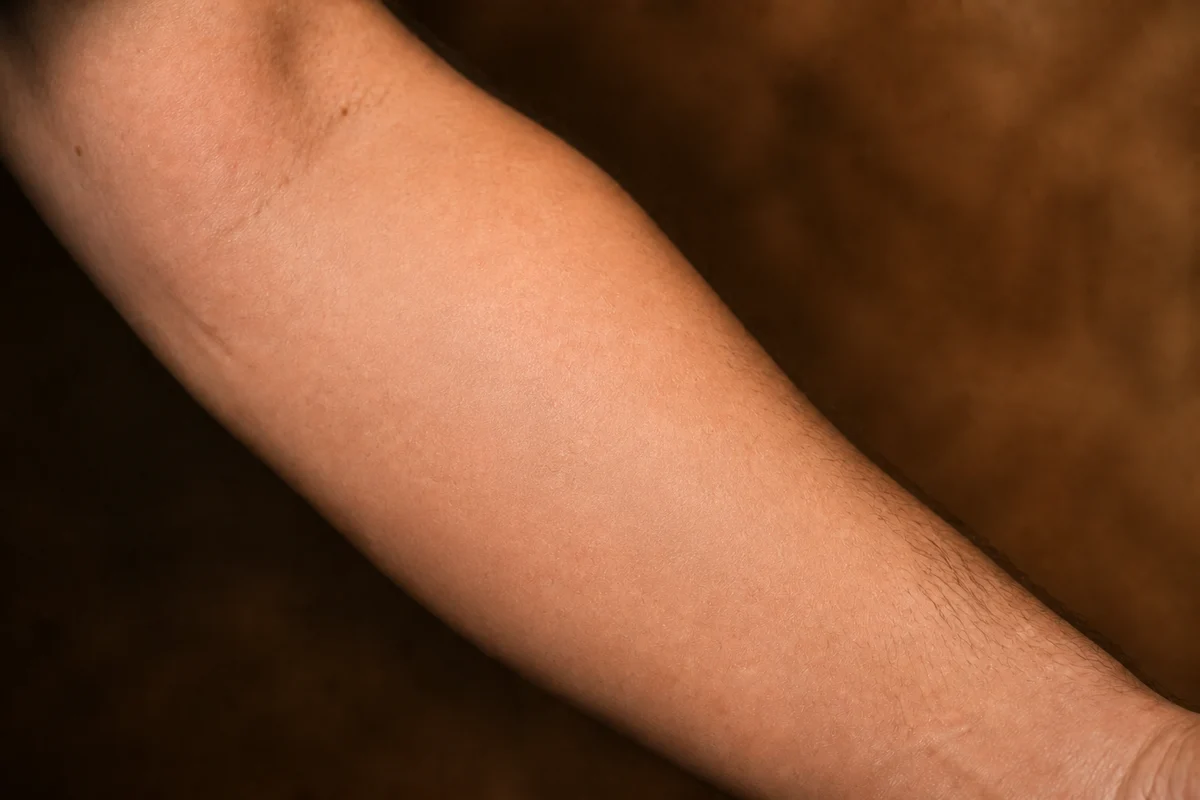 After 8 to 10 sessionsThe skin is clear, sometimes after more than ten sessions: that is the end of the road, not session three.
An illustration, not a patient photograph, and the pace shown is that of a professional black tattoo. Count on 8 to 10 sessions, sometimes more depending on the ink and how deep it sits. A trace can remain: nobody can guarantee you blank skin. We estimate it at the assessment and tell you plainly where you stand at every visit.
What we tell you upfront, without your having to ask: the result doesn't fade all at once, it slows down mid-way while the body catches up on the deeper layers, and that's normal.
A clinic that posts its prices lets itself be compared. Tattoo removal is priced by the size of the tattoo, starting at $100 a session for a mini tattoo, up to the largest formats. The full grid, with a photo per tier so you can place yourself, is on the treatment page, and a fixed-price package exists for anyone who'd rather pay once instead of session by session, described on the unlimited package page.
One clarification, so nothing surprises you: the tattoo-removal assessment has a price. It's shown before you confirm your appointment, and it's credited to your first session if you go ahead.
A clinic is also judged by what it refuses. The laser targets melanin as much as ink: on a deep skin tone, it can no longer tell the two apart, and the risk of depigmentation becomes real. That's why we don't treat those skin tones with the PicoSure. A clinic that tells you "we treat absolutely everyone" isn't doing you a favour.
White and pastel inks raise a different problem: they respond poorly everywhere, and can even darken before they fade. We tell you before the first session, not after. And nobody, anywhere, can guarantee complete removal in a fixed number of sessions: very dense or very old ink can leave a faint shadow even after ten or so visits.
| What an honest clinic tells you | What to run from |
|---|---|
| "On that skin tone, the risk of depigmentation is real, we won't do it" | "We treat absolutely everyone" |
| "White and pastel inks respond poorly, they can even darken" | A promise of complete removal on every ink |
| "Plan on 8 to 10 sessions, sometimes more" | A low number given before even seeing your tattoo |
| "No complete removal is ever guaranteed" | "Guaranteed gone in three sessions" |
Three signals that should make you pause:
Everything above comes from us. Here's what doesn't. The 2027 Consumer Choice Award, at the top of this article, is the first: it's the only time the word "best" appears here without our having written it ourselves.
Next to the seal, two numbers you can check in one tap: a 5.0 rating across more than 700 Google reviews, and more than 5,000 people treated since 2021. Among the public reviews, some are about tattoo removal specifically:
Je suis allée me faire détatouer. L’endroit est très professionnel et propre. Le personnel est très sympathique, je recommande vivement.
That's also what we invite you to check, with the real name of the person who wrote it.
Take the five lines from the table at the top and ask every clinic you're considering the same questions: which device, which handpiece for colours, who holds the handpiece, how many sessions, what posted price. A clinic that answers all five without dodging is a clinic you can go to. If it's us, we start by looking at your ink, and we tell you how many sessions to aim for, or whether removal isn't right for your skin. If you're not sure a full removal is what you want, the unwanted tattoo page also covers what exists alongside it.
Being nearby helps for repeat visits, but tattoo removal plays out over months: better a clinic a little further that has the right device and tells you the truth about session count, than one down the street that doesn't have the colour handpiece for your ink.
Yes. Reading a skin and an ink long enough to give a real number of sessions takes time. The price is shown before you confirm, and it's credited to your first session if you go ahead.
Because the laser targets melanin, not only ink. On a deeper skin tone, it becomes hard to aim at one without touching the other, which raises the risk of depigmentation. A clinic that declines for that reason is protecting your skin; one that accepts without mentioning it may not have really assessed you.
Yes, with the dedicated handpiece: black, grey, red, orange, yellow, green and blue. Colours like yellow and green take longer than black, but they're treatable, which isn't the case everywhere.
8 to 10, sometimes more, spaced 6 to 8 weeks apart. A simple shading can go in 1 to 4. The exact number for your tattoo is confirmed at the assessment.
A distinction given by an organization outside the clinic, by city and by category. Clinique DC received the 2027 edition in the "Best aesthetics clinic in Laval" category. The seal is the file provided by the organization, as is.
The best plan starts with an assessment. We look at your skin and answer your questions, no obligation.

Hi, I am Stella. Ask me about a treatment, a price or the clinic, and I will point you to the right place.
Stella answers from the site. She does not diagnose and does not book. The conversation stays 24 hours on this device, and the clinic keeps a copy.