TempSure or XERF: Which of the Two Radiofrequencies Fits What You See in the Mirror
TempSure or XERF: two radiofrequencies, two depths of heat. Which one fits what you see in the mirror, and when the gentler one is truly enough.

Yes for mild to moderate sagging, more modest on fine lines, no for expression lines: what the studies say, and the limits of that evidence.


Yes, for mild to moderate sagging: the skin of the jawline and jowls can tighten in a measurable way. More modestly on fine lines. No on expression lines, which are treated differently. And the evidence is thin: we say so up front, then show you where it comes from.
A friend had it done, or you've seen an ad, and you wonder whether it works, and on what. Here is what the studies measured, and what we tell you in advance at our clinic.
In the literature, "effective" means a measurable tightening of the skin, judged by raters or by instruments. It doesn't mean a facelift. Radiofrequency heats the deeper layers of the skin so that collagen contracts and then renews. It removes no excess skin.
Marked sagging, with extra skin, is a surgical matter, and we tell you so plainly.
Three sources sum up the essentials.
| Source | What it measured | Its limit |
|---|---|---|
| Austin et al., 2022 review | Mostly positive subjective ratings. On measurements: elasticity, collagen, wrinkles. Satisfaction was higher in people seeking modest rejuvenation | Pools very different devices and protocols; excludes home devices |
| Kumar et al., 2025 review | 15 studies, 1,230 people. "Moderate" confidence, according to the authors, for aesthetic improvement, satisfaction and safety | One randomized trial, eleven case series. Low confidence for the lifting effect, which rests on a single pilot study |
| Shin et al., 2024 | 20 women aged 42 to 60, one session, blinded assessment by dermatologists. Jowl and nasolabial fold laxity improved at 12 weeks and held at 24 | Small group, a monopolar device that isn't XERF. Fine lines, pores and tone: gradual improvement, not statistically significant |
They show an effect on firmness, mostly when sagging is mild or moderate. The percentages that circulate come from small groups, often without a control: we repeat none of them.
XERF is a two-frequency monopolar radiofrequency device from Cynosure Lutronic. According to the manufacturer, Health Canada has cleared it for skin tightening.
To date, we have found no independent study on XERF itself. The studies cover the family of monopolar devices.
"Wrinkles" means at least four different things, and radiofrequency doesn't act on all of them.
| What bothers you | What radiofrequency can do | What addresses it |
|---|---|---|
| Fine surface lines | A modest effect: in the Shin study, the improvement isn't significant | Decided at the assessment |
| Skin that sags (jawline, jowls, nasolabial fold) | This is where studies most often see an effect | Radiofrequency, if the sagging is mild or moderate |
| Expression line (forehead, between the brows, crow's feet) | No effect expected: the fold comes from the muscle | A neuromodulator, injected by a nurse |
| Groove from lost volume | It doesn't fill | A filler, injected by a nurse |

They often mix on the same face. Our article on the difference between lines, volume and loose skin helps sort them out.
The reviews say so themselves. What limits the evidence:
None of the 15 studies in the 2025 review reports downtime.
XERF doesn't remove skin. It doesn't fill. It doesn't erase an expression line. If your sagging is advanced, or you expect a facelift's effect, surgery is the right answer and we tell you at the assessment.

The assessment may also conclude that XERF isn't the right option for you. Pregnancy, certain medications or broken skin are checked at that point, based on your file.
A medical esthetician sets up XERF on the full face and neck, eye area included. We plan two sessions at minimum, then a yearly upkeep session. The effect builds over 3 to 6 months, and results last 12 to 18 months for most people, sometimes up to 24 months, after a full series, according to the clinic: it varies from person to person.
We guarantee no result. We measure your starting point with the LINE VU 3D skin analysis, then compare at the end of the series.
Yes for mild to moderate sagging, more modestly on fine lines. The studies are small, rarely controlled, and several are tied to manufacturers. No independent study covers XERF itself.
It depends on the wrinkle. On fine surface lines, the effect is modest. On an expression line, it doesn't act: a neuromodulator, injected by a nurse, handles that. A groove from lost volume calls for a filler, also injected by a nurse.
Firmer skin, mostly along the jawline and jowls, that settles in over several months. No percentage can be promised: the effect depends on your starting point, and advanced sagging is a surgical matter.
The intended effects are firmness and skin texture. During treatment you feel warmth, and passing redness is possible afterwards. Side effects have their own article on our blog.
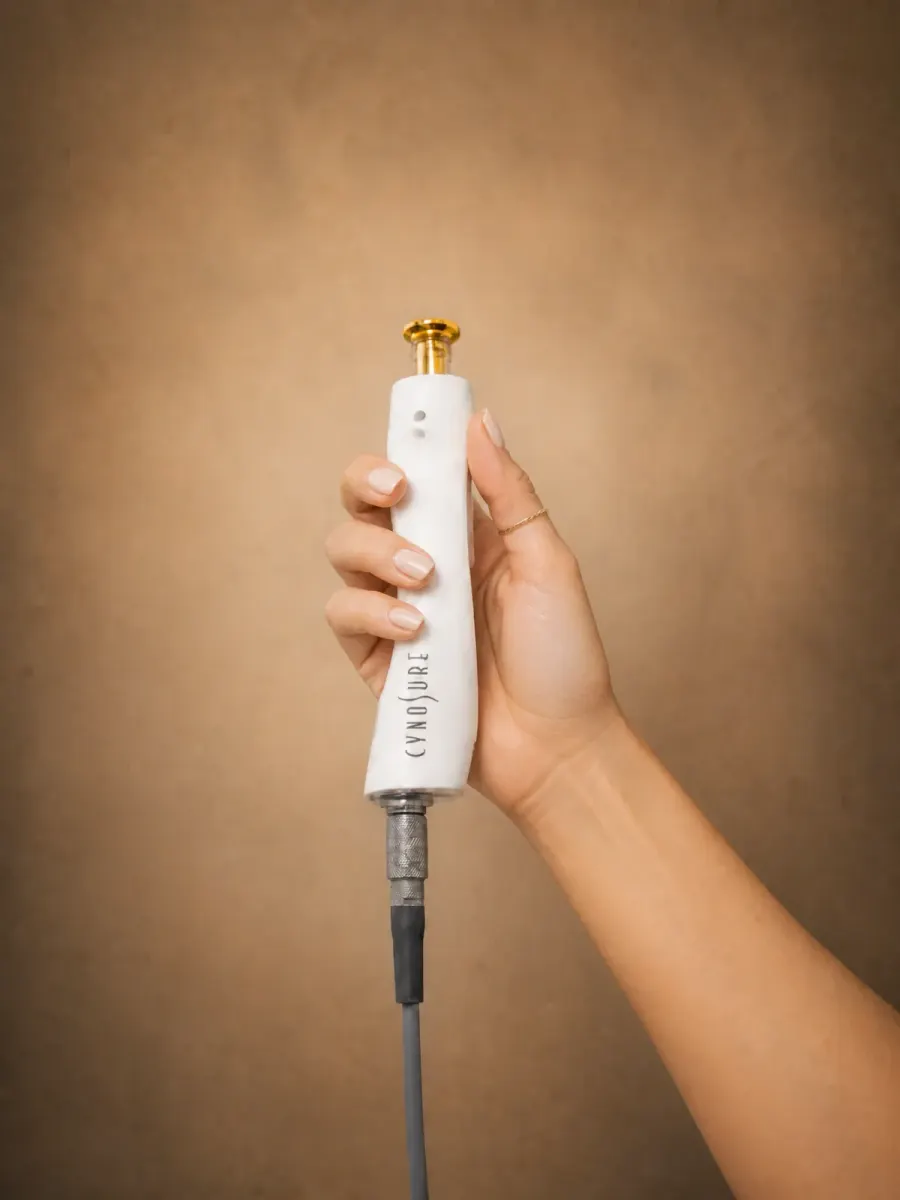
TempSure or XERF: two radiofrequencies, two depths of heat. Which one fits what you see in the mirror, and when the gentler one is truly enough.
One word, three technologies, very different bills. What changes the price of a face-tightening treatment, and where you can read our own prices.

The same day, after a few weeks, over the months: what changes and when, and why booking three weeks before a big event is a bad idea for your skin.
The best plan starts with an assessment. We look at your skin and answer your questions, no obligation.

Hi, I am Stella. Ask me about a treatment, a price or the clinic, and I will point you to the right place.
Stella answers from the site. She does not diagnose and does not book. The conversation stays 24 hours on this device, and the clinic keeps a copy.