PRP and Exosomes Together: What the Combination Adds for Your Hair
Why combine PRP and exosomes in one hair protocol, how the session goes, and our programs that bring both together.

Hair that falls out after childbirth usually grows back by itself. When to worry, what we check, and what DC Bloom can do if it doesn't.

Clumps of hair in the shower, in the brush, on the pillow. A few months after childbirth, it's very common, and most of the time it grows back on its own. Here's what it looks like when it's temporary, when it's worth getting checked, and what you can do next.
According to the American Academy of Dermatology (AAD), this heavy shedding is caused by falling estrogen levels after delivery. It isn't true hair loss: the follicles are still there, they've simply tipped a lot of hairs into the shedding phase at the same time.
The AAD says shedding usually peaks about four months after birth. If you notice it at month three or four, you're right on the usual schedule.
"Most women see their hair return to its normal fullness by their child's first birthday." (American Academy of Dermatology)
The calendar is your best guide. This table sums up what you may see, what it usually means, and what comes next.
| What you see | What it usually means | What we suggest |
|---|---|---|
| Lots of hair coming out, from a few months after birth to about a year | Falling estrogen, which settles by itself | Wait, and treat your hair gently |
| Volume that hasn't come back after a year | Another cause is possible, according to the AAD | Get checked, by a dermatologist or by our team |
| A part that's getting wider | The first sign of hereditary hair loss, according to the AAD | A scalp assessment |
| Shedding that drags on with no visible regrowth | Low iron, a thyroid issue or a hormonal change, which an assessment can rule out | An assessment before any treatment |
The AAD notes that a woman can have shedding from childbirth and, at the same time, a subtle hereditary loss. The two blur together, and an assessment is what separates them.
You don't need a treatment for the first months. The AAD suggests simple habits:

The AAD puts it simply: if your hair hasn't regained its fullness after a year, it may be time to see a dermatologist. With us, you don't have to wait a year if you see your part widening, or if it worries you. A consultation commits you to nothing, and you leave knowing where you stand.
In women, we check iron, thyroid and hormones first. If the cause isn't corrected, restarting the follicle does little. A blood test is something to discuss with your doctor, and our scalp assessment tells you whether that step is worth it.
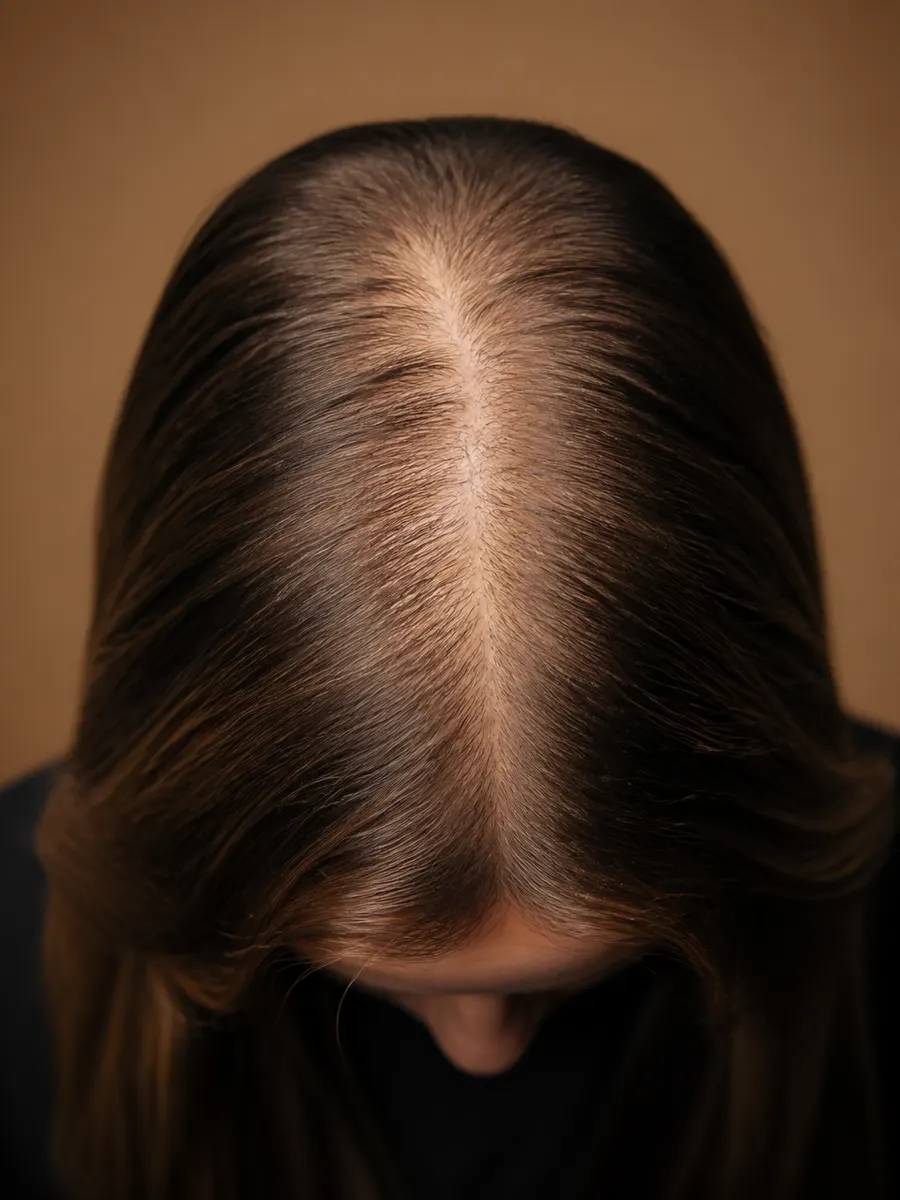
DC Bloom is our program for women whose hair is thinning. It starts with an assessment, then runs three PRP sessions, drawn from your own blood, spaced 3 to 4 weeks apart, one of them with exosomes. One of our nurses does the injections.
Results are gradual. In our other articles, we place the slowing of shedding between 4 and 8 weeks, the first new hairs around 3 months, and the full result between 6 and 12 months. Upkeep is then planned around your response, often one session every 6 to 12 months. No result is guaranteed.
One thing to know ahead of time: PRP isn't recommended during pregnancy or breastfeeding, as a precaution. If you're nursing, we wait until you've stopped, and we explain why. To place your own case, you can also read our path for women.

When does hair loss after childbirth start? According to the AAD, it peaks about four months after birth. Many new mothers notice it in the first months.
How long before my hair comes back? According to the AAD, most women see their usual fullness return by their child's first birthday.
Does breastfeeding change anything? For PRP, yes: we wait until breastfeeding is over. For the shedding itself, discuss it with your doctor.
When should I start to worry? If the volume hasn't returned after a year, or if your part is widening. Our scalp assessment also checks iron, thyroid and hormones.
Does DC Bloom work for everyone? No. At the assessment, we tell you honestly whether it's for you, even if that means pointing you elsewhere.
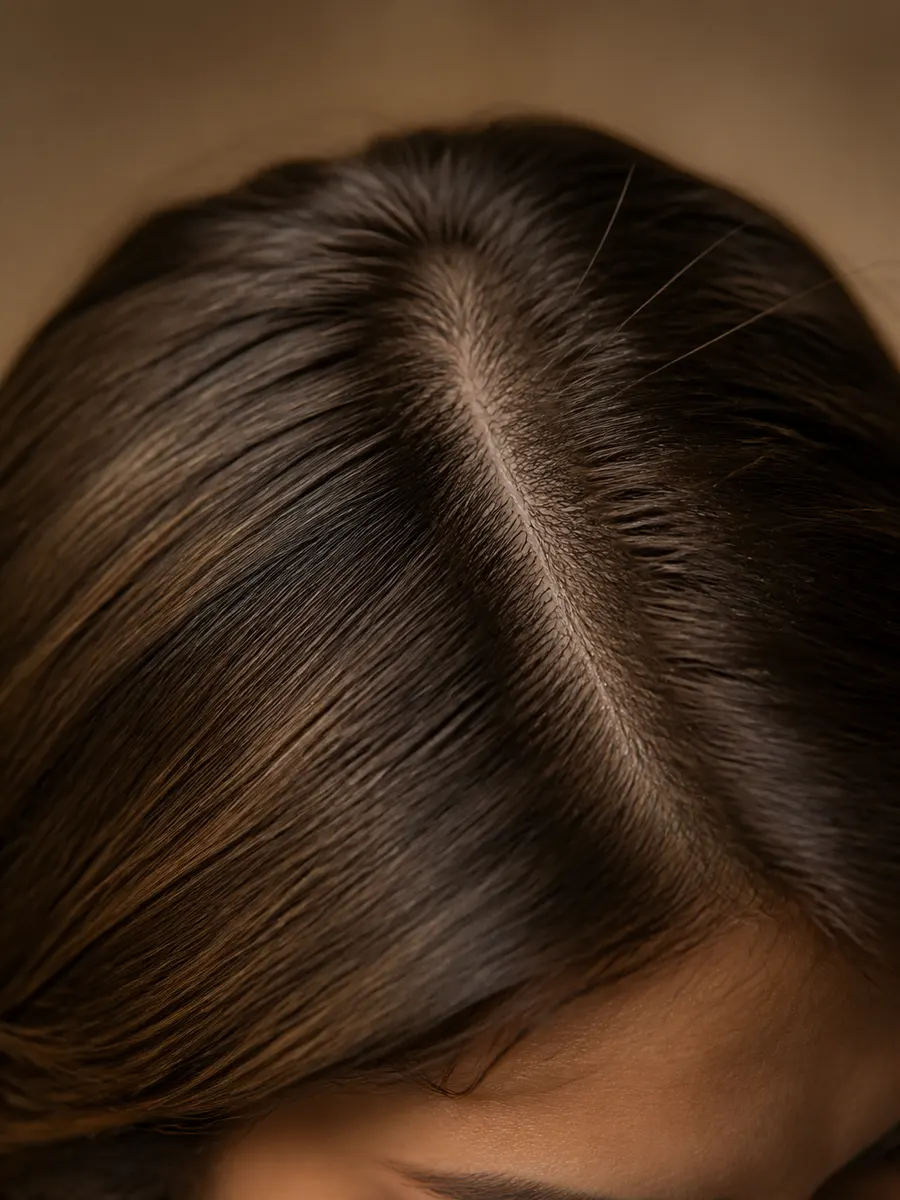
Why combine PRP and exosomes in one hair protocol, how the session goes, and our programs that bring both together.

Hair PRP concentrates the growth factors in your platelets and places them back into the scalp to wake follicles that are still alive.
It depends mostly on the stage of the loss. What studies show on hair PRP, who it works best for, and when it isn't enough.
The best plan starts with an assessment. We look at your skin and answer your questions, no obligation.

Hi, I am Stella. Ask me about a treatment, a price or the clinic, and I will point you to the right place.
Stella answers from the site. She does not diagnose and does not book. The conversation stays 24 hours on this device, and the clinic keeps a copy.