PRP and Exosomes Together: What the Combination Adds for Your Hair
Why combine PRP and exosomes in one hair protocol, how the session goes, and our programs that bring both together.

Hair PRP concentrates the growth factors in your platelets and places them back into the scalp to wake follicles that are still alive.

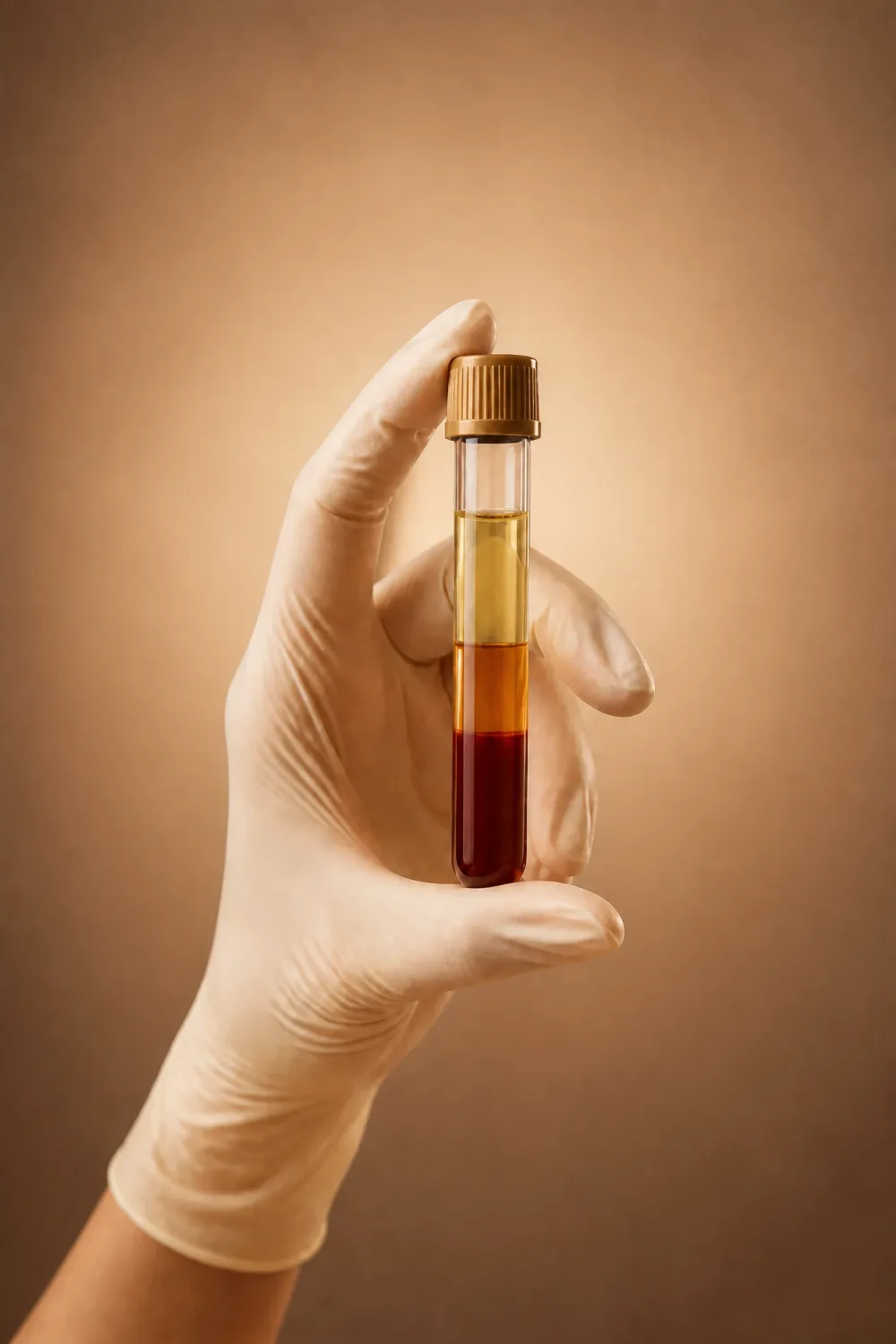
Hair PRP works with what your blood already contains. We draw a little blood, concentrate the platelets and their growth factors, then place that concentrate back into the scalp. Those growth factors wake dormant follicles and extend the hair's growth phase, as long as the follicle is still alive.
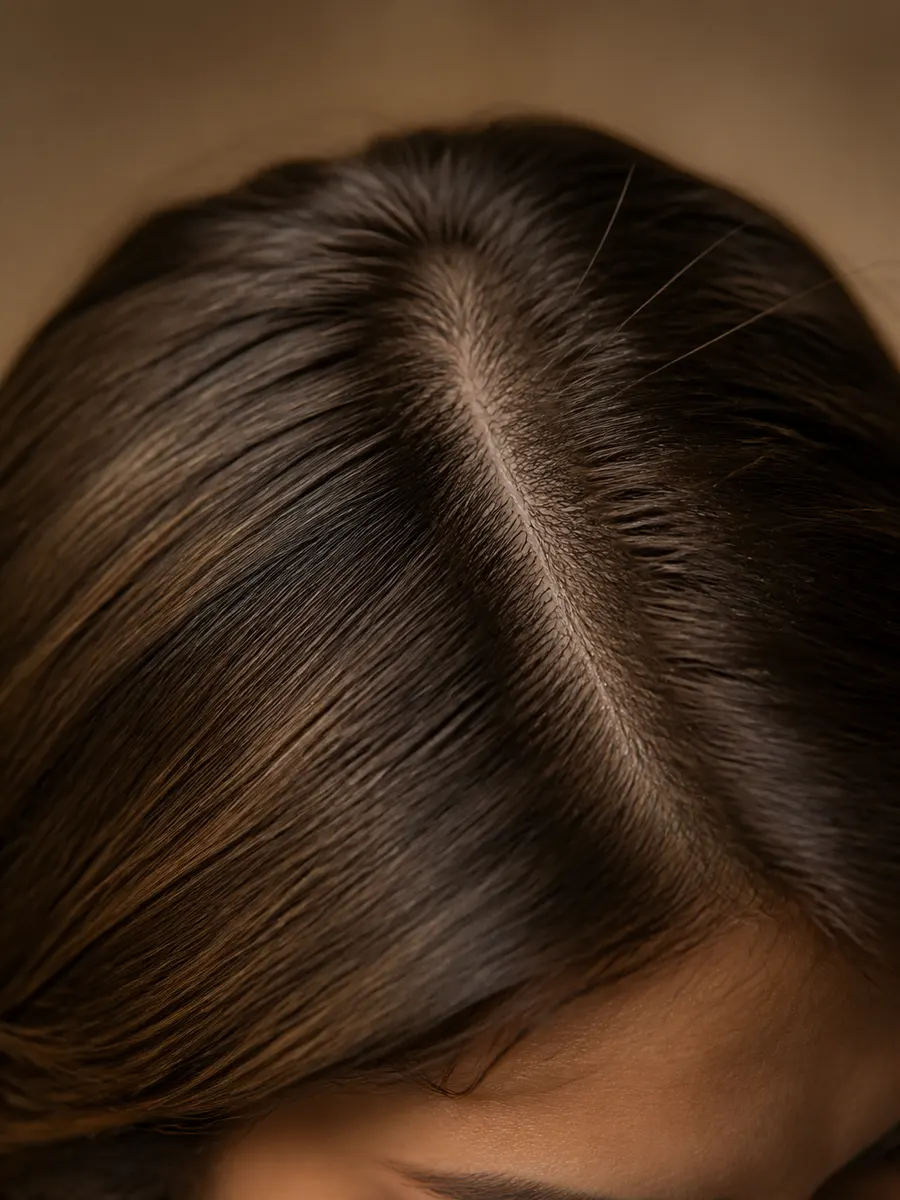
Maybe you've started counting the hairs in your brush in the morning, or noticing that your scalp shows a little more under the bathroom light. Shampoos and supplements have let you down, and surgery scares you. We get it. Hair loss affects women and men alike, at any age, and it changes how you see yourself.
Here's how PRP works, how a session goes, who it suits and what you can expect from it.
PRP, platelet-rich plasma, uses what your own blood contains to restart the follicle.
We draw a small amount of blood, spin it to concentrate the platelets and their growth factors, and place that concentrate back into the scalp. Everything we inject comes from you. The full treatment page is here.
Your platelets contain growth factors, meaning messengers that direct tissue repair. Once concentrated and placed back into the scalp, they:
Dormant follicles wake up, and those still working produce more. PRP doesn't create a follicle where none remains, though, and that is its main limit.
Everything starts with a scalp assessment, which we call the hair eligibility consultation. It serves to:
If PRP isn't right for you, this is when we tell you.
1. The blood draw. It's an ordinary blood draw, like any lab work. The amount taken is enough to prepare your PRP, and your body replaces it without difficulty.
2. Preparing the plasma. The blood spends about 15 minutes in a centrifuge, which separates its components and concentrates the platelets in the plasma.
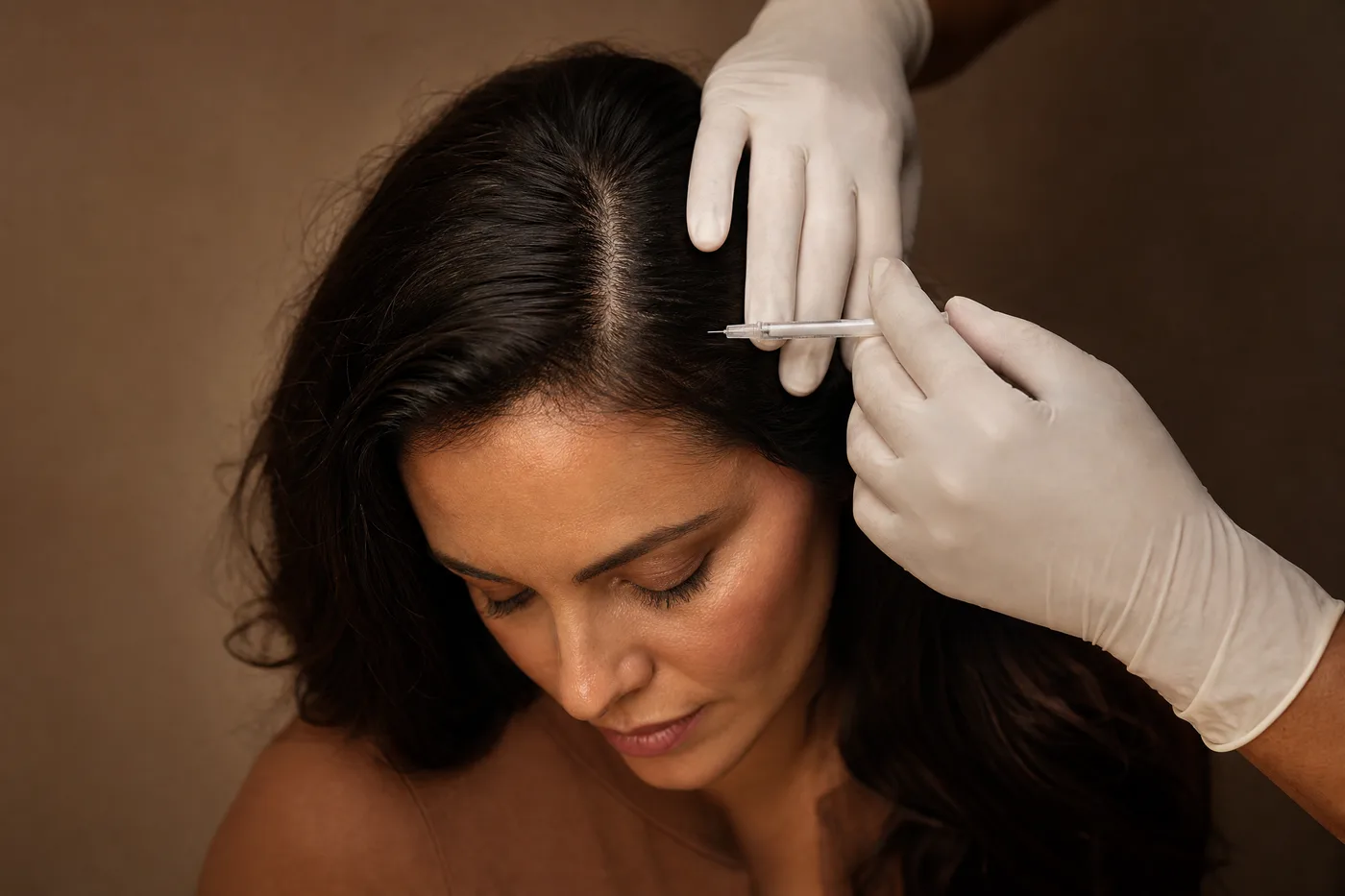
3. Placement in the scalp. We place the plasma in the areas to treat with a very fine needle. With local anaesthetic, it takes about thirty minutes.
4. Aftercare instructions. We explain what to do and what to avoid in the days that follow, because it affects the result.
One of our nurses performs the treatment. PRP is done with a needle, which puts it outside a medical esthetician's scope.
In women, we check iron, thyroid and hormones first. If the cause of the shedding isn't corrected, restarting the follicle does little.
If the loss is advanced and some areas are completely bare, a transplant is what to consider. PRP can then play a supporting role, caring for the scalp around the grafts, but it won't replace follicles that are gone.
We also won't point you toward finasteride or minoxidil. That's not our approach.
The markers below describe a typical progression. Nobody can guarantee you a result.
First effects, 4 to 6 weeks:
Around 3 to 4 months:
Around 6 to 9 months:
Publications on hair PRP are encouraging. They often show a gain in density and slower shedding. Protocols vary from one study to the next, though, and so do the numbers, so we won't give you a percentage.
One factor comes up in every publication: the stage of the loss. The earlier you start, the better the response.
Generally we aim for 3 to 4 sessions spaced 4 to 6 weeks apart. That rhythm allows:
It's the basis of our hair programs: DC Bloom for women, DC Prime for men.
To keep what has been gained, we plan maintenance sessions, generally one a year. PRP doesn't end hair loss; it wins back ground that then has to be held.
The product comes from you, so there's no risk of rejection or allergic reaction. Side effects, when they occur, stay mild:
Hair PRP is contraindicated in cases of:
You don't have to go through this list alone at home. The nurse reviews it with you, along with the list of your medications.
It comes from you. We introduce no foreign product.
The result arrives gradually, with no abrupt before-and-after, which makes it discreet.
It combines, on its own or with exosomes (DC Bloom Exo, DC Prime Exo) when you want to go further.
And if the blood draw puts you off, DC-Exo does the same work without one.
Protocols keep improving. Centrifugation techniques are more refined, and the concentrations obtained are more consistent than they were ten years ago. The field is still young, so we tell you what we see at the clinic rather than what we hope for.
There's nothing miraculous about hair PRP. It gives your follicles back what your blood already contains, while they can still use it.
A dormant follicle can wake up, but a follicle that's gone doesn't come back. That's what we look at during the assessment, and it's why we suggest coming in early.
To place your own case, start with our hair page.
Why combine PRP and exosomes in one hair protocol, how the session goes, and our programs that bring both together.

It depends mostly on the stage of the loss. What studies show on hair PRP, who it works best for, and when it isn't enough.
PRP comes from your blood, exosomes skip the blood draw. What sets them apart, what studies say, and how we choose with you.
The best plan starts with an assessment. We look at your skin and answer your questions, no obligation.

Hi, I am Stella. Ask me about a treatment, a price or the clinic, and I will point you to the right place.
Stella answers from the site. She does not diagnose and does not book. The conversation stays 24 hours on this device, and the clinic keeps a copy.