Hair Loss After Pregnancy: What Passes On Its Own, and When to Get Checked
Hair that falls out after childbirth usually grows back by itself. When to worry, what we check, and what DC Bloom can do if it doesn't.

Temples receding in your twenties? What the AAD says, what waiting costs you, and how DC Prime works while the follicle still responds.

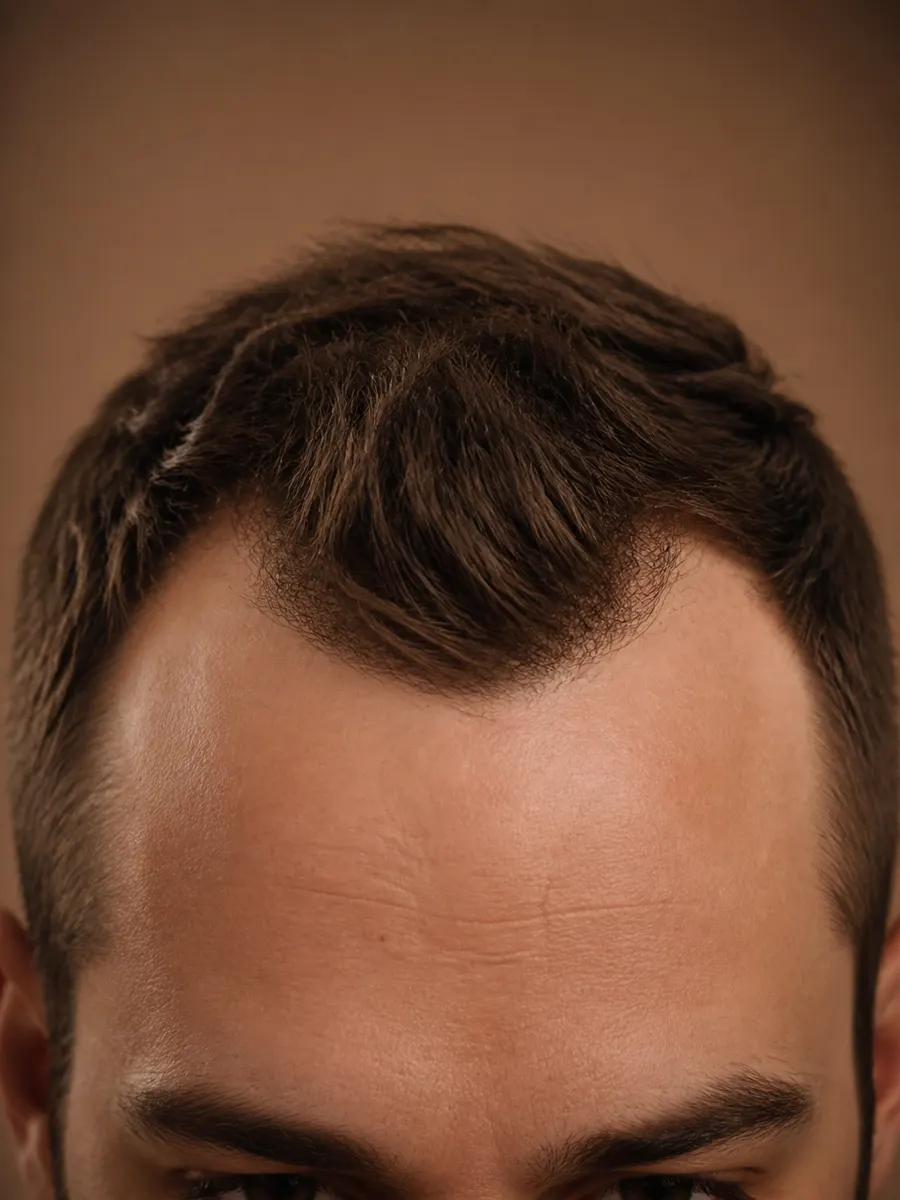
You notice your forehead looks bigger in photos, or your temples have lost some ground. At 25, you tell yourself it's too early to think about it. That's exactly the right time to ask the question. Here's what it might be, what the AAD says about starting early, and what waiting can cost you.
Possibly. According to the American Academy of Dermatology (AAD), hereditary hair loss can start as early as the teens, even though it usually appears later. In men, the first sign is often a receding hairline or a bald spot at the top of the head.
The signs are subtle. The AAD notes that you can have hair loss for months or even years before you notice it. And only an assessment says what it is: according to the AAD, a dermatologist can tell you which type of hair loss you have.
"The men who tend to see the best results start treatment soon after noticing hair loss." (American Academy of Dermatology)
A follicle doesn't vanish overnight, and that's the good news. It shrinks first, then, years later, it stops responding. Our program only works on follicles that are still active: that's why timing matters.
| You act early | You wait for years | |
|---|---|---|
| The follicle | It still responds | It may no longer respond |
| Our DC Prime program | The right stage | Not for you if the area has been bare for years |
| Your option | A path of a few months, then upkeep | Often a hair transplant, which we refer you to |
| What we tell you | "It's worth a try" | "This is no longer our treatment, here's what's next" |
None of this is a guarantee. PRP has fair but variable evidence, and the result depends on each person. What we can promise is an honest answer about where you stand today.
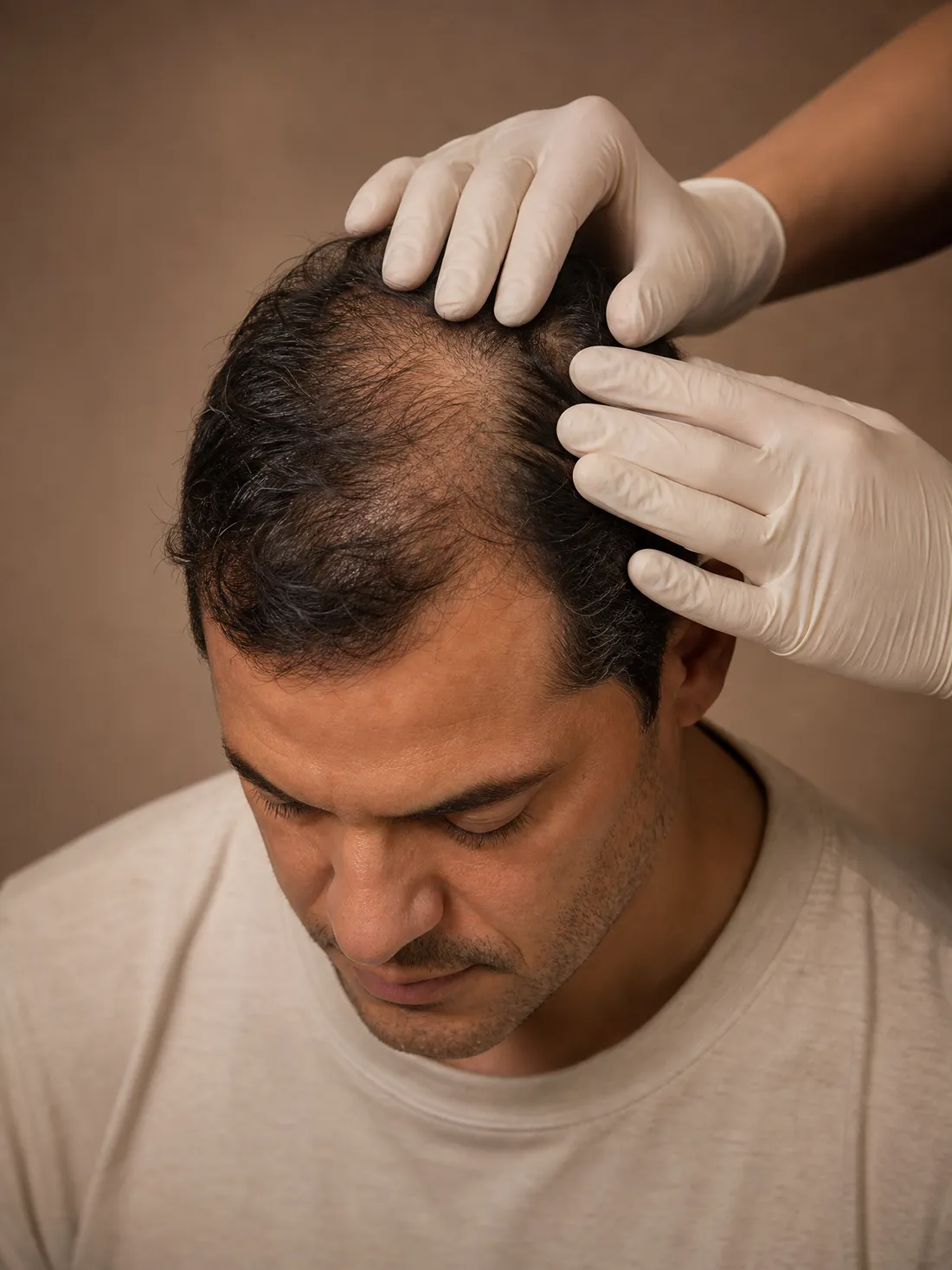
DC Prime is our program for men. It's meant for the early stages: receding temples, a thinning crown. The path is four sessions over two to three months:
One of our nurses does the injections. The timeline from our other articles applies here too: shedding slows between 4 and 8 weeks, new hairs show around 3 months, the full result lands between 6 and 12 months. Upkeep follows, often one session every 6 to 12 months, depending on your response.
The AAD presents finasteride and minoxidil as approved treatments. We never suggest them. It's a clinic choice: DC Prime relies on your own follicles, rather than on a medication taken for life. If you already take one, we talk about it at the assessment, without judgment.
Here's what we say up front, without your having to ask anything:
To place your own case before you come in, read our path for men.
Is it normal for my hair to recede at 25? It can be, or it can be the start of hereditary hair loss. The AAD says it can begin as early as the teens. An assessment tells the difference.
Should I start right away? The AAD observes that men who start soon after noticing hair loss tend to see better results.
What happens if I wait? The follicle may stop responding. In that case, DC Prime is no longer the right treatment, and we point you elsewhere, such as a hair transplant.
Does DC Prime replace a medication? We don't suggest finasteride or minoxidil. DC Prime relies on your own follicles, and we discuss it at the assessment.
Does it work for everyone? No, nothing is guaranteed. At the assessment, we tell you honestly whether it's for you.

Hair that falls out after childbirth usually grows back by itself. When to worry, what we check, and what DC Bloom can do if it doesn't.
Why combine PRP and exosomes in one hair protocol, how the session goes, and our programs that bring both together.

Hair PRP concentrates the growth factors in your platelets and places them back into the scalp to wake follicles that are still alive.
The best plan starts with an assessment. We look at your skin and answer your questions, no obligation.

Hi, I am Stella. Ask me about a treatment, a price or the clinic, and I will point you to the right place.
Stella answers from the site. She does not diagnose and does not book. The conversation stays 24 hours on this device, and the clinic keeps a copy.