PRP and Exosomes Together: What the Combination Adds for Your Hair
Why combine PRP and exosomes in one hair protocol, how the session goes, and our programs that bring both together.

Shedding slows by 4 to 8 weeks, new hairs show around 3 months, density peaks between 6 and 12 months. The timeline, step by step.
Shedding slows from 4 to 8 weeks, new hairs become visible around 3 months, and the result is complete between 6 and 12 months. So the first signs come fairly quickly, but regrowth itself takes its time. Hair PRP is your own platelets, concentrated and placed back into the scalp.
We get this question almost every time, in the days after a first session. We understand: you look at your reflection in the morning searching for the smallest sign, and nothing seems to change.
Can it go faster? No. PRP doesn't work like a haircut; it follows the pace of the hair itself. Here's the timeline, step by step, and what you can watch for while you wait.
PRP doesn't mask anything. It works on the follicle, at depth, and hair grows at its own pace.
The hair cycle:
PRP first has to wake the dormant follicles, then carry them into a new cycle. The work starts at the first session, but it takes weeks before it shows.
The markers below describe a typical progression. The response varies from person to person, and nobody can guarantee you a result.
What happens without your seeing it:
What you might notice:
If nothing jumps out, don't be discouraged. At this stage, that's normal.
This is the first sign, and often the most encouraging.
At the same time, hair feels thicker to the touch, its texture changes and the scalp is less sensitive.
Many people regain confidence at this point. It isn't regrowth yet, but the follicle is responding.
At three months, you should start to see:
On quality, hair is clearly thicker, shine returns and styles hold better.
Why three months? Because a new hair needs at least that long to grow through the scalp and become visible. No product shortens that delay.
Shedding stabilizes and hair holds up better.
After this period, the goal is keeping the result. That's what maintenance is for, covered in this article.
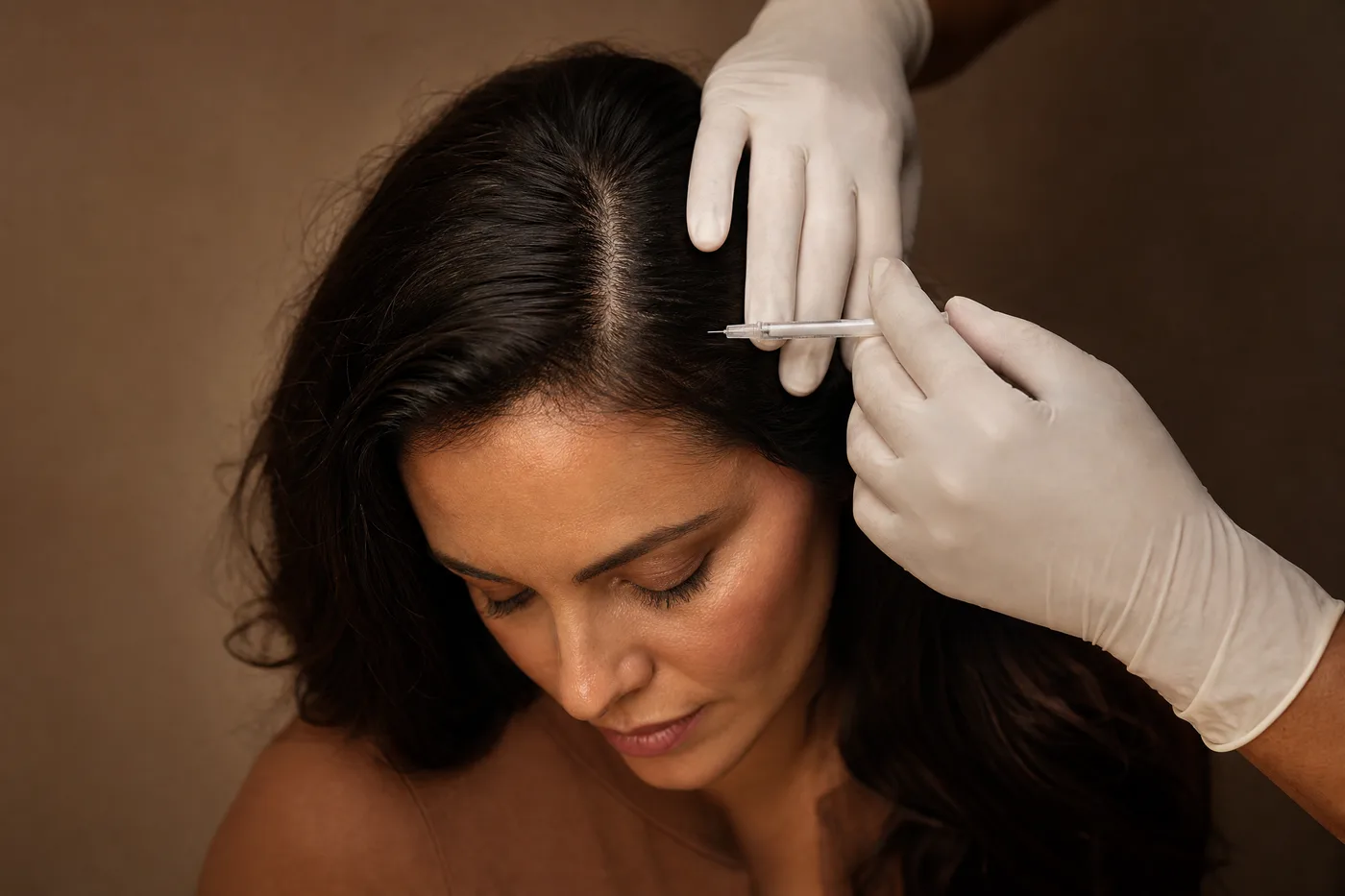
When you see yourself every day, you don't notice gradual change. It's like a child growing up: you mostly notice it in last year's photos.
At the start, we take standardized photos of every area, with the same lighting, front, profile and crown.
At 3, 6 and 12 months, we retake the same photos in the same conditions so they can be compared, with a density measurement if needed.
These photos show progress objectively during the wait. They also let us adjust the protocol if the response isn't there. They often reveal improvements the person hadn't noticed themselves.
Every morning at the mirror, you look for a change that's still a few weeks away. You've put time, hope and money into this treatment. It would be surprising if you weren't impatient.
Look after your scalp with gentle shampoos and a massage, eat enough protein and drink water.
Take your own photos every month too, in the same conditions. On days when it feels like nothing is happening, you'll be able to compare.
The response is often quicker in someone younger, in good general health, whose loss is recent or moderate.
Habits help too: a nutrient-rich diet, 7 to 8 hours of sleep, managed stress and physical activity.
Drink enough water, correct deficiencies if bloodwork shows them, protect your scalp from the sun and avoid aggressive chemical treatments. The most important factor is still keeping to the session schedule.
If that's your case, we won't let you keep paying for sessions that do nothing.
We do a reassessment at 4 months. We look at the quality of your PRP, your response, the lifestyle habits that might be holding the result back, and whether the protocol needs adjusting.
What we can propose next:
And if nothing can work in your case, we'll tell you rather than sell you one more session.
The result looks natural. Regrowth blends in with your existing hair, with no abrupt change, and nobody guesses you had a treatment.
Once obtained, the gain lasts 12 to 18 months, and one maintenance session a year is usually enough to keep it.
The scalp is healthier too, and hair is more resilient, shinier and easier to style.
Allow 4 to 8 weeks to see shedding slow, about 3 months for the first new hairs, and 6 to 12 months for the full result. That's the time a follicle needs to restart. If someone promises you a visible result in three weeks, be wary: the hair cycle doesn't allow it.
To place your case, start with our hair page.
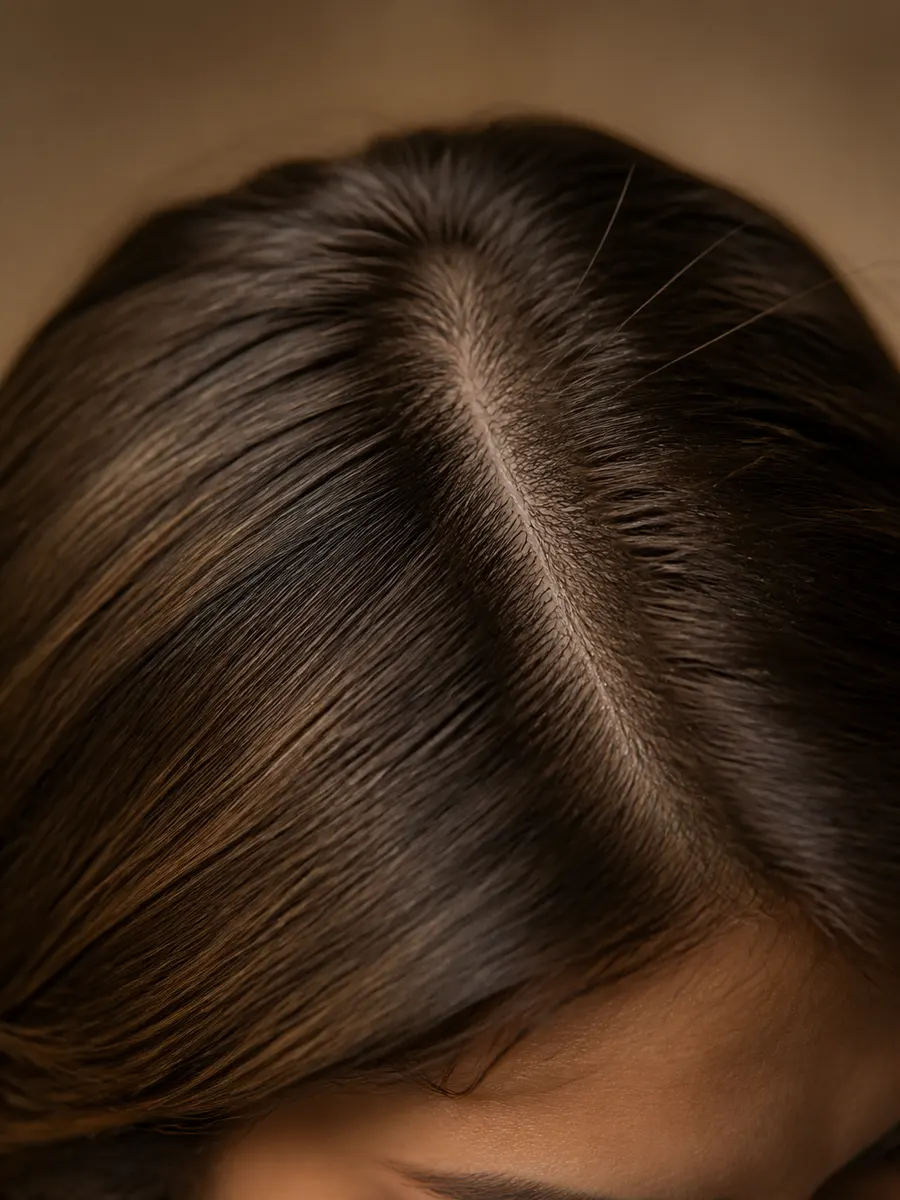
Why combine PRP and exosomes in one hair protocol, how the session goes, and our programs that bring both together.

Hair PRP concentrates the growth factors in your platelets and places them back into the scalp to wake follicles that are still alive.
It depends mostly on the stage of the loss. What studies show on hair PRP, who it works best for, and when it isn't enough.
The best plan starts with an assessment. We look at your skin and answer your questions, no obligation.

Hi, I am Stella. Ask me about a treatment, a price or the clinic, and I will point you to the right place.
Stella answers from the site. She does not diagnose and does not book. The conversation stays 24 hours on this device, and the clinic keeps a copy.