What Age to Start Firming Treatments: What Changes at 25, 35 and 50, and What Can Still Wait
What skin does at 25, 35 and 50, when a firming treatment becomes useful, what can still wait, and why we will be the ones to tell you so plainly.

After menopause, skin loses its firmness faster than before. What the research reports, what heat can change, and what it cannot change at all.

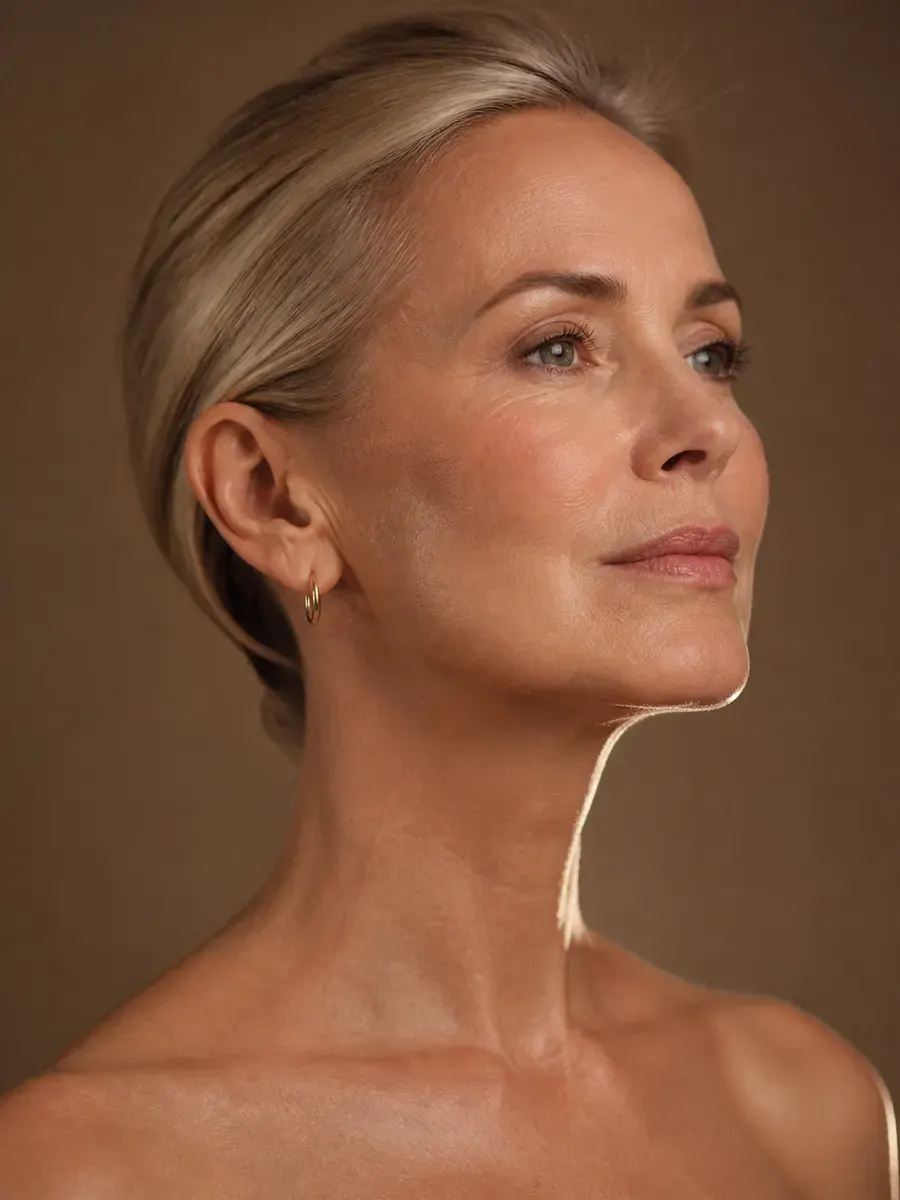
If your skin seems to have loosened all at once in the years around menopause, you are not imagining it. A literature review published in 2022 reports that skin loses nearly a third of its collagen in the first five years after menopause. It often shows first at the neck and jawline.
This article explains what is happening in the skin, what research measures and what it does not, and what can still change, with its limits.
The change is rarely one specific line. It is more a firmness that fades: a less defined jaw edge, softer skin on the neck, a face that seems to have slid down a little. Many women say they no longer quite recognise themselves, without being able to point to one spot.
It is a common change that follows the hormonal shift. There is nothing to blame yourself for.
Oestrogen helps maintain collagen, the fibre that keeps skin dense and firm. When oestrogen levels drop, collagen declines faster. According to the review by Kamp et al. (Clinical and Experimental Dermatology, 2022), the loss is fast at first:
"A rapid decline in skin collagen is seen following menopause, with nearly a third lost in the first 5 years."
The same review then reports a decline of about 2.1% per year over the following fifteen years. It also notes that this loss tracks the years since menopause rather than age, and that elastin, the fibre that gives skin its spring, breaks down: the skin becomes looser and more lined.
That is why two women of the same age can have very different skin: the clock that matters here is the menopause one.

These figures are useful, but it helps to know where they come from. The review does not say which part of the body the collagen was measured on. And on facial skin, the authors call for more research, notably on oestrogen applied to the skin.
| What the review reports | What it does not say |
|---|---|
| Nearly a third of collagen lost in five years | Which part of the body was measured |
| About 2.1% per year for fifteen years after | Whether the face follows the same pace |
| A loss tied to the years after menopause | What happens in any one woman |
In other words, the trend is solid, but your own face remains the best guide to what is happening for you.
What people call "a face that drops" often mixes two things:
Both show up together, but they do not respond to the same treatments. Knowing which one dominates for you is the first step. The article on firming the face without injections explains the difference in more detail.
The simplest step happens at home: the American Academy of Dermatology recommends a broad-spectrum sunscreen, SPF 30 or higher, every day before going outdoors.
In a clinic, controlled heat is one way to stimulate collagen. Radiofrequency heats the dermis, the skin's supporting layer; collagen tightens, and the skin then makes more over several weeks.
A 2025 review (Kumar et al., Aesthetic Surgery Journal Open Forum) pooled 15 studies and 1,230 people, mostly women. It reports better firmness and texture of the face. The authors also point out limits: small groups, non-standardised measurements, studies often sponsored by manufacturers. And we found no study that isolates post-menopausal skin. So we cannot tell you that heat works better or worse after menopause; we assess it on your skin.

It is worth saying plainly, so you know what to expect:
The review by Kamp et al. reports that hormone therapy has an effect on skin collagen. That is a medical decision that takes your whole health into account, and it is made with your doctor. We neither recommend it nor advise against it: it is outside our field.
Is what you see skin laxity that heat could tighten, or mostly lost volume? That is the real question, and it can be sorted out in front of a mirror before it is sorted out in a clinic. The article am I a candidate for radiofrequency offers a simple test to tell them apart.
Yes. Research describes a fast loss of collagen in the first years after menopause. How much varies from one woman to another.
Partly. Collagen can be stimulated and skin firmness improved, but the same treatment cannot bring back lost volume or remove excess skin.
That is a question for your doctor. Research is looking at it, but the decision depends on your whole health, and it is not ours to make.
We found no study that separates this case. So we assess your own skin, without promising a result in advance.
Whenever it bothers you. There is no set date or minimum age.
To understand what happens in the skin when collagen declines, the collagen loss page describes it in detail.

What skin does at 25, 35 and 50, when a firming treatment becomes useful, what can still wait, and why we will be the ones to tell you so plainly.
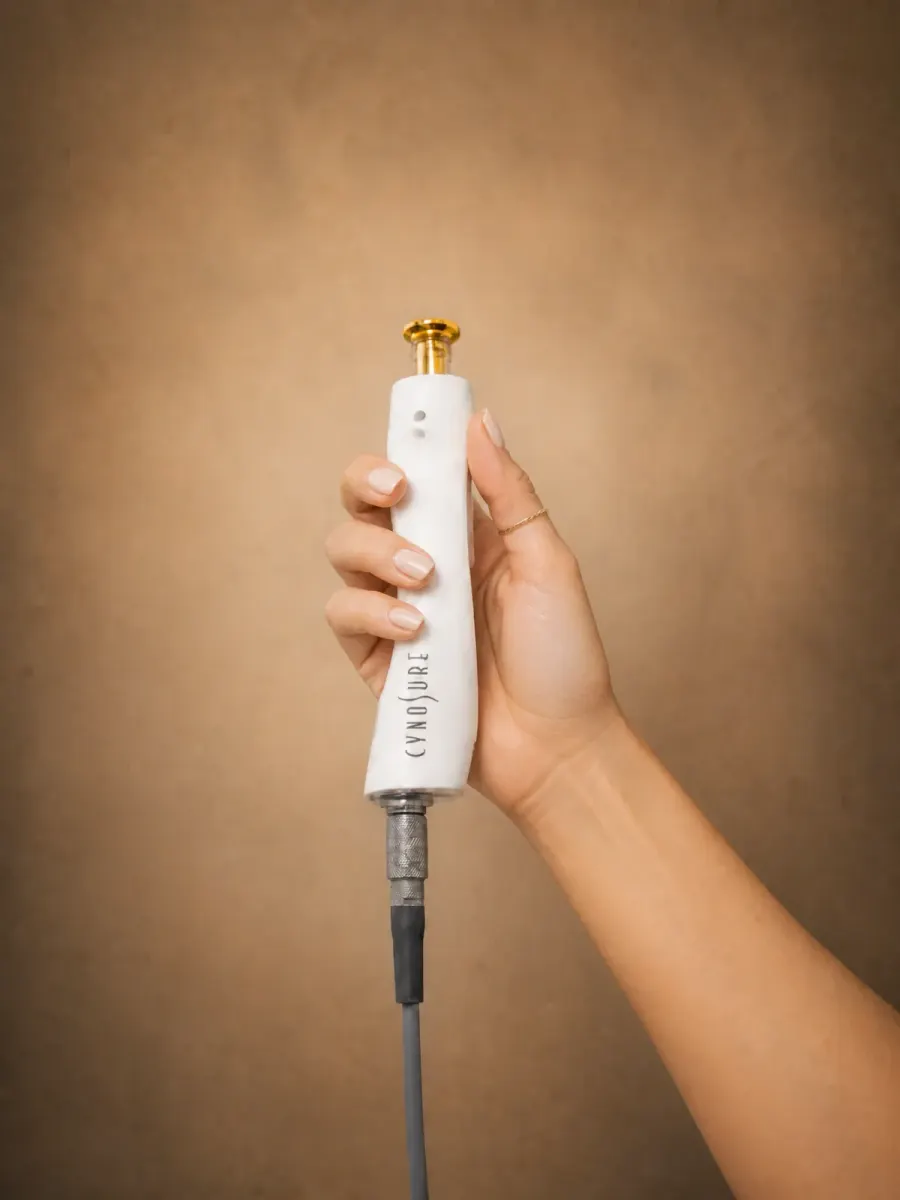
TempSure or XERF: two radiofrequencies, two depths of heat. Which one fits what you see in the mirror, and when the gentler one is truly enough.
One word, three technologies, very different bills. What changes the price of a face-tightening treatment, and where you can read our own prices.
The best plan starts with an assessment. We look at your skin and answer your questions, no obligation.

Hi, I am Stella. Ask me about a treatment, a price or the clinic, and I will point you to the right place.
Stella answers from the site. She does not diagnose and does not book. The conversation stays 24 hours on this device, and the clinic keeps a copy.