Botox: the long-term effects, without the myths
What science actually documents after years of neuromodulator, the myths to set aside, and Health Canada’s safety benchmarks.

How a neuromodulator works, the difference between Botox and Dysport, the right time to start, and why looking natural is a question of dosing.


Few treatments are as well known, and as misunderstood, as Botox. Between the frozen faces you see in movies and the promises of eternal youth, the reality is simpler and more reassuring.
Let's sort it out: what a neuromodulator really does, what it doesn't do, and how to get a natural result.
"Botox" is a brand name, but the category is called neuromodulators. The principle: temporarily relax a specific muscle by interrupting the nerve signal that tells it to contract.
The thing is, the expression lines in the upper face (forehead, the frown lines between the brows, crow's feet) are carved by these repeated contractions, year after year. By relaxing the muscle, you let the skin smooth out and you keep the line from deepening.
It's reversible: the effect fades over a few months, and the muscle goes back to work if you don't renew.
They're two neuromodulators from the same family, with small differences in formulation and diffusion. In the hands of an experienced injector, both give excellent results. The choice comes down to the area, your anatomy, and how you've responded in the past.
On the neuromodulator side, our pricing is clear and by the unit:
Taxes extra. We bill by the unit actually used, not by some vague package: you know exactly what you're paying.

There's no "mandatory" age. The right time depends on your skin and your goals.
A line that's still "dynamic" (only shows up when you move) responds better than a line "at rest" that's already etched in. That's one of the reasons starting early, sparingly, often gives the most natural result.
Our DC-Tox program is made exactly for someone who wants steady, predictable upkeep at a controlled price.
This matters, because a lot of disappointment comes from a poorly targeted treatment.
The neuromodulator works on lines caused by muscle movement. It doesn't fill lost volume and it doesn't rebuild a structure. For lost volume (cheeks, hollow under-eyes, jawline, lips), that's where fillers come in.
Often the nicest result comes from a thoughtful combination: the neuromodulator for expression, filler for volume. We dose one and the other to suit your face, never by a single recipe.
A good plan doesn't try to inject everything. It looks for the minimum that still looks like you.
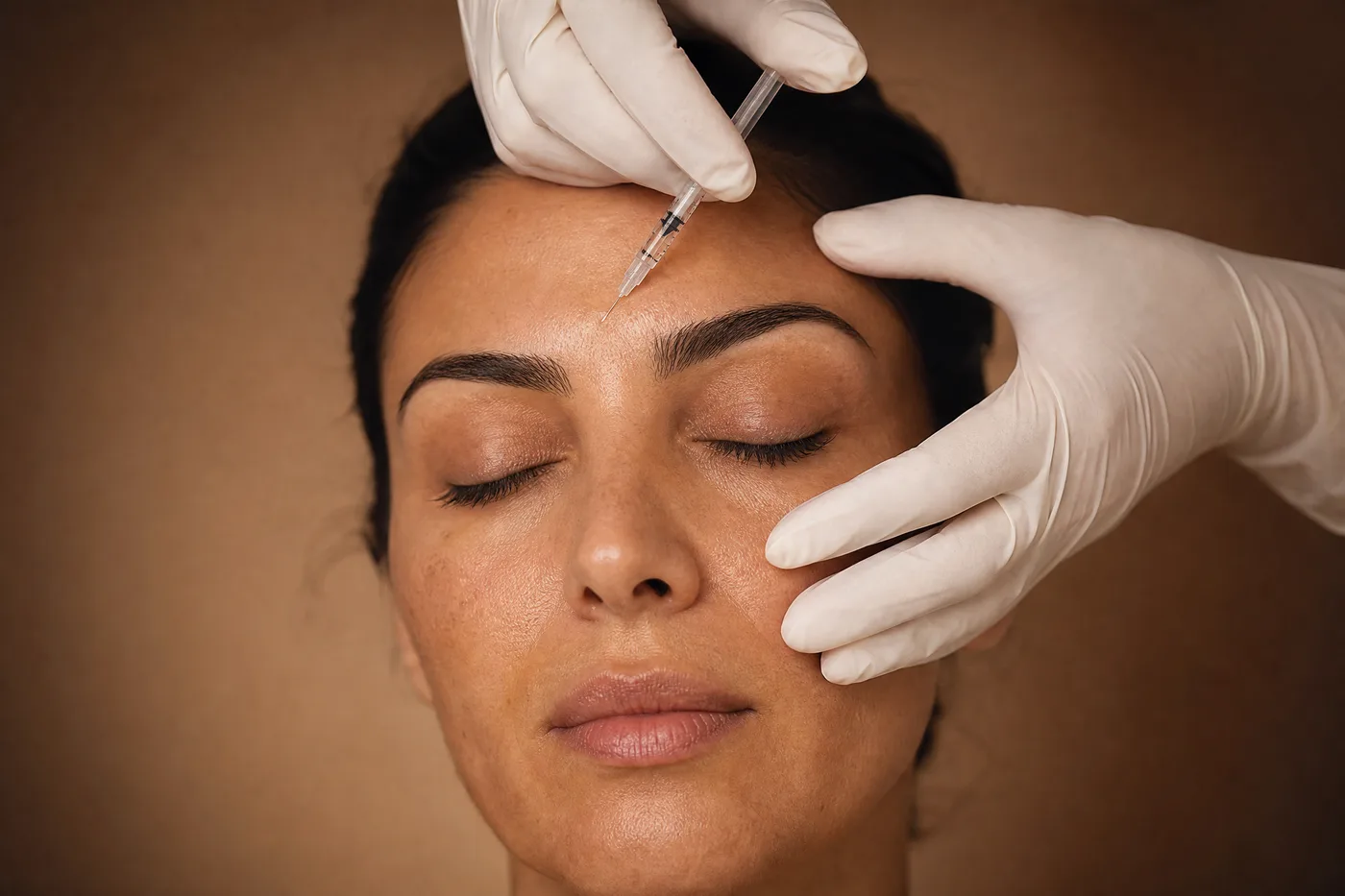
The "frozen" face isn't an effect of the product, it's an effect of overdosing or poor placement. Done right, a neuromodulator softens without erasing your expressions: you still look like yourself, just rested.
The key is an injector who listens to your goal, respects your anatomy, and knows when to stop. We'd rather start cautiously and adjust as needed than do too much at once.
A neuromodulator relaxes a muscle to smooth expression lines, temporarily and reversibly. It doesn't replace filler, and it doesn't give you a frozen face when it's dosed well. The best starting point is still an assessment, where we look at your skin and your priorities before proposing a plan. The consultation comes with no obligation.

What science actually documents after years of neuromodulator, the myths to set aside, and Health Canada’s safety benchmarks.

What really drives the price of a filler, our starting rates, and why the cheapest often costs more.

Under the eye, it all depends on the type of line. A mirror test is often enough to see which of the two treatments is yours.
The best plan starts with an assessment. We look at your skin and answer your questions, no obligation.

Hi, I am Stella. Ask me about a treatment, a price or the clinic, and I will point you to the right place.
Stella answers from the site. She does not diagnose and does not book. The conversation stays 24 hours on this device, and the clinic keeps a copy.