PRP and Exosomes Together: What the Combination Adds for Your Hair
Why combine PRP and exosomes in one hair protocol, how the session goes, and our programs that bring both together.

No, most people tolerate it well. What you feel during the session, and why there’s no blood draw involved.

Does the exosome treatment hurt? In the vast majority of cases, no. And if needles scare you, there's a route that skips them entirely.
You've heard about exosomes for hair, and this is the question holding you back. We get it, nobody wants to grit their teeth through a session. We'll explain what you feel with each method, and how we choose with you.
Exosome hair treatments are well tolerated by most people.
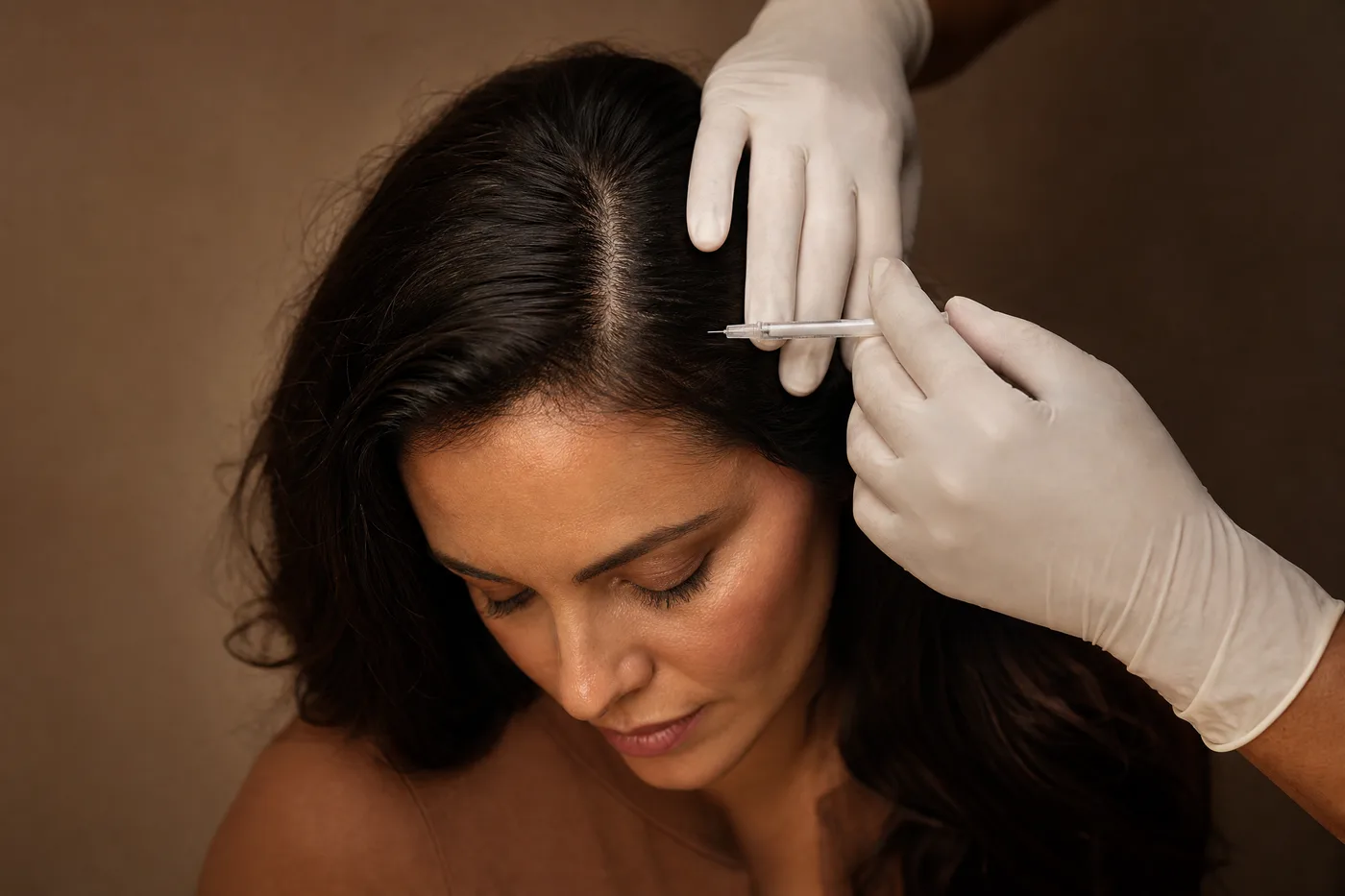
When exosomes are placed by micro-injection into the scalp, here's what to expect:
If you're sensitive, we can apply numbing cream fifteen minutes beforehand. After a first session, the phrase we hear most often is "that's it?".
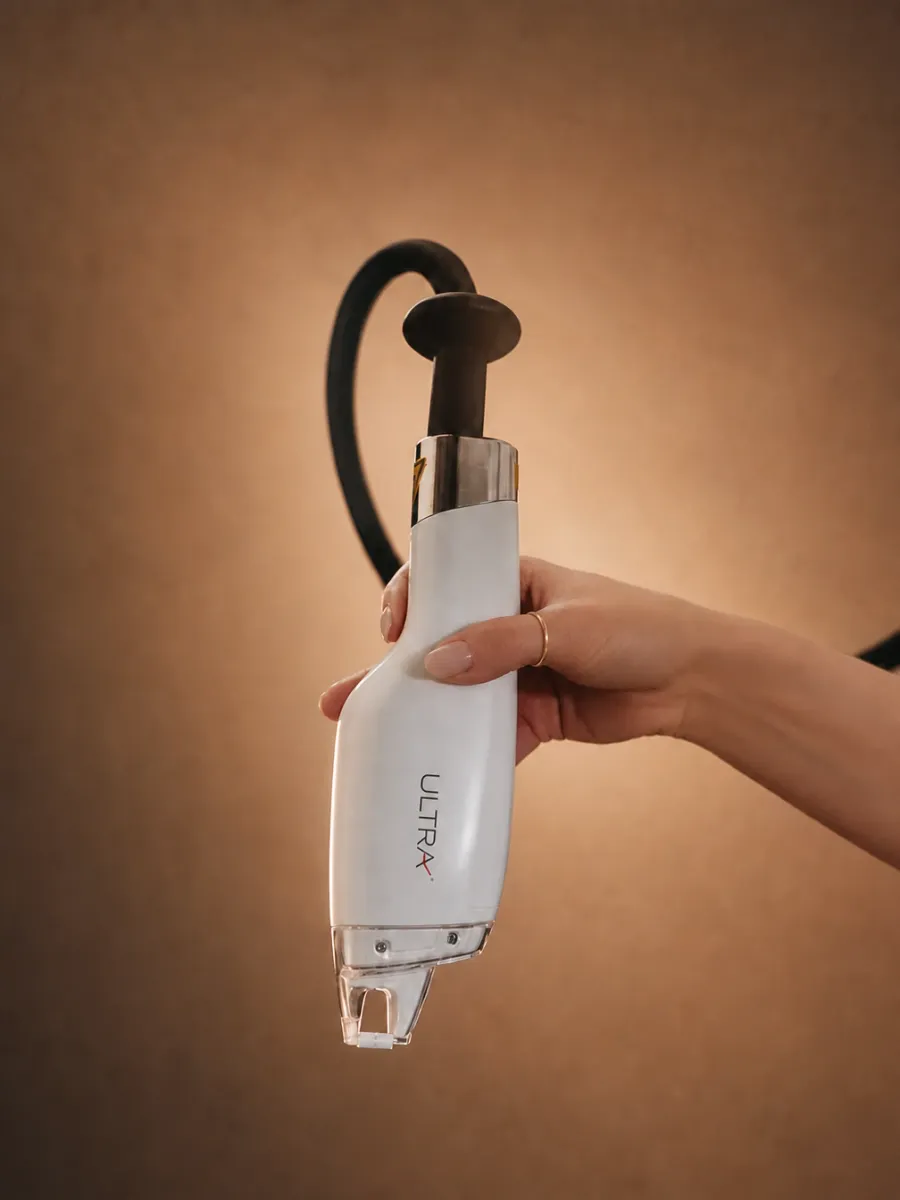
If needles truly scare you, there's another route. We use the laser, then apply the exosomes. That's the treatment we call Ultra Exo.
The LaseMD Ultra creates invisible micro-channels in the skin of the scalp. We then apply the exosomes, which travel down those channels, without any need to prick the skin.
What you feel:
During. There's nothing to dread and no anaesthetic to wait for, and the session takes about ten minutes.
After. Redness is very discreet, and you go back to your day right away, with nothing to hide from anyone.
| Micro-injections | Laser and exosomes | |
|---|---|---|
| Sensation | Light tingling | Gentle warmth |
| Anaesthetic | Optional | Unnecessary |
| Aftermath | Redness 2 to 4 h | Discreet redness |
| What holds some people back | The needle | Nothing |
The difference between the two comes down mostly to the needle. If it doesn't bother you, micro-injections remain a comfortable option.
We don't know yet. The laser opens absorption pathways that let growth factors travel deep, and the available data is encouraging. However, no study has yet directly compared the two methods on the scalp.
Both options stand up. We choose with you based on your tolerance and your situation, since no ranking between the two exists.
The timeline, either way:
These markers describe a typical progression, and the response varies from person to person.
We take the time to explain each step and answer your questions before starting. If the idea of the session stresses you out, tell us. We organize the session accordingly, and it's never a problem.
Yes, it has a lot of nerve endings. That's why we work with very fine needles, or with a non-ablative laser that creates no wound.
Few, and they're brief. Light redness gone within 24 hours, and sometimes a cool sensation. The subject is covered in detail in our article on safety.
Yes. There's no sedation and no dressing, and you keep full autonomy.
Four sessions three to four weeks apart, whether you choose the needle or the laser. The protocol is the same, only the comfort changes.
They're microscopic vesicles your cells produce naturally to communicate. They carry growth factors, proteins and micro-RNA.
On the follicle, they:
They restart your own regeneration process with a signal from outside. Exosomes are not approved by Health Canada for hair regrowth, even though their use is common in clinics.
Comfort. It's equivalent with injections, and better with laser, since there's neither needle nor blood draw.
Effectiveness. PRP is better documented and has more hindsight, while exosomes offer a more consistent concentration. Each has its advantages, and neither clearly wins over the other.
The two don't do the same thing. A transplant moves existing hair to bare areas, while exosomes wake follicles that are still alive. If you have completely bare areas, a transplant is what you need, and we'll tell you so.
The right profile:
The contraindications:
Every path starts with a scalp assessment. We look at the history of your loss and its possible causes, then talk about what you expect and your tolerance for treatment.
We then recommend the needle or the laser, based on what suits you.
Being afraid of needles is a perfectly valid reason not to have a treatment, and that's why the no-injection route exists.
Comfort matters for the result too. Someone who dreads every session often ends up dropping their protocol before the end, and an unfinished protocol rarely gives the result hoped for.
To place your case, start with our hair page.
Why combine PRP and exosomes in one hair protocol, how the session goes, and our programs that bring both together.

Hair PRP concentrates the growth factors in your platelets and places them back into the scalp to wake follicles that are still alive.

It depends mostly on the stage of the loss. What studies show on hair PRP, who it works best for, and when it isn't enough.
The best plan starts with an assessment. We look at your skin and answer your questions, no obligation.

Hi, I am Stella. Ask me about a treatment, a price or the clinic, and I will point you to the right place.
Stella answers from the site. She does not diagnose and does not book. The conversation stays 24 hours on this device, and the clinic keeps a copy.