Is the Unlimited Tattoo Removal Package Worth It? Who It Fits and Who It Doesn't
One fixed price per tattoo, every session for two years: from what size the package makes sense, and when paying per session is the better choice.

The laser targets melanin, not just ink. What that changes on darker skin, why we hold back here, and what an in-person assessment really settles.

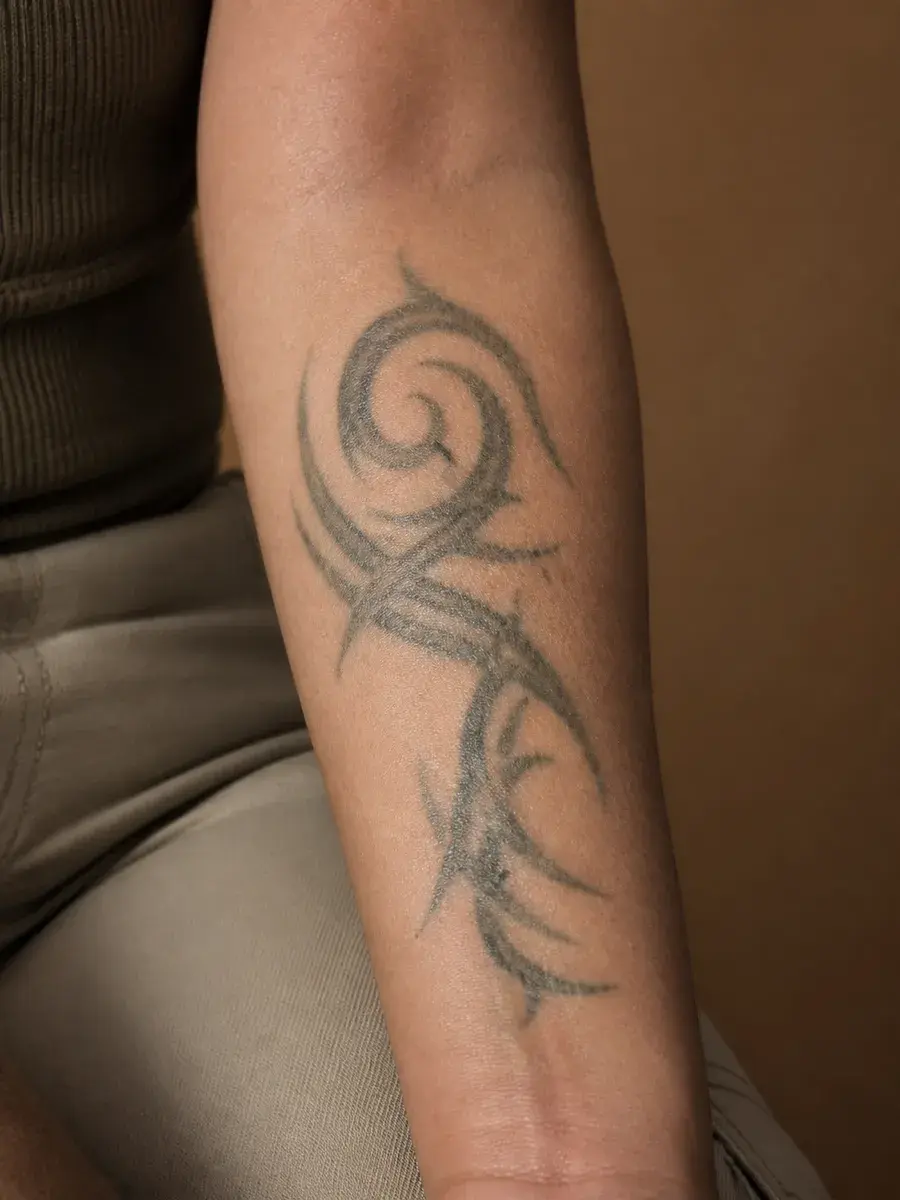
On darker skin, a tattoo-removal laser can damage the colour of the skin around the tattoo, because it also targets melanin. Treatment is technically possible, but its safety isn't certain. So here, we prefer not to treat darker skin types.
You may have read that a laser "works on all skin types," or been turned away with no explanation. Here's what the laser sees in your skin, what can happen, what research says, and what an in-person assessment looks at.
A tattoo-removal laser sends a very short pulse of light that pigments absorb. Ink absorbs that light and breaks into particles your body clears, session after session. But ink isn't the only pigment in your skin: melanin, which gives your skin its colour, absorbs light too.
On fair skin, there's little melanin around the ink, and the laser works mostly on the tattoo. The darker the skin, the more melanin there is, and the harder it is for the laser to tell ink from skin. It's the same reason a recent tan calls for caution.
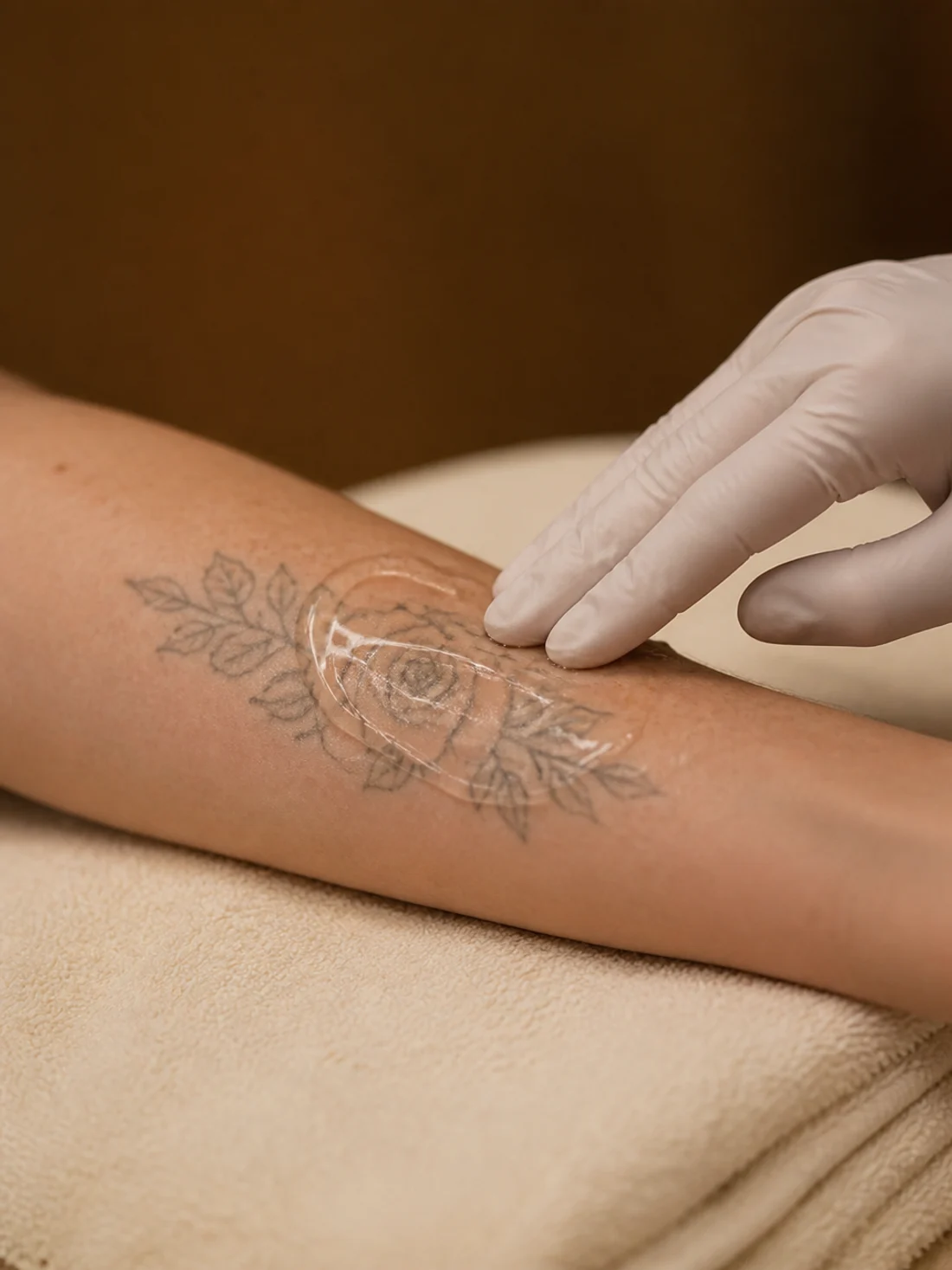
When melanin absorbs part of the energy, the skin can react by changing colour:
These changes can fade over time or last. According to Cleveland Clinic, people with skin of colour face a greater risk of lighter skin patches after a treatment that targets the deeper layers of the skin, and laser tattoo removal is among the possible causes. No one can predict ahead of time how your skin will react, and that's the heart of our caution.
Studies on tattoo removal in darker skin are few, often on small groups. A systematic review of picosecond lasers (Reiter et al., Lasers in Medical Science, 2016) included six human trials, 160 people in all. Reported side effects included lighter and darker skin patches, and the authors rate the risk of bias as medium to high in most studies.
In other words, research doesn't show that a laser is safe on every skin. Nor does it show the risk is the same for everyone. The data are missing, and we'd rather say so plainly.
Treating darker skin is possible, but it's not certain that it's safe. We prefer not to take that risk.
That's the clinic's rule for tattoo removal with PicoSure, and we tell you before you book. It isn't a judgment about your skin or your tattoo. A tattoo fades over several sessions, and a patch of changed skin colour can show longer than the ink you wanted gone.
It's a fair question: for laser hair removal, we do treat darker skin. The two rules don't contradict each other, because the target isn't the same.
| Laser hair removal | Laser tattoo removal | |
|---|---|---|
| What the laser targets | The pigment in the hair, under the skin | The ink lodged in the skin |
| Laser used on darker skin | A wavelength that passes surface melanin better | PicoSure |
| Our rule on darker skin | We treat, with adapted settings | We hold back |
Our article on laser hair removal and darker skin explains the rule from the other side.
A photo sent by text doesn't replace an assessment. In person, we look at:
Not all olive or dark skin is in the same situation, and we decide that with you at the assessment. If the answer is no, we explain why.
A tan adds melanin to the skin's surface, so it raises the same issue on a smaller scale. Before treating with a laser, we wait at least 2 weeks, ideally 2 to 4, after your last sun exposure. Naturally fair skin with a summer tan waits too.
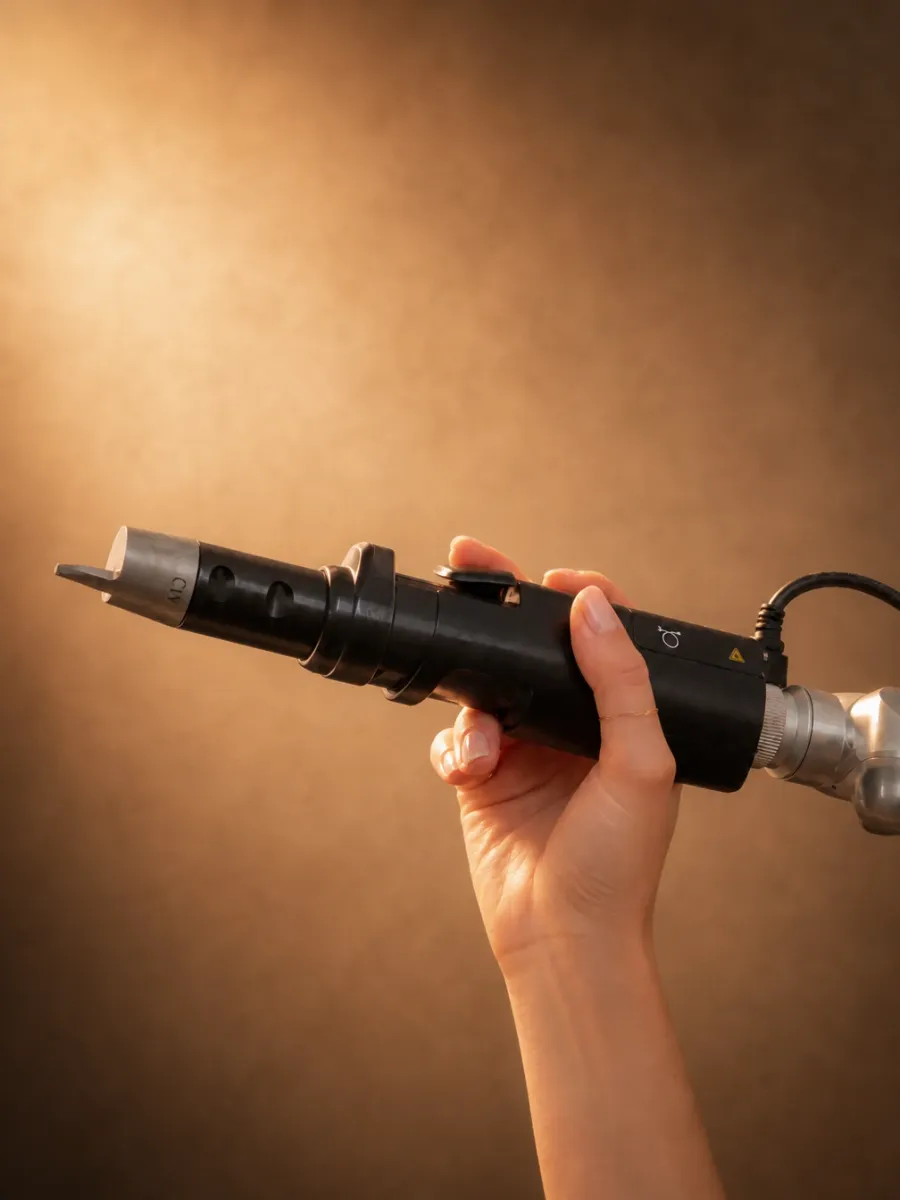
Tattoo removal is gradual: we usually plan 8 to 10 sessions, sometimes more, 6 to 8 weeks apart. Our article on the number of sessions covers what changes that count. If you only want to lighten a tattoo before covering it, or remove permanent makeup, the same skin-type rule applies: it's checked at the assessment.
All the practical details are on the tattoo removal page and the unwanted tattoo page.
It varies, and it can't be predicted. A patch can fade over time or last. Because it can't be predicted, the clinic holds back on darker skin types.
Yes. A tan adds melanin at the surface. We wait at least 2 weeks, ideally 2 to 4, after your last exposure before treating.
We can only speak to our own rule. Ours is not to treat darker skin types for tattoo removal, because safety isn't certain.
No. A photo changes with the light and the screen. The assessment is done in person.

One fixed price per tattoo, every session for two years: from what size the package makes sense, and when paying per session is the better choice.

Laser before a cover-up gives the new design more room. How many sessions to aim for, what we don't promise, and what to tell your tattoo artist.
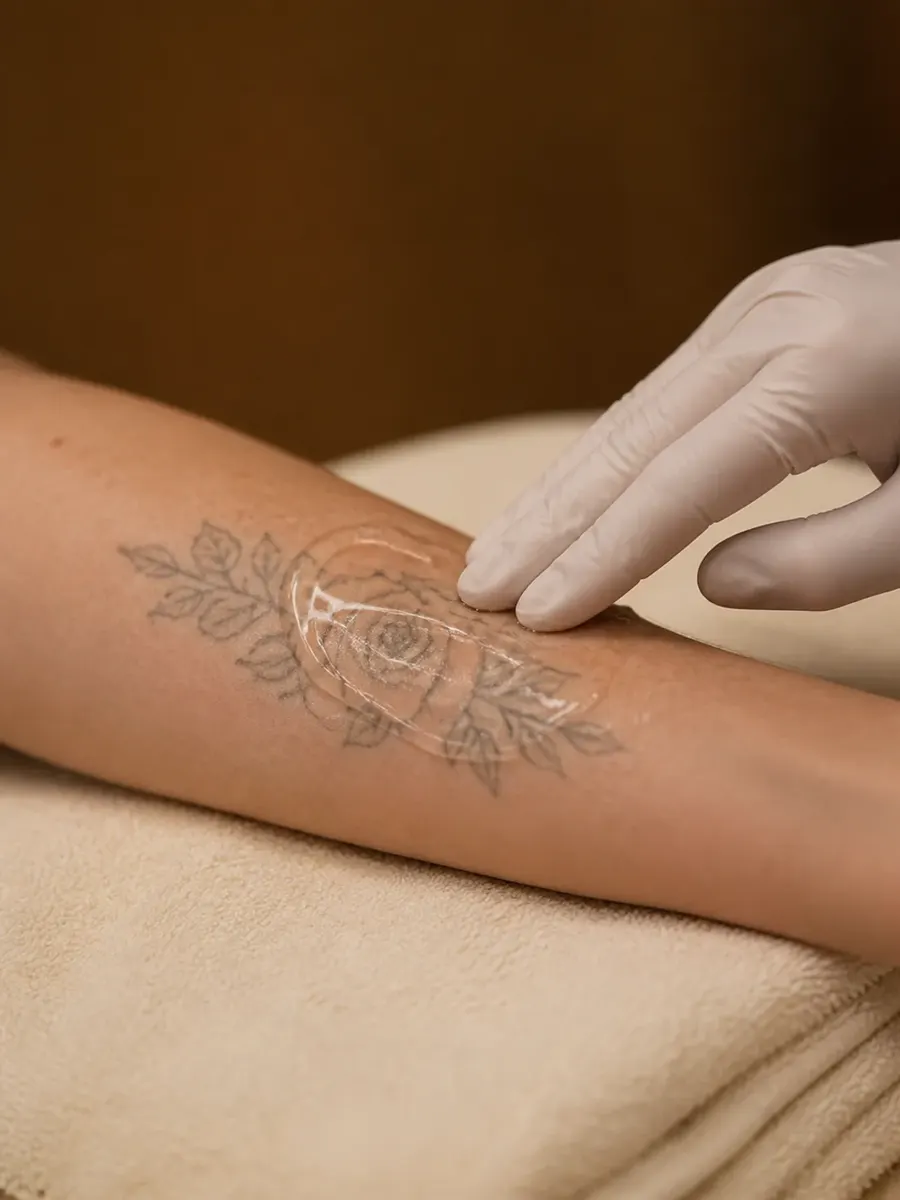
Regret a brand-new tattoo? Why we wait for the skin to heal before the first laser session, and how the date is set at your assessment.
The best plan starts with an assessment. We look at your skin and answer your questions, no obligation.

Hi, I am Stella. Ask me about a treatment, a price or the clinic, and I will point you to the right place.
Stella answers from the site. She does not diagnose and does not book. The conversation stays 24 hours on this device, and the clinic keeps a copy.