Best Clinic for Your Laser Tattoo Removal in Laval? Here Is How We Answer That
Laser tattoo removal in Laval: the five things to check before choosing your clinic, and our answers. 2027 Consumer Choice Award.

Both prick the skin with fine needles. Only one adds heat deep in the dermis. What that changes for grain, pores, scarring and looseness, and where to start.


You have probably seen the two names side by side somewhere: "microneedling" and "RF microneedling," sometimes written as Potenza. The second name suggests it does the same thing as the first, only better. That is not quite right.
Both devices prick the skin with fine needles. That is the same starting gesture. What separates them is what happens once the needles are in: one stops there, the other adds heat. And that difference decides which one is the right call for you.
The confusion comes from the word itself. "Microneedling" gets used for both, even though they call for two different assessments and do not repair quite the same thing. The rest of this article follows one thread: where the difference comes from, and what it changes for you.
A tip covered in very fine needles enters the skin, at a set depth, and pulls back out right away. Repeated hundreds of times over an area, this creates thousands of micro-channels, invisible to the eye, that close within hours.
These controlled micro-injuries trigger repair. Skin responds by building new collagen, which tightens and smooths texture over time. This principle drives both devices, here as everywhere: DP4 microneedling on one side, Potenza on the other.
At this stage, they do exactly the same thing. The difference starts at the needle itself.
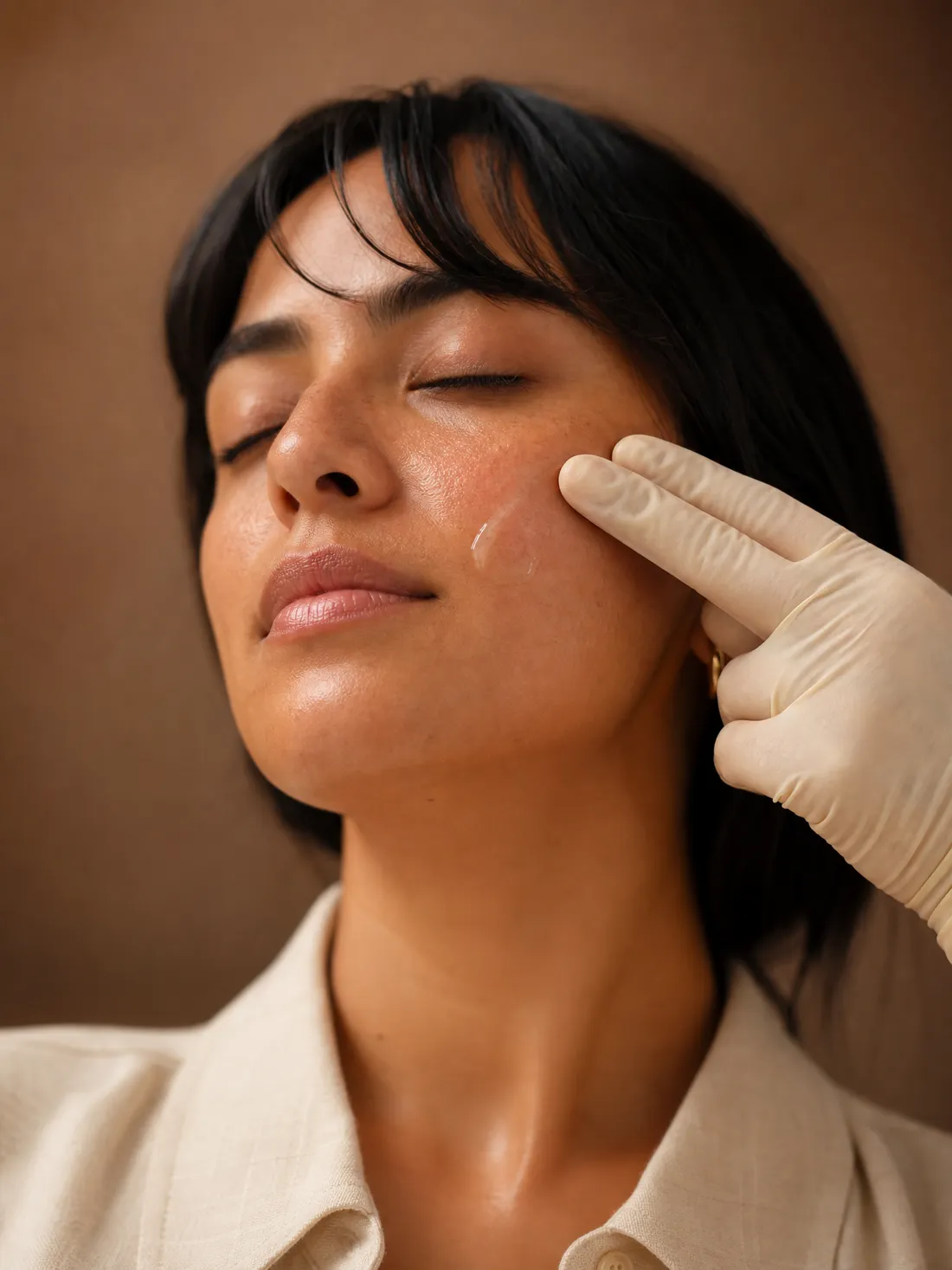
On the DP4, the needles only pierce. Nothing is delivered through them: the channel they open mostly serves as an entry point for an active applied on top, and the repair itself comes from the mechanical injury alone.
It is a simple mechanism, and that is also what makes it a good starting point: the session is short, the skin is less taxed, and depth can be adjusted without ever heating the tissue. Skin that is new to the technique, or reactive skin, has fewer reasons to worry here.
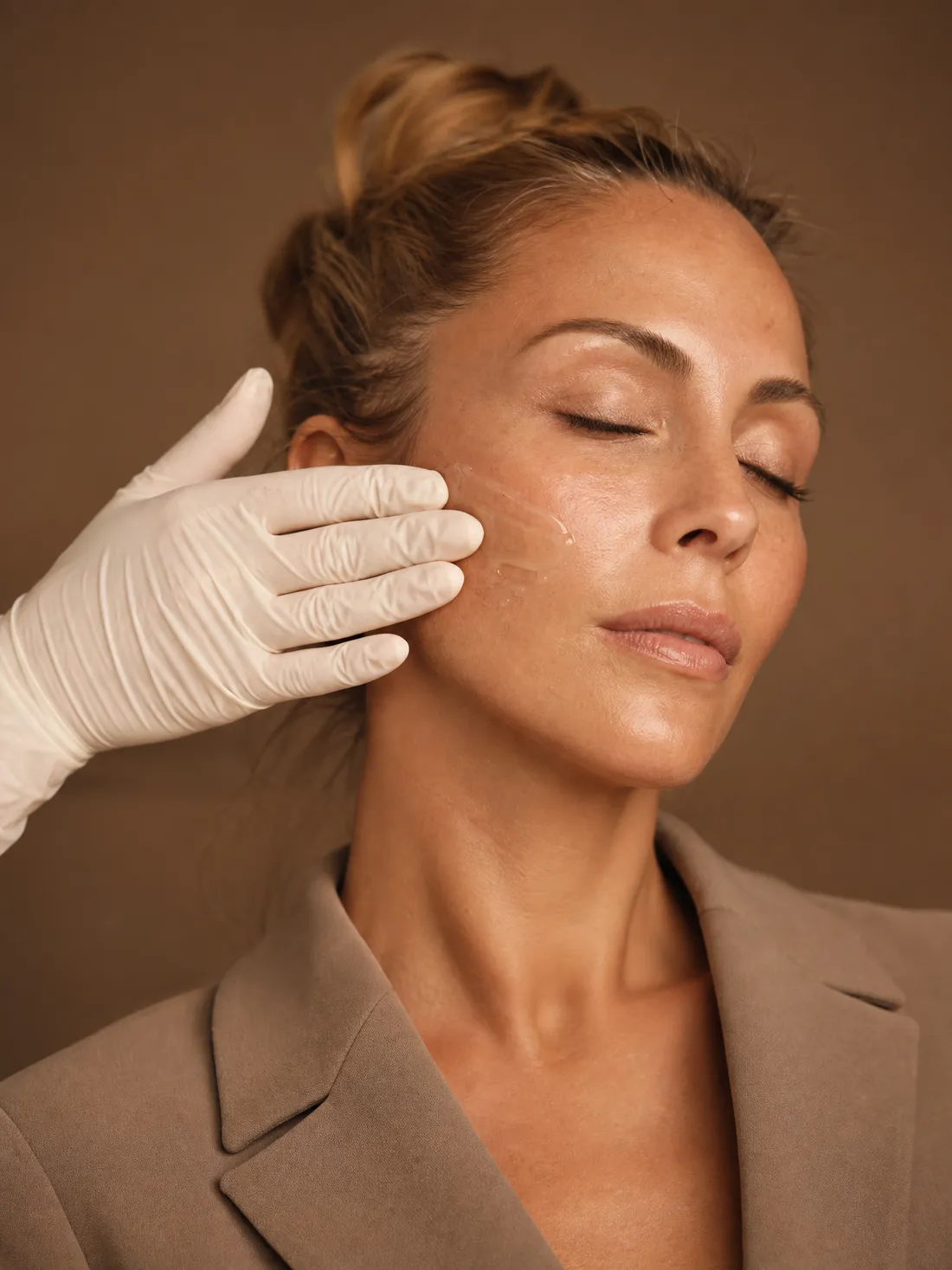
On the Potenza, the needles are insulated along nearly their whole length. Only the tip conducts energy. As they go in, they no longer just pierce: they release radiofrequency heat directly into the dermis, exactly where the tip sits.
Skin receives two signals at once: the mechanical injury from the needle, plus a thermal response layered in underneath rather than spread over the whole area. That targeted heat is what sets Potenza apart from classic microneedling, and why its effect reaches further than texture alone.
Being able to choose among several depths and several radiofrequency modes also changes what a single session can aim at: more superficial for grain, deeper for a scar or a spot that has started to sag. That flexibility does not exist on a mechanical-only device.
<table> <thead><tr><th></th><th>Classic microneedling</th><th>Potenza (RF)</th></tr></thead> <tbody> <tr><td>Mechanism</td><td>Mechanical micro-channels only</td><td>Micro-channels + RF heat delivered into the dermis</td></tr> <tr><td>What it targets first</td><td>Skin grain, pores, active absorption</td><td>More marked texture, acne scarring, early looseness</td></tr> <tr><td>Duration</td><td>45 to 60 min</td><td>60 min</td></tr> <tr><td>Downtime</td><td>Redness for 24 to 48 h</td><td>Redness and mild swelling for 24 to 48 h</td></tr> <tr><td>Starting price</td><td>$325</td><td>$749</td></tr> </tbody> </table>
For uneven skin grain, visible pores, or simply to help a targeted active penetrate, classic microneedling gets the job done without needing to add heat. It is also the more logical choice for a first try with the technique, or for a tighter budget.
Heat becomes a real argument when skin carries something more stubborn: deep acne scarring, or early looseness that comes along with the texture loss. That is where Potenza reaches for an effect the mechanical route alone does not get to.
Uneven texture, as we assess it in clinic, covers both cases: a grain that only lightly catches under your fingers, and deeper relief left by old scarring. It is not the same severity, and it is not the same device we reach for first in each case.
To place yourself at a glance, here is what we suggest first depending on what bothers you:
| What bothers you first | Where we start | Why |
|---|---|---|
| Uneven skin grain, visible pores | Classic microneedling | The mechanical signal is enough, without heating the skin |
| Reactive skin, or a first try with the technique | Classic microneedling | The skin is less taxed, and depth can be adjusted |
| A targeted active to drive in (exosomes, PRP…) | Classic microneedling | The boosts are built for it |
| Deep acne scarring | Potenza | The heat reaches what the mechanical route alone does not |
| Looseness that is just beginning | Potenza | Radiofrequency works in the dermis |
| Marked looseness in the lower face or neck | Neither one | That is the job of XERF |
Both sessions leave skin red: that is the direct result of thousands of micro-channels opened at once. With classic microneedling, redness usually settles within 24 to 48 hours.
Potenza adds mild swelling to that redness, over the same 24-to-48-hour window: it is the response to the thermal signal layered on top of the mechanical one. Nothing that stops most people from working the next day, but it is not a treatment to plan the night before an event.
Either way, skin stays sensitive to the touch for the first few days and calls for a soothing product rather than an exfoliating active. Sun protection becomes non-negotiable again until the redness is fully gone, since skin that just repaired a micro-injury is more prone to pigment marks.
Classic microneedling lends itself especially well to an active applied right before the session, since the micro-channels it opens help absorption without any heat degrading it. With us, four boosts can be added to the session:
None of these boosts is replaced by Potenza's heat. They are two different logics: one adds an active, the other adds energy. Nothing stops you from starting with one and trying the other later, at your assessment.
Potenza's heat stays a relatively surface-level heat: it works in the dermis, not in the muscles or the facial volumes. It does not replace an injection to relax an expression line, nor filler for lost volume.
And for more marked looseness in the lower face or neck, which calls for heating a larger volume of tissue deeper down, a different device takes over: XERF, which we are not comparing here, but which exists for that step. Potenza stays a very good starting point for looseness that is just beginning to show, without being the answer for a face that has lost a lot of its hold.
Neither classic microneedling nor Potenza is "better" across the board: they answer two different questions. Our medical aesthetician looks at your skin, what actually bothers you, and the comfort you are after, and tells you which of the two starts your plan best, without pushing you into more than you need.
Three things come up most often in that conversation: what you actually see in the mirror (grain or pores, versus a deep scar or looseness setting in), how much downtime your week can absorb, and whether you would rather ease in or go straight for the device that reaches furthest. None of those answers is wrong: they simply point toward one device or the other, sometimes toward both at different points in your plan.
In both cases, the needle opens the skin. The heat is only worth it if what bothers you sits below the surface.
Both feel like a series of small pricks. Potenza adds the sensation of heat as the needle delivers its energy, which most people describe as a bit more intense than microneedling alone, without being out of reach. A numbing cream is applied beforehand in both cases.
Yes: radiofrequency does not target any pigment, unlike a laser. The mechanism works across all skin tones.
The boosts are built for classic microneedling, where the active penetrates through the micro-channels without any heat getting in the way. What suits you best gets confirmed at your assessment.
For classic microneedling, results build gradually over a series of sessions, spaced 4 weeks apart. For Potenza, they build over a few weeks to three months, with sessions spaced 4 to 6 weeks apart.
A little, by restarting collagen like any controlled mechanical injury, but its effect stays light compared with a technology that also delivers heat, like Potenza. For looseness that actually shows, it is not the right starting point.
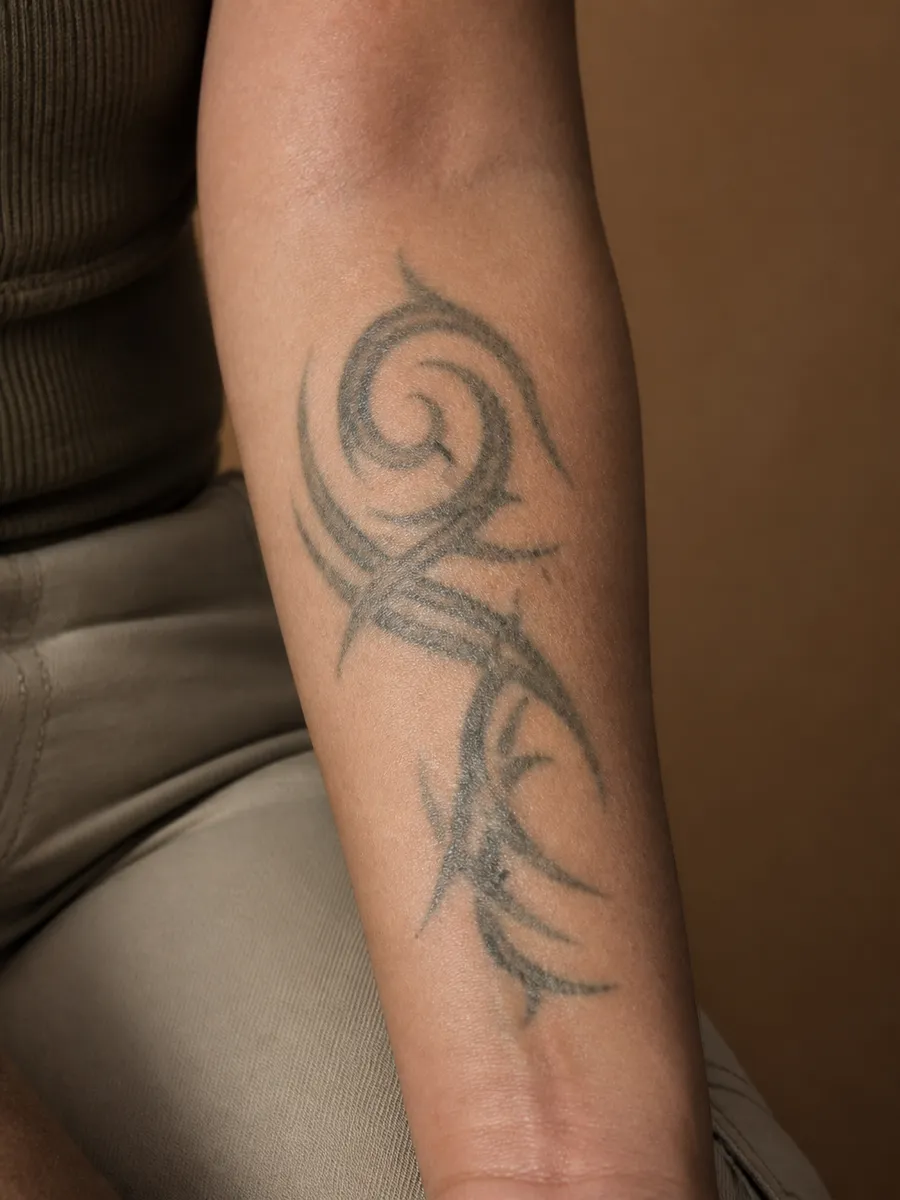
Laser tattoo removal in Laval: the five things to check before choosing your clinic, and our answers. 2027 Consumer Choice Award.

One clinic says one session, another says eight. It isn't generosity: it's two families of devices, with two different logics.
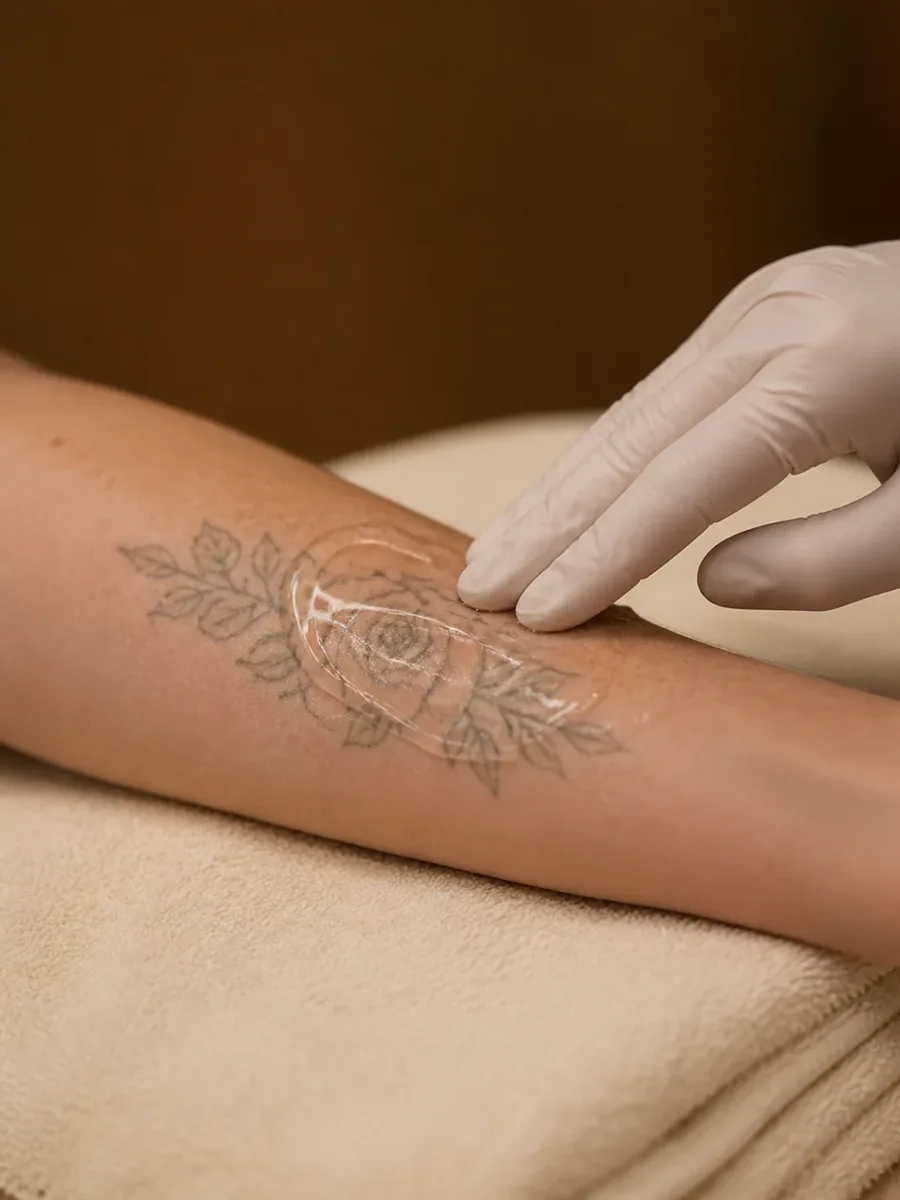
The numbers vary wildly from one site to the next, sometimes tripling. Here is what actually changes your number of sessions, and the honest range to expect.
The best plan starts with an assessment. We look at your skin and answer your questions, no obligation.

Hi, I am Stella. Ask me about a treatment, a price or the clinic, and I will point you to the right place.
Stella answers from the site. She does not diagnose and does not book. The conversation stays 24 hours on this device, and the clinic keeps a copy.