PRP and Exosomes Together: What the Combination Adds for Your Hair
Why combine PRP and exosomes in one hair protocol, how the session goes, and our programs that bring both together.

A hair PRP session at Clinique DC takes 30 to 45 minutes. What happens at each step, from the blood draw to the aftercare instructions.

A hair PRP session takes 30 to 45 minutes. We draw a little blood, spin it to concentrate your platelets, then place that concentrate back into your scalp. The treatment in detail is on the PRP page.
If the blood draw or the needles on your scalp make you a little nervous, you're not the only one. Here's what happens, step by step, so you know what to expect when you arrive.
Everything starts with a hair eligibility consultation with one of our nurses. She's also the one who does the treatment: PRP is done with a needle, which puts it outside a medical esthetician's scope.
We examine your scalp with a dermatoscope to assess:
We look at your profile, meaning your family history, your habits and what you expect from the treatment.
We check contraindications, every time: diabetes, clotting disorders, pregnancy, scalp inflammation.
We set the protocol according to your situation, with the number of sessions and their spacing.
Allow about thirty minutes. Ask every question you have, including the ones about price.
Many people dread this step. Is it any different from a regular blood test? No.
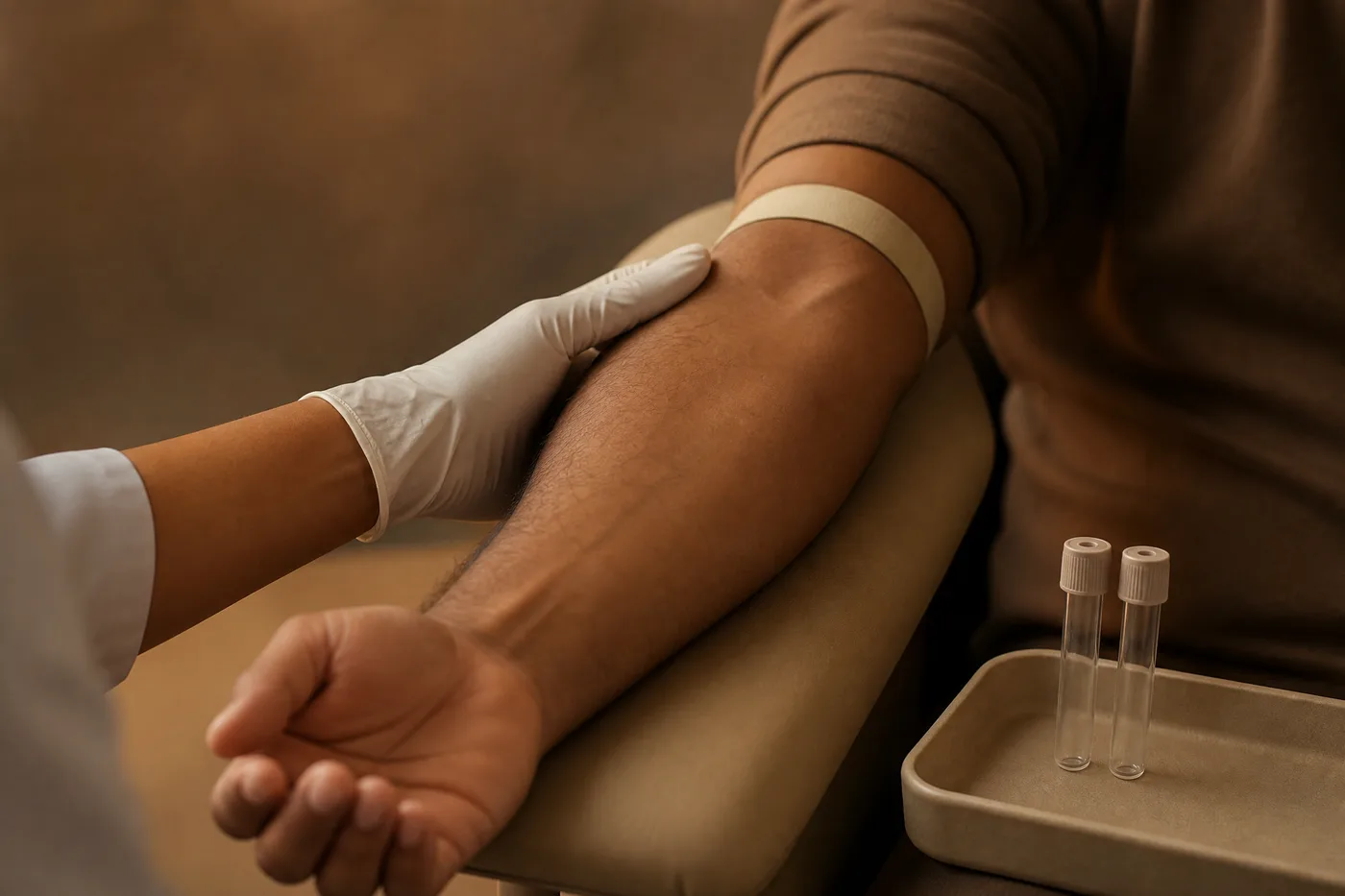
We draw 10 to 20 ml from the crook of the elbow, as for routine lab work. It takes two to three minutes, and you feel a small prick.
While you wait, the tubes spend 8 to 12 minutes in a medical centrifuge.
Centrifugal force separates the blood's components. Red cells, which are heavier, sink to the bottom, white cells settle in the middle, and the platelet-rich plasma stays on top.
The result is a concentrate clearly richer in platelets than your blood in its natural state. That concentrate is what we then place in the scalp.
We disinfect the scalp first. If you'd like, we can apply a numbing cream.
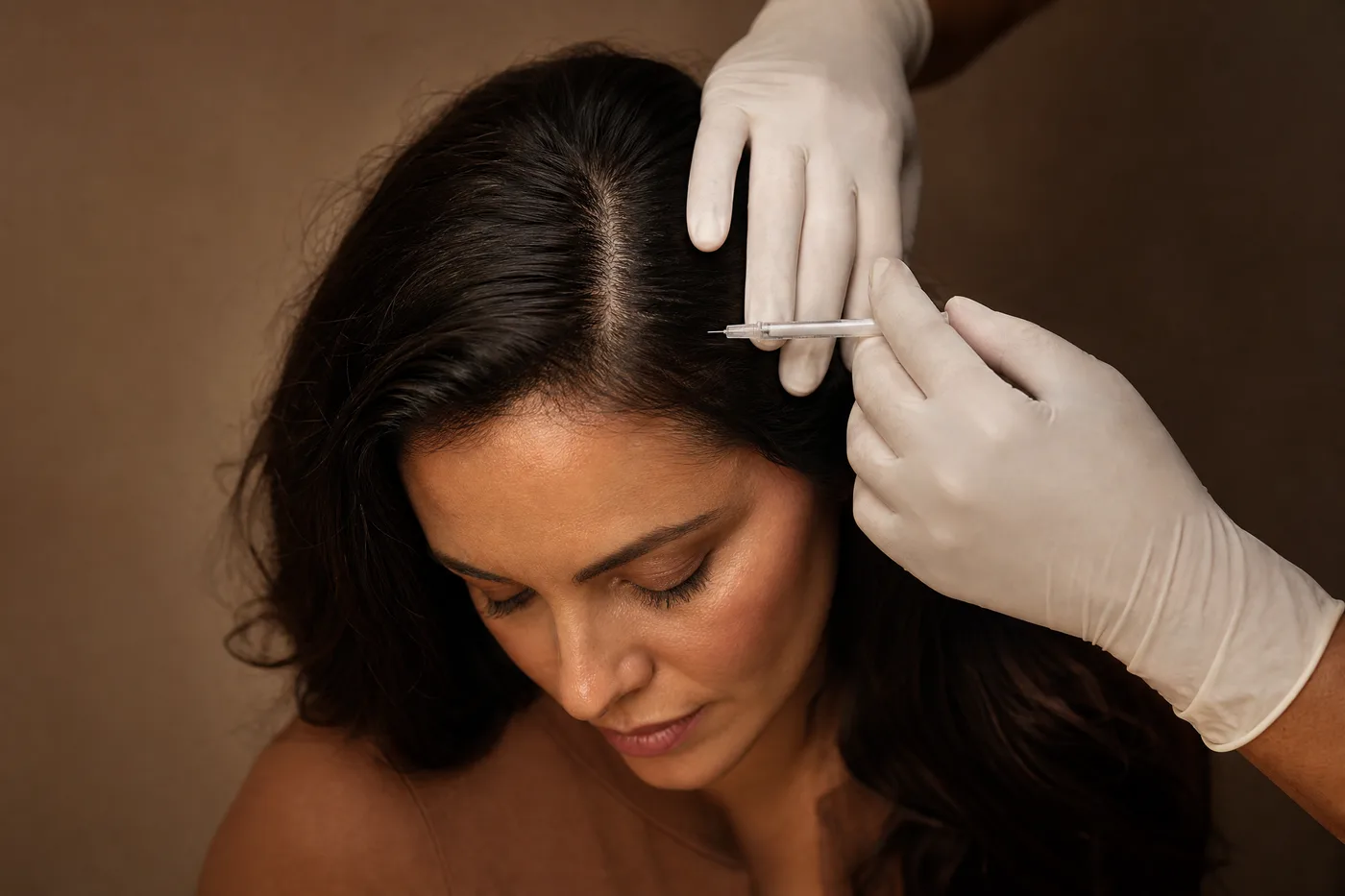
We then place the plasma with a very fine needle, area by area, evenly, at the depth of the follicle. You feel light tingling, which most people tolerate well.
This step takes 10 to 15 minutes, depending on the area treated.
30 to 45 minutes at the clinic:
There's no surgery, no sedation and no dressing. You can get on with your day when you leave.
The scalp is slightly pink at the injection points, and the redness clears in two to six hours. You may feel slight tightness, sometimes light itching, which is normal.
You can go back to all your activities right away. There's no recovery period.
We plan three to four sessions spaced three to six weeks apart, depending on the program: DC Bloom for women, DC Prime for men.
After that, one to two maintenance sessions a year help keep the result.
After the first session, shedding slows and hair is shinier.
After the second, density is more noticeable and texture changes.
From the third on, the result is at its best, with regrowth in the treated areas.
The hair cycle is counted in months. That's why we ask you to wait a few sessions before judging the result.
Nurses trained in regenerative medicine techniques perform the treatment themselves.
We use a medical centrifuge, because the concentration obtained depends directly on the device.
We follow up from one session to the next, with comparative photos.
If you're not a good candidate, we won't offer you the treatment. A protocol sold to someone who won't get anything from it only leads to disappointment.
The product comes from you, so there's no rejection and no reaction to a foreign substance. Side effects stay mild:
The subject is covered in detail in our article on contraindications.
A hair PRP session means thirty to forty-five minutes, a small prick in the arm and some tingling on the scalp, then you leave.
The step that matters most comes before: the assessment, which determines whether the treatment is worth it in your case.
To place yours, start with our hair page.
Why combine PRP and exosomes in one hair protocol, how the session goes, and our programs that bring both together.

Hair PRP concentrates the growth factors in your platelets and places them back into the scalp to wake follicles that are still alive.
It depends mostly on the stage of the loss. What studies show on hair PRP, who it works best for, and when it isn't enough.
The best plan starts with an assessment. We look at your skin and answer your questions, no obligation.

Hi, I am Stella. Ask me about a treatment, a price or the clinic, and I will point you to the right place.
Stella answers from the site. She does not diagnose and does not book. The conversation stays 24 hours on this device, and the clinic keeps a copy.