PRP and Exosomes Together: What the Combination Changes for Your Hair
Combining PRP and exosomes in one hair protocol: what exosomes add, and our programs that bring both together.

The contraindications to hair PRP, what we check at your assessment, and alternatives like exosomes, at Clinique DC.
Yes, there are contraindications to hair PRP. The treatment is very safe because it uses your own blood, but there are situations where we postpone, where we decline, and where we send you elsewhere. We check them systematically at the assessment. The treatment itself is described on the PRP page.
Let us go through when PRP is not recommended, and above all what we offer instead.
Clotting disorders:
Why. PRP needs functional platelets in sufficient number. If your blood has a clotting abnormality, we can neither draw safely nor count on the result.
Heavy anticoagulants:
Worth noting: low-dose aspirin is generally maintained, after assessment.
Why. Even though PRP comes from your own blood, we apply the precautionary principle: no study has been conducted in pregnant women. Your baby comes before your hair, and that decision is not made at the front desk: the nurse makes it with you.
Good news on the other hand: after delivery, PRP responds well to postpartum shedding, once breastfeeding is over.
On the scalp:
Elsewhere in the body:
The logic. Injecting into infected tissue can worsen the infection or spread it. We postpone; that is not a refusal.
Diabetes: we are cautious when it is poorly controlled, when there are severe complications, or advanced neuropathy. Well-controlled diabetes is often compatible, after assessing your general condition and your circulation.
Autoimmune conditions: an active lupus flare, severe rheumatoid arthritis, active multiple sclerosis, Crohn's disease or ulcerative colitis in an inflammatory phase all call for a medical opinion. In stable remission, it is often compatible.
Immunosuppressants: methotrexate, long-term corticosteroids, immunosuppressants after an organ transplant.
Oncology treatments: chemotherapy in progress, radiotherapy over the area to be treated, or the recovery period after treatment.
None of these lists is meant to be read alone at home. The nurse goes through them with you, your medications in hand.

PRP takes what is in your blood. Someone who smokes heavily or eats poorly will have plasma lower in growth factors, and therefore a more limited result. That is not a judgement, it is mechanics.
Smoking. It reduces blood oxygenation, alters platelets and their growth factors, lowers circulation to the follicle and slows healing after sessions. It is the heaviest factor by a wide margin.
A chronically unbalanced diet. Deficiencies in iron, zinc and B vitamins, chronic inflammation, plasma low in nutrients, platelets that perform less well.
Problem drinking. Liver toxicity that affects growth-factor synthesis, multiple deficiencies, acquired clotting disorders, systemic inflammation.
Severe chronic stress. Permanently elevated cortisol, which does no hair any favours, plus reduced circulation and degraded sleep.
Rather than refusing you the treatment, we would rather prepare the ground. What helps your hair helps your health.
Ideally 4 to 6 weeks before the first session:
The benefit is double: a better result, and general health that follows.
Exosomes do not depend on your blood. That is exactly what makes them the option when PRP runs into a limit:
Plasma that will not keep up: heavy smoking that will not change, growth factors that decline with age, a chronic condition affecting blood quality, medication that alters platelets.
A relative contraindication to PRP: hard-to-control diabetes, a light anticoagulant, a stable but present autoimmune condition.
They do not depend on you. The concentration of growth factors is the same every session, whatever your current form and habits.
There is no blood draw. So no clotting question to settle before starting.
The product is prepared in a laboratory, under sterile, controlled conditions.
One honest note: exosomes are not approved by Health Canada for hair regrowth, even though their use is common in clinics. And it is a recent approach, without long-term hindsight. We would rather say so.
The medical interview: your full history, your current treatments and their interactions, your habits, and what you expect from the treatment.
The examination: your general condition, the scalp (infection, inflammation), circulation, and skin contraindications.
Bloodwork, if needed: platelet count, clotting tests, inflammatory markers, glycemic control if you are diabetic.
What we will not do is point you toward finasteride or minoxidil. That is not our approach.
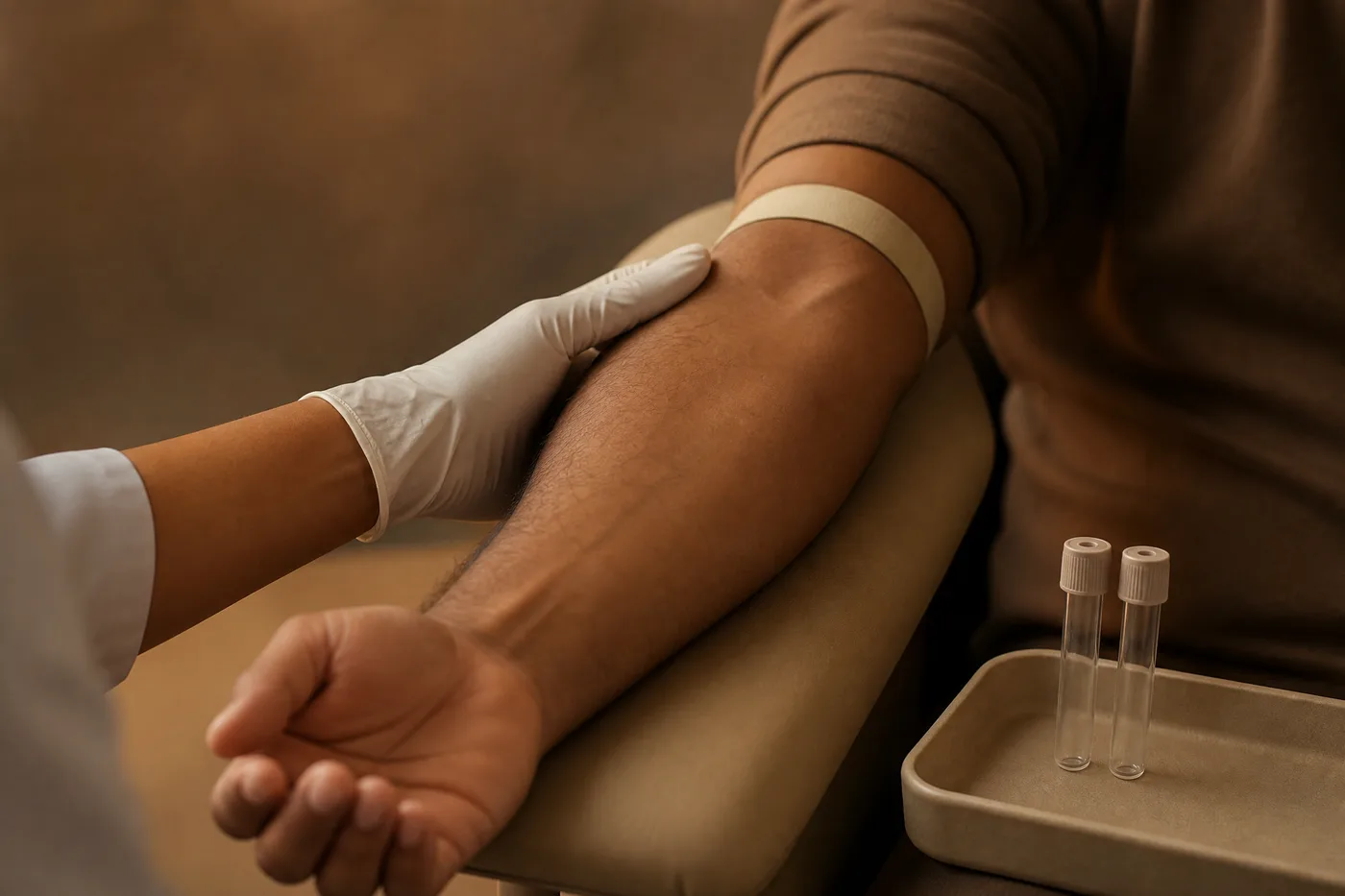
Low-dose aspirin is generally compatible. The nurse weighs the cardiovascular benefit against a slightly higher chance of bruising, and we adjust the monitoring.
Well controlled, with circulation preserved, it is a good indication. We watch healing and the response from one session to the next.
We will tell you plainly: PRP will give less. Exosomes are the better option in that case. And if you can cut down, even without quitting, it counts.
In remission for more than six months, it is often compatible, with regular medical follow-up and attention to any flare.
6 to 8 weeks before, on the food side:
On the habits side:
On supplements, only if bloodwork shows a deficiency: vitamin D, iron and zinc are not taken at random. Your doctor or our nurse will tell you.
We take no risks with your safety. If there is a contraindication, we explain it and offer you something else, even when that something else earns us less.
The hair eligibility assessment exists exactly for that: to review your medical situation and give you a clear answer before you commit to anything.
To place your case before coming in, start with our hair page.

Combining PRP and exosomes in one hair protocol: what exosomes add, and our programs that bring both together.

PRP for hair reinjects your platelets’ growth factors to wake follicles that are still alive. Here is how it works, step by step.

The evidence on hair PRP is decent but variable. We explain honestly who it works on, and who it does not.
The best plan starts with an assessment. We look at your skin and answer your questions, no obligation.

Hi, I am Stella. Ask me about a treatment, a price or the clinic, and I will point you to the right place.
Stella answers from the site. She does not diagnose and does not book. The conversation stays 24 hours on this device, and the clinic keeps a copy.