
XERF: firming the face without the scalpel
How radiofrequency tightens skin and restarts collagen, who it is really for, and where surgery stays the better answer.

What radiofrequency can firm, what it will never lift, and the signs that say a surgical facelift is still the better answer for you.

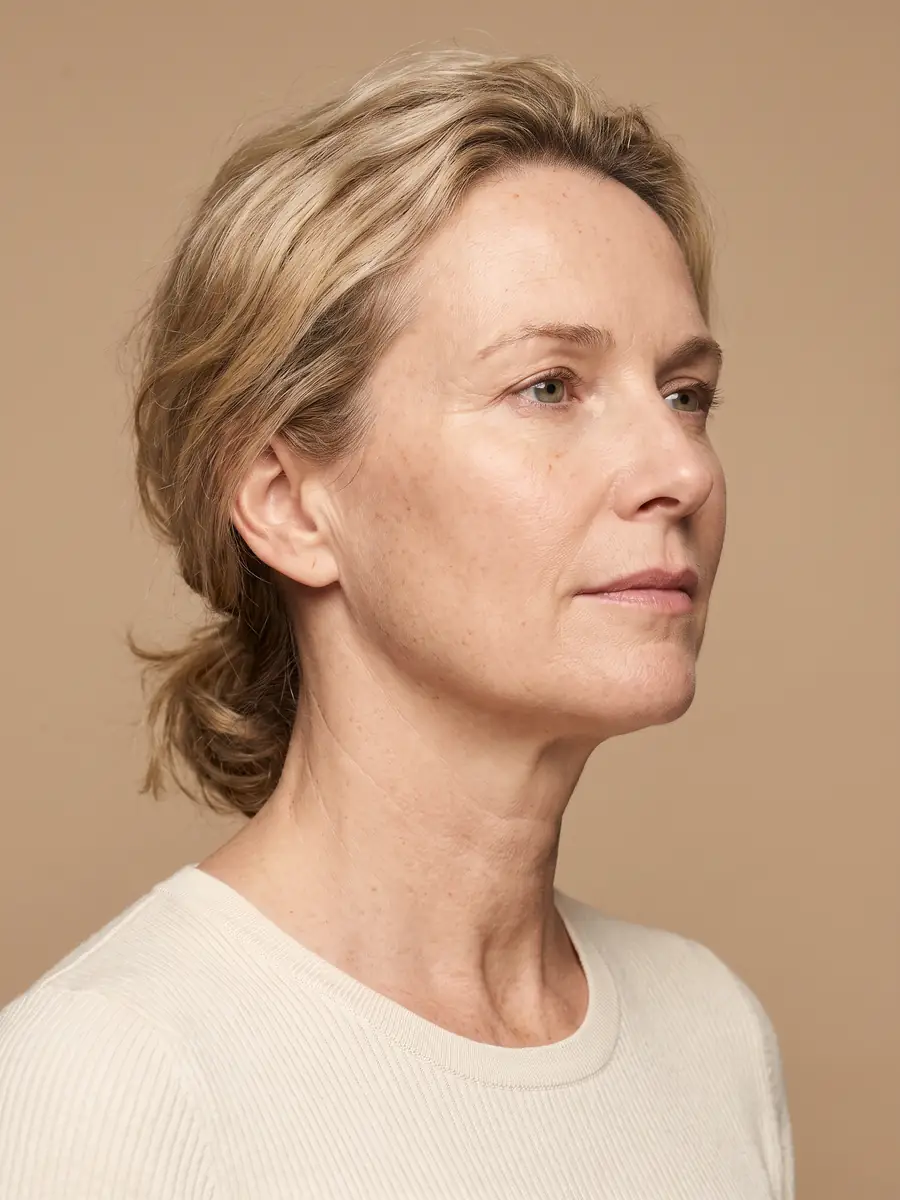
You have noticed that the lower half of your face no longer holds the same line. You want to know whether a device can do anything about it, or whether you are about to spend time and money only to end up in an operating room anyway.
Almost nobody answers that question straight. Clinics that only do non-surgical work sell a promise with no stated limit; surgeons answer that nothing replaces surgery, without explaining what everything else actually does. The truth fits in one sentence, and it decides everything: no energy device removes skin.
Here is how to tell which side of that line you are on.
What people call "the face dropping" is not one thing. It is three, they usually arrive together, and they do not call for the same answer.
| What is happening | What you see | What answers it |
|---|---|---|
| The skin loses its spring | Thinner, softer skin that no longer bounces back when you pinch it | Radiofrequency |
| Volume shifts | The cheekbone flattens, the smile fold deepens, the lower cheek grows heavier | Injectables |
| There is simply too much skin | It hangs, it creases, it forms a fold when you turn your head | Surgery |
The first two can be treated without an operation. The third cannot. That is the whole point of this article, and it is also why two people the same age get opposite answers at their assessment.
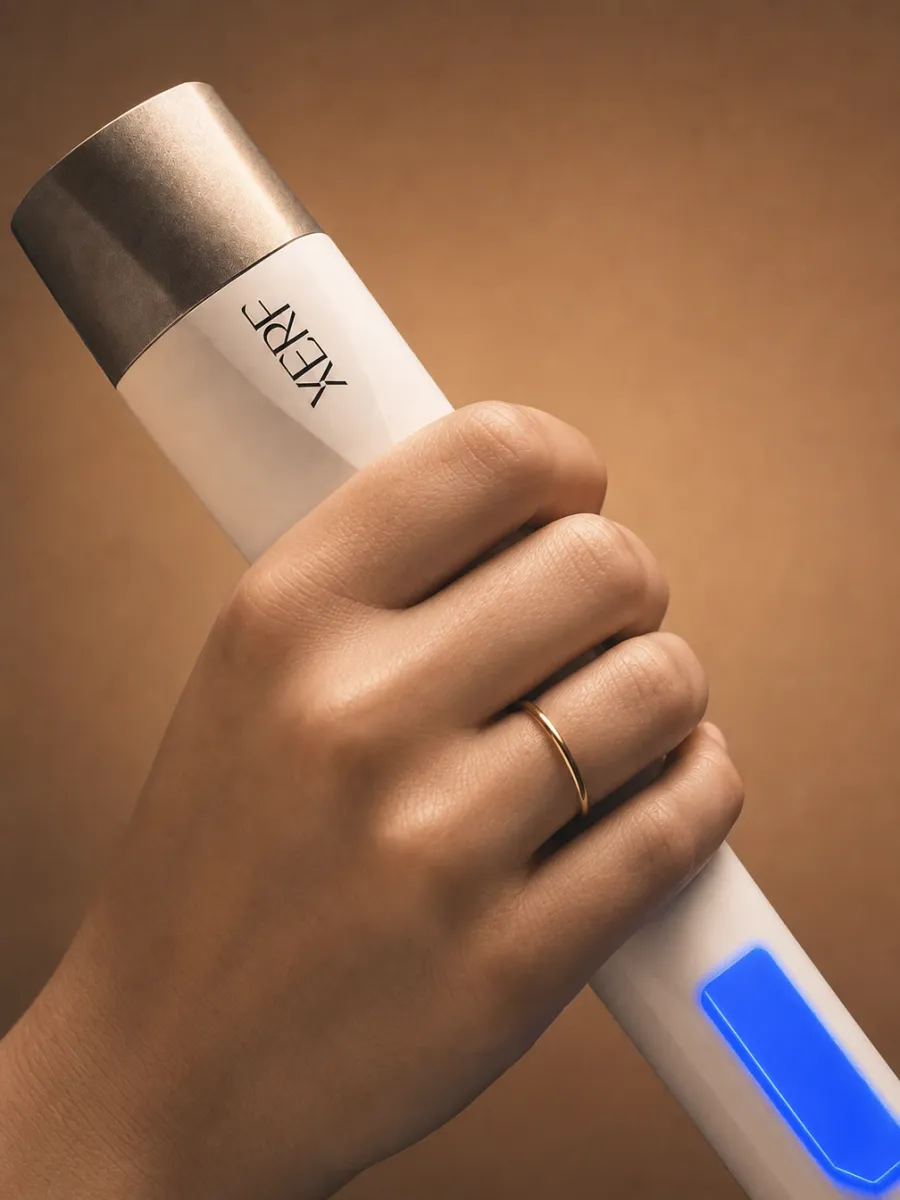
Radiofrequency heats the dermis in a controlled way. That heat contracts the collagen fibres that are already there, and it sends the skin a repair signal: it starts making new collagen over the following weeks and months. That is what XERF does across the full face and the neck, with no needle and no downtime.
The key word is tighten. Tightened skin is skin that has regained tension and thickness. It creases less, it holds the jawline better, it looks denser. But all of it is still there: heat cannot take away a single centimetre.
A facelift does the exact opposite. The surgeon lifts, repositions the deeper tissue, cuts away the excess skin and closes. It is a mechanical act. No device imitates it, whatever name the treatment is given.
| Radiofrequency | Surgical facelift | |
|---|---|---|
| The act | Heating the dermis | Lifting, repositioning, cutting |
| On the skin | It tightens and thickens | The excess is removed |
| The stage it suits | Mild to moderate laxity | Significant laxity, excess skin |
| When the result shows | Over the following months | Once healing is done |
| What it will not do | Remove a centimetre of skin | Improve skin quality |
That is why plastic surgeons publicly hold that there is no such thing as a true non-surgical facelift. It is their position, and on that specific point it is correct: a technology that removes nothing cannot produce the result of one that removes. Where the position becomes incomplete is when it suggests non-surgical work does nothing. On skin that still has its support, it does a great deal.
Which leaves one question: does yours still have it?
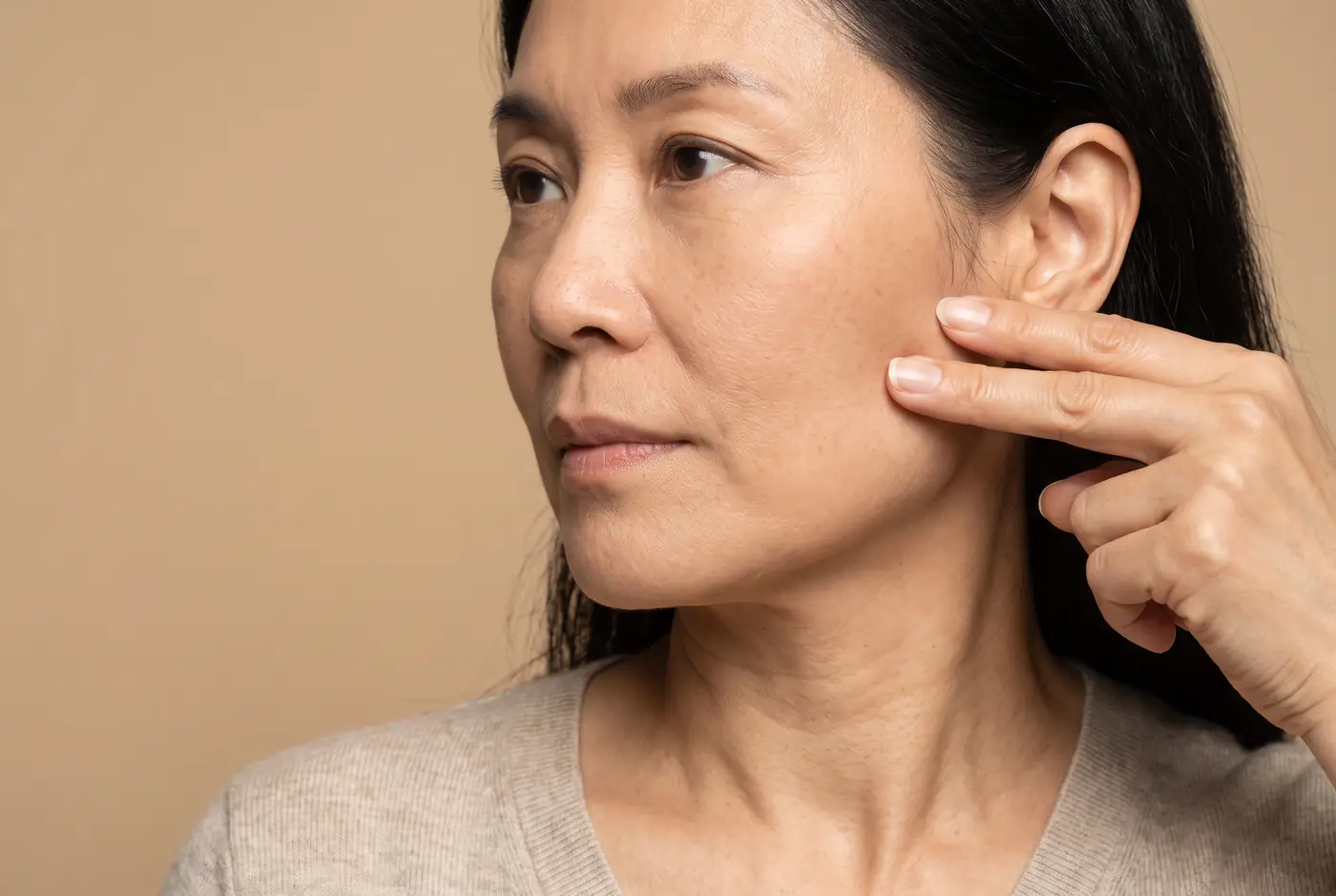
You can get a first read in front of your own mirror, in about a minute.
The traction test. Put two fingers in front of your ear and pull the cheek skin back and up, gently. Watch what changes.
| What you observe | Which side you are on |
|---|---|
| A very small movement is enough to bring the jawline back, and the skin returns on its own when you let go | The firmness side: there is spring to recover |
| You have to pull hard and far to see a difference, and the skin falls back into a fold when you let go | The excess skin side: it is not spring that is missing, it is surface area |
The pinch test. Pinch the skin of your cheek and release. Skin that snaps straight back still has its elastin. Skin that stays marked for a second or two has much less of it.
These tests give you a direction, not a verdict. What we add at the assessment is what you cannot see on your own: the real thickness of the dermis, skin quality, how much of the laxity comes from volume loss rather than lost tension, and where your profile sits at rest. A 3D skin analysis measures part of that; the rest is a hands-on exam.
We say this at the assessment, and we would rather write it here too, before you even book. When laxity is significant, a facelift is still the better answer. The signs that point that way:
In those cases, selling you a series of sessions would be selling you a delay, not a result. Skin quality would improve, visibly, and it would not fix what you came in to fix. That does not mean nothing can be done: it means the procedure that answers your situation happens in an operating room, and the person to talk to about it is a plastic surgeon.
That is not a comfortable thing for a clinic to say. It is also the only honest one, and it is exactly what you will hear from us if it applies to you.
Between the two extremes sits most of the people asking this question: mild to moderate laxity. The jawline softens, the neck is starting to change, the skin lacks tone, but nothing truly hangs yet. That is where radiofrequency makes the most sense, and it matches the candidacy cosmetic surgery boards describe: mild to moderate laxity, and realistic expectations.
What does realistic mean, concretely? A systematic review of fifteen studies published between 2015 and 2025, covering roughly 1,230 participants, reports improved firmness after radiofrequency treatment. The exact figure swings enormously from one study to the next, from about half of cases to all of them, because every team measures differently and on different skin. So what it gives you is a direction, not a percentage anyone should promise you: firmness improves, and how much depends on your starting point.
Here is what we tell you before we start, without you having to ask:
Radiofrequency works in two stages, and it is worth knowing that before the first session so you do not judge the treatment too early.
| When | What happens in the skin | What you see |
|---|---|---|
| Right away | The heat contracts the collagen already there | A light tightening effect, sometimes visible on the way out, often subtle. That is not the result, it is the advance |
| Over the following months | New collagen is built, slowly | This is where the firmness is won. Week to week you see nothing; month to month, you do |
| After that | Aging picks up where it left off | What you gained is kept with spaced-out upkeep, otherwise the slope resumes where it was |
Nobody should sell you a firming treatment while letting you believe it is settled once and for all. Follow-up photos exist precisely so the result is judged at a distance rather than at the end of the session.
How many sessions and how far apart is decided at the assessment, based on what we see on your skin. Two people the same age do not get the same plan.
Sometimes we look at a face and know in the first minute that our device is not the answer. What happens then is simple: we tell you, we explain why, we show you what we are seeing. You leave with clear information, and without having paid for a series of sessions that was never going to keep its promise.
Sometimes the answer is "not only us." Skin can need firmness and volume: volume loss is what hollows, lost tension is what softens the line. In that case part of the plan runs through injections, done by one of our nurses, and the other part through the device. We tell you which of the two will make the bigger difference first.
And if you are weighing surgery, having radiofrequency now closes no doors. Denser, better-maintained skin is never a drawback on the day you consult a surgeon.
No, and it should be said in that direction rather than the other. It can tighten skin that has lost its tension, and on mild to moderate laxity the difference shows. It does not remove skin, so it does not do what a facelift does. The two are not competitors: they answer two different stages.
It is not a question of age, it is a question of stage. We see people in their sixties whose skin kept plenty of spring, and people in their forties with marked excess skin on the neck. The traction test tells you more than your birth date, and the assessment settles it.
The collagen you build is your own, so it ages at the same rate as the rest of you. In practice the gain holds for a while, then the natural slope takes over again. That is why we talk about spaced-out upkeep rather than a permanent result. Anyone promising you a permanent result from a device is telling you something nobody can verify.
There is no indication that maintaining your skin quality works against future surgery. As with any treatment history, you will mention it to the surgeon at your consultation, and it is their call what bears on their procedure.
Yes, and the order is decided with the surgeon rather than with us, because their healing timeline is what governs it. What we can say on our side: radiofrequency works on the quality and tension of the skin, which does not conflict with the logic of a facelift, which works on quantity.
If your skin has lost its spring but still holds, radiofrequency has something to give you. If it has become too large for your face, surgery has the answer, and we will say so. It is the same question we ask ourselves looking at facial skin laxity or a sagging neck and jawline: is tension missing, or is there skin to spare?
The best plan starts with an assessment. We look at your skin and answer your questions, no obligation.

Hi, I am Stella. Ask me about a treatment, a price or the clinic, and I will point you to the right place.
Stella answers from the site. She does not diagnose and does not book. The conversation stays 24 hours on this device, and the clinic keeps a copy.