Before Your First Laser Hair Removal: Shaving, Sun, Waxing, What to Do and Avoid
Shave the day before, skip the wax and the sun: how to prepare for laser hair removal, explained simply, for someone who has never had a session.

Alexandrite, diode or Nd:YAG: what each laser does, for which skin and hair, explained in plain words, with what the research says about how they work.


You're searching for which laser to choose for hair removal and you land on three names: alexandrite, diode, Nd:YAG. All three heat the hair through its melanin, the pigment that gives it colour. They differ in wavelength, which is the "colour" of their light. Alexandrite mostly serves fair skin, Nd:YAG serves olive and dark skin, and diode sits in between.
Here, the Clarity II carries alexandrite and Nd:YAG on the same handpiece. We don't have a diode laser. Here is what each one does, what the research says, and what we explain before a first session.
The right laser depends on two things: the colour of your skin and the colour of your hair.
A laser fires a single wavelength, with all its energy concentrated on it. IPL, or intense pulsed light, fires a mix of wavelengths.
In a review of twelve trials on skin types III to VI (Dorgham and Dorgham, 2020), alexandrite cut hair counts more than IPL did. Nd:YAG and diode were not significantly different from IPL, but Nd:YAG caused fewer dark marks afterwards. Lasers hurt more. The full comparison, with budget, is in our article on laser vs IPL.
Melanin isn't only in the hair: your skin contains some too, more or less depending on its tone. A light that melanin absorbs strongly therefore heats the hair, but also the skin around it.
A longer wavelength goes deeper and is less held back by the melanin at the surface. The manufacturer of the Clarity II puts it this way: 755 nm suits fair skin and finer hair, and 1064 nm, which penetrates deeper, is safer on darker skin.
To place a skin tone, we use the phototype, a scale from I (very fair) to VI (very dark) based on how the skin reacts to the sun. The American Academy of Dermatology writes that laser gives its best results on light skin and dark hair, and that it must be done very carefully on dark skin.
| Laser | Wavelength | Skin it's most often chosen for | Good to know |
|---|---|---|---|
| Alexandrite | 755 nm | Fair to medium | Strongly absorbed by melanin, including the skin's own |
| Diode | about 800 to 810 nm | In between | Studies have used it on darker skin, but sources disagree: the settings matter |
| Nd:YAG | 1064 nm | Olive, dark or tanned | Goes deeper, less held back by the skin's melanin |
According to Thomas and Houreld (2019), diode comes in 800 or 810 nm, and 810 nm has been proposed as a way around the limits on darker skin. This table shows the tendency, not your case. We confirm at the assessment, with a patch test if needed.
The laser needs pigment. Dark, well-filled hair responds well, whatever the wavelength. White, grey, very light blonde or red hair doesn't respond, because there is nothing to heat.
We tell you before the first session, not after the third.
The Cochrane review (Haedersdal and Gøtzsche, 2006) pooled eleven trials, none of high quality. It found about a 50% hair reduction, up to six months, with alexandrite and diode, and little evidence for Nd:YAG, IPL and the ruby laser. No data showed the hair disappearing for good.
Rao and Sankar (2011) reviewed the records of 150 people with skin types IV to VI, treated with Nd:YAG: hair had dropped by 54% on average, after 8.9 sessions.
These figures come from different studies, with different devices, body areas and ways of measuring. They can't be lined up to say one laser beats another. In both cases, several sessions are needed, spaced four to six weeks apart according to the American Academy of Dermatology.
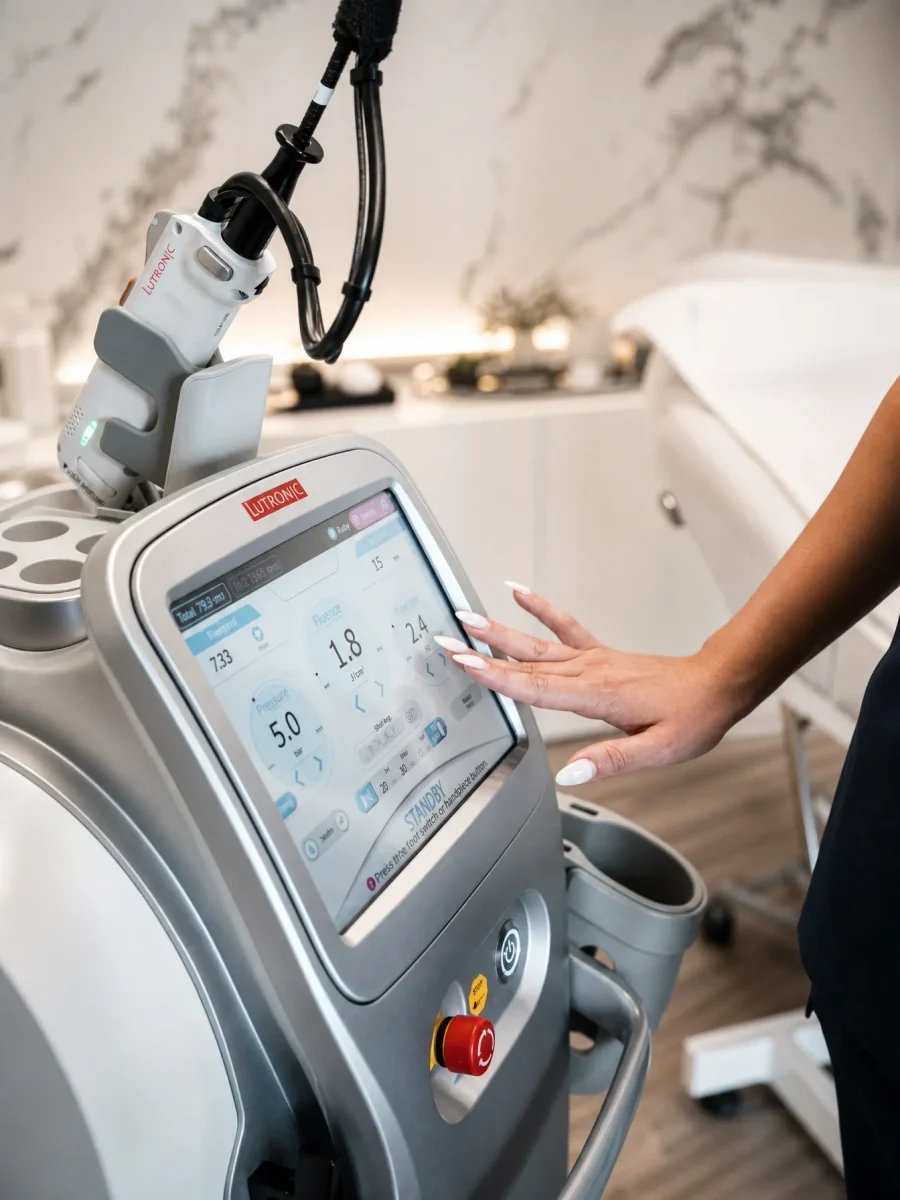
The Cynosure Lutronic Clarity II carries alexandrite and Nd:YAG. If your skin calls for one, we use one; if it calls for the other, we switch wavelength without switching device. Cooling is built in, and the energy is adjusted to your skin at every session. All the detail is on the device page.

A diode laser can suit some people, and we don't have one. If the assessment shows the Clarity II doesn't suit your skin or your hair, we tell you rather than treat you.
A serious clinic tells you the essentials upfront. Here, before the first session:
According to the American Academy of Dermatology, a person who knows skin and lasers well lowers the risk of side effects. What applies to your situation (pregnancy, medication, damaged skin) is checked at the assessment. Our guide to choosing a laser hair removal clinic in Laval covers the rest.

A laser fires a single wavelength, IPL a mix. In the 2020 review cited above, alexandrite cut more hair than IPL, at the cost of more pain.
Nd:YAG 1064 nm is the wavelength most often chosen, because it goes deeper and is less held back by the skin's melanin. The settings remain decisive, and we review them at every session.
The trials pooled by the Cochrane review show no clear difference between the two, with about a 50% short-term reduction for each. The right choice depends on your skin, your hair and the settings.
No, not on white, grey, very light blonde or red hair: without pigment, there is no target. We tell you before we start.
The question of age, and of a parent being present, is confirmed with the clinic before booking. Write to us or come to the assessment: we look at your skin, your hair and the areas you want, for example legs and arms.

Shave the day before, skip the wax and the sun: how to prepare for laser hair removal, explained simply, for someone who has never had a session.
Many people call a spa's pulsed light a "laser". Here is the difference, why hair grows back with one of them, and how to spot a real clinic.

On dark skin, the risk depends on the device and its settings. What wavelength changes, why Nd:YAG exists and what we check before your first session.
The best plan starts with an assessment. We look at your skin and answer your questions, no obligation.

Hi, I am Stella. Ask me about a treatment, a price or the clinic, and I will point you to the right place.
Stella answers from the site. She does not diagnose and does not book. The conversation stays 24 hours on this device, and the clinic keeps a copy.