
Hair loss in women: it often starts at the part
In women, loss is most often diffuse across the top and the part widens, while the frontal hairline usually stays intact. A good share has a hormonal or reactive cause we can address.
Looking for men’s hair loss? See the men’s page →
In women, loss follows its own patterns
Losing some hair every day is normal. What matters is knowing which type of loss you’re dealing with: a reactive shed after childbirth isn’t treated like a female pattern that’s settling in. And before anything else, we rule out a medical cause like low iron or the thyroid.
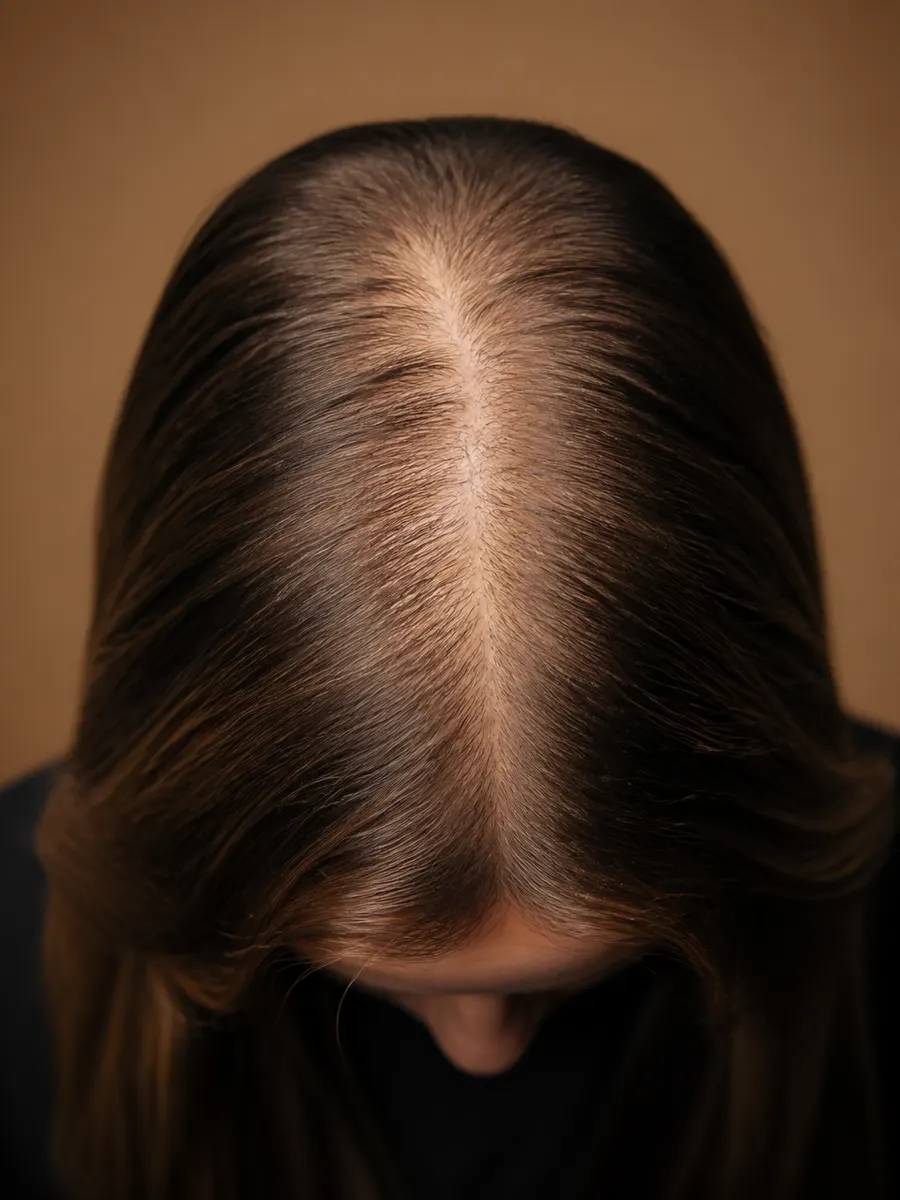
Diffuse thinning (female pattern)
Hair thins across the top and crown and the part widens, but the frontal hairline usually stays intact. This is the profile that responds best when you act early.
A good candidate for PRP early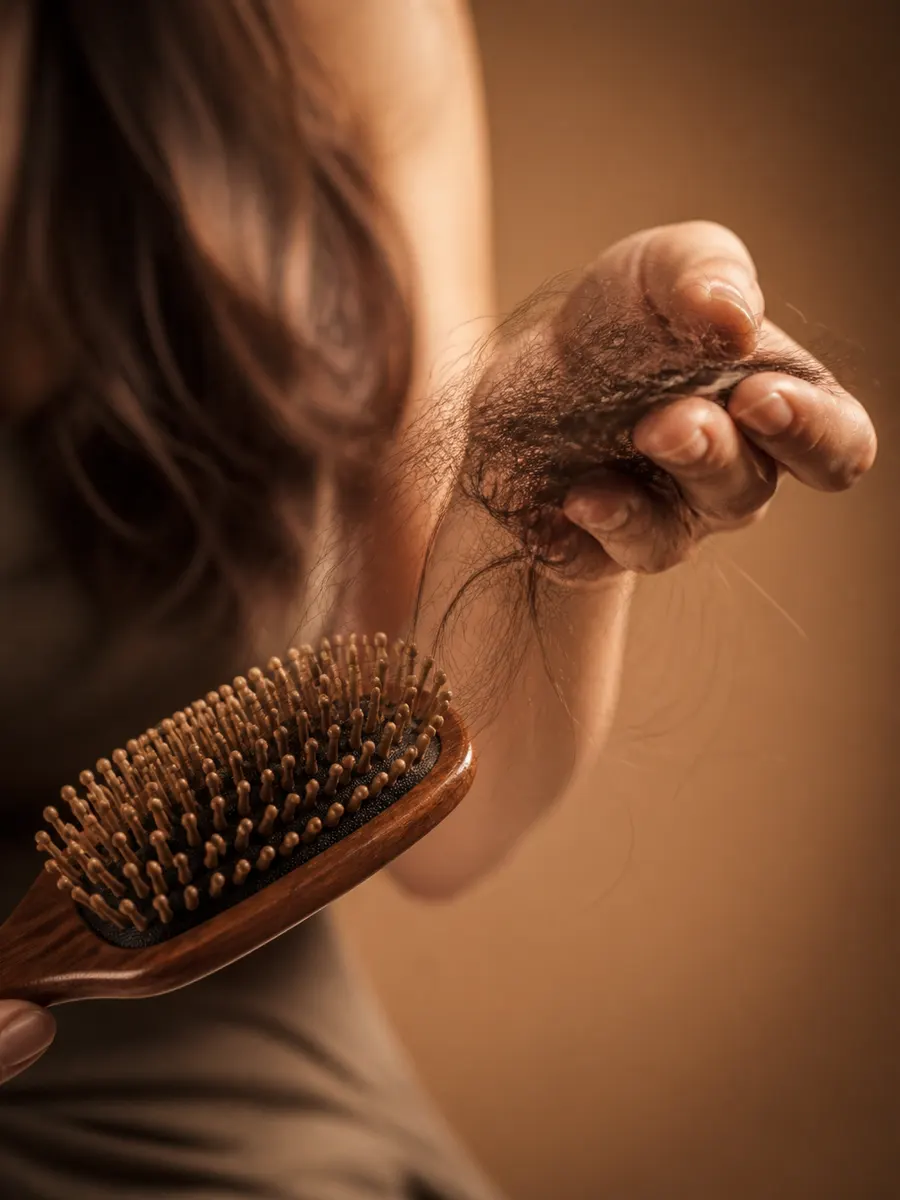
Reactive shedding (telogen effluvium)
A sudden shed a few months after childbirth, or after a shock like an illness or a severe diet. It often recovers on its own once the cause is addressed.
Often temporary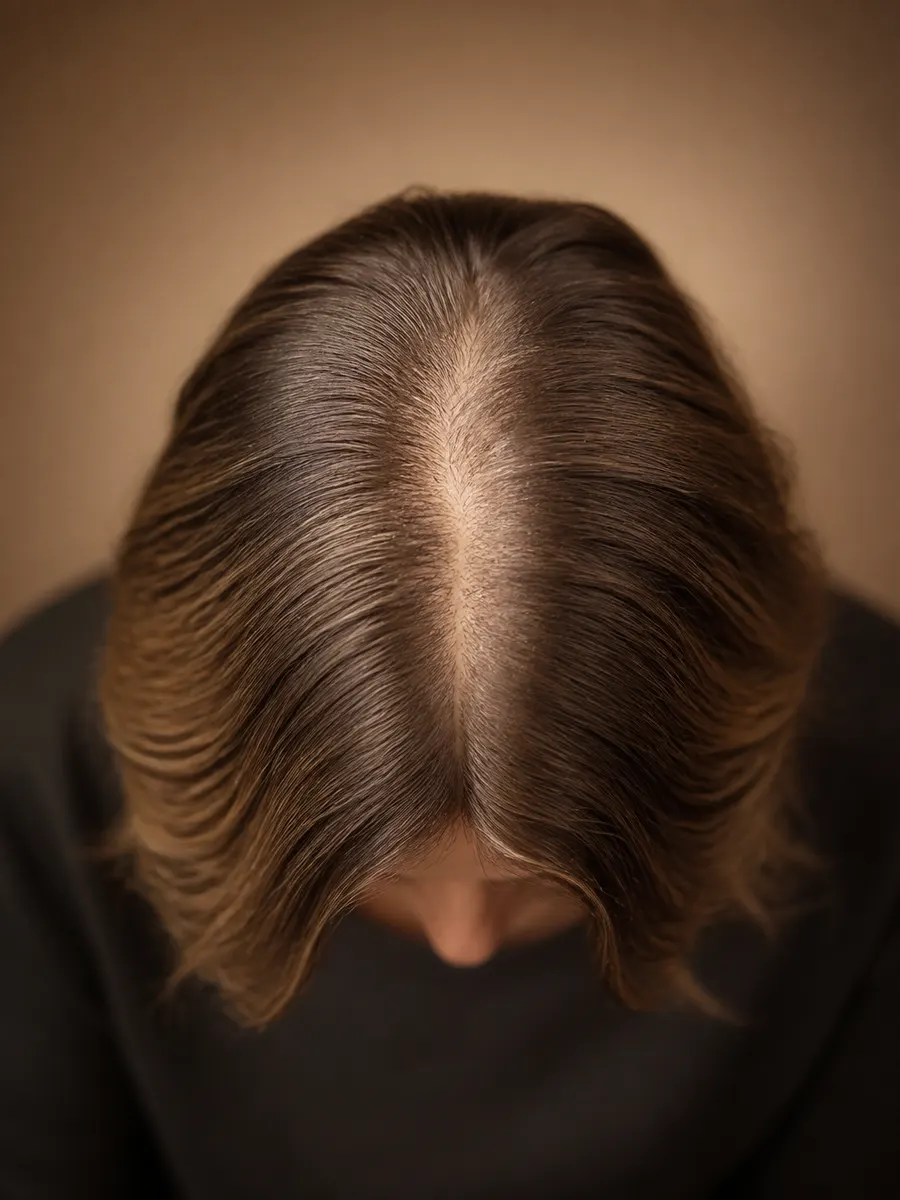
Hormone-driven (menopause, PCOS)
The drop in estrogen at menopause, or an imbalance like PCOS or the thyroid, gradually thins the hair. The cause guides the plan.
We check the cause first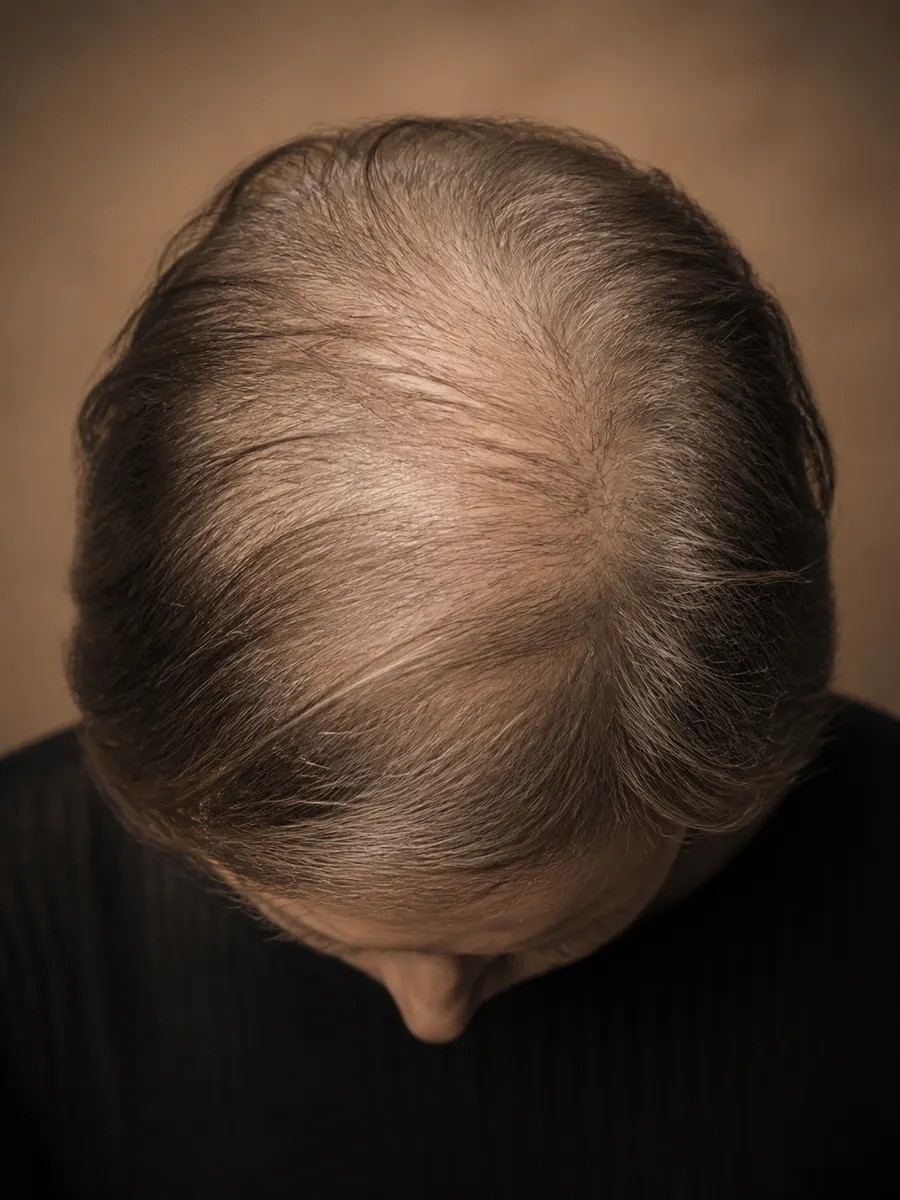
More advanced loss
Areas where the follicle is no longer active, where regrowth no longer happens. Treatment results stay limited, and we’d rather tell you.
We refer if neededWhy women’s hair thins
Rarely a single cause, and often one you can’t see at a glance. We look at what’s at play for you before proposing a plan.
Inherited hormonal sensitivity
An inherited hormonal sensitivity thins the hair across the top and widens the part, without receding the frontal line the way it does in men.
After a pregnancy
The hormonal drop after childbirth pushes a lot of hair into the shedding phase two to three months later. It’s reversible.
Perimenopause and menopause
The fall in estrogen shifts the hair cycle, and density drops little by little across the top.
PCOS and thyroid
An imbalance like polycystic ovary syndrome or a thyroid issue can thin the hair. Bloodwork helps confirm it.
Low iron and deficiencies
Low iron (ferritin), common in women with heavy periods or a restrictive diet, weakens growth. Bloodwork checks for it.
The postpartum shed is startling, but it usually settles on its own.
- A noticeable shed two to three months after birth
- It typically returns to normal within a few months
- We act mainly if it drags well past a year
Hormones shift and density starts to drop across the top.
- The part widens and the hair gets finer
- A good window for a program like DC Bloom
- We check iron and thyroid first
The drop in estrogen deepens the thinning across the top.
- Density drops more clearly at the crown
- Some areas respond less well to treatment
- We set realistic expectations for your stage
First, we rule out what can be corrected
In women, a good share of the loss comes from a deficiency or from hormones, not a hereditary pattern. That can be checked, and often corrected, before we even talk treatment.
Bloodwork (iron, ferritin, thyroid)
Low iron or a thyroid issue slows growth, and that gets corrected. We often check it before we even talk about PRP.
Hormonal workup (PCOS, menopause)
When the cause looks hormonal, we point you to a physician for an evaluation, then adjust the hair plan afterward.
We wake the follicles still active
With the cause ruled out, we stimulate the follicles with your own growth factors, in a series then upkeep. We build on what’s yours, never a daily medication for life.
Scalp PRP
We concentrate the platelet-rich plasma from your blood and inject it into the scalp. Evidence is fair but variable, results build over several months. PRP $625, taxes extra.
See the treatment →Our women’s programDC Bloom (PRP + exosomes)
Our women’s scalp program adds exosomes to the PRP, in a series then upkeep. It’s where we take you when the groundwork follows. DC Bloom $1,590, taxes extra.
See the treatment →Long-term upkeep
A female pattern is chronic: we manage it, we don’t cure it. Maintenance sessions hold the gain you’ve made.
The best time to act is while the hair is still thinning
No need to alarm you to tell you something true: keeping density is easier than going back for it. As long as the follicle is thinning but hasn’t vanished, it still responds. That’s the window we look to catch with you.
Thinning hair responds better than a bare patch
PRP and exosomes wake a follicle that’s still active. On an area bald for years, the effect becomes limited, and we’d rather tell you upfront.
Keeping density is simpler than getting it back
Supporting the hair you still have asks less than trying to recreate it where it’s gone. Starting early plays on the easier side.
Early doesn’t mean in a panic
We take the time to rule out a cause like low iron before treating. Acting early means coming to talk while the window is open, not rushing.
Female hair loss is managed, not cured in one shot. The sooner we look together, the more room we have to hold your density.
Before we treat, we rule out a medical cause. Low iron gets corrected, not covered up.
How we decide, together
We start by placing your type of loss and its stage, and for a woman we first rule out a hormonal cause or an iron deficiency. For PRP, we also look at your blood quality. That’s what tells us whether you’re a good candidate and at what pace to go.
When a treatment won’t change enough, we say so, even if it means pointing you elsewhere. Three nurses and three medical estheticians, seven years of experience and more than 700 reviews in Sainte-Rose, Laval.
Your questions
We start with your skin.
An honest evaluation, then a step-by-step plan. You decide, we advise.