
Men’s hair loss: it starts at the temples
In men, the temples recede and the top thins, often for hereditary reasons. It’s gradual, and that’s exactly why we act early: while the hair is thinning but not gone, we can support it.
Looking for women’s hair loss? See the women’s page →
Male pattern loss follows a recognizable path
In men, loss almost always follows the same hereditary path. The temples hollow out and the hairline creeps back. Later, the crown at the top of the head thins in turn. It’s different in women, whose frontal line usually stays intact while density drops behind it.
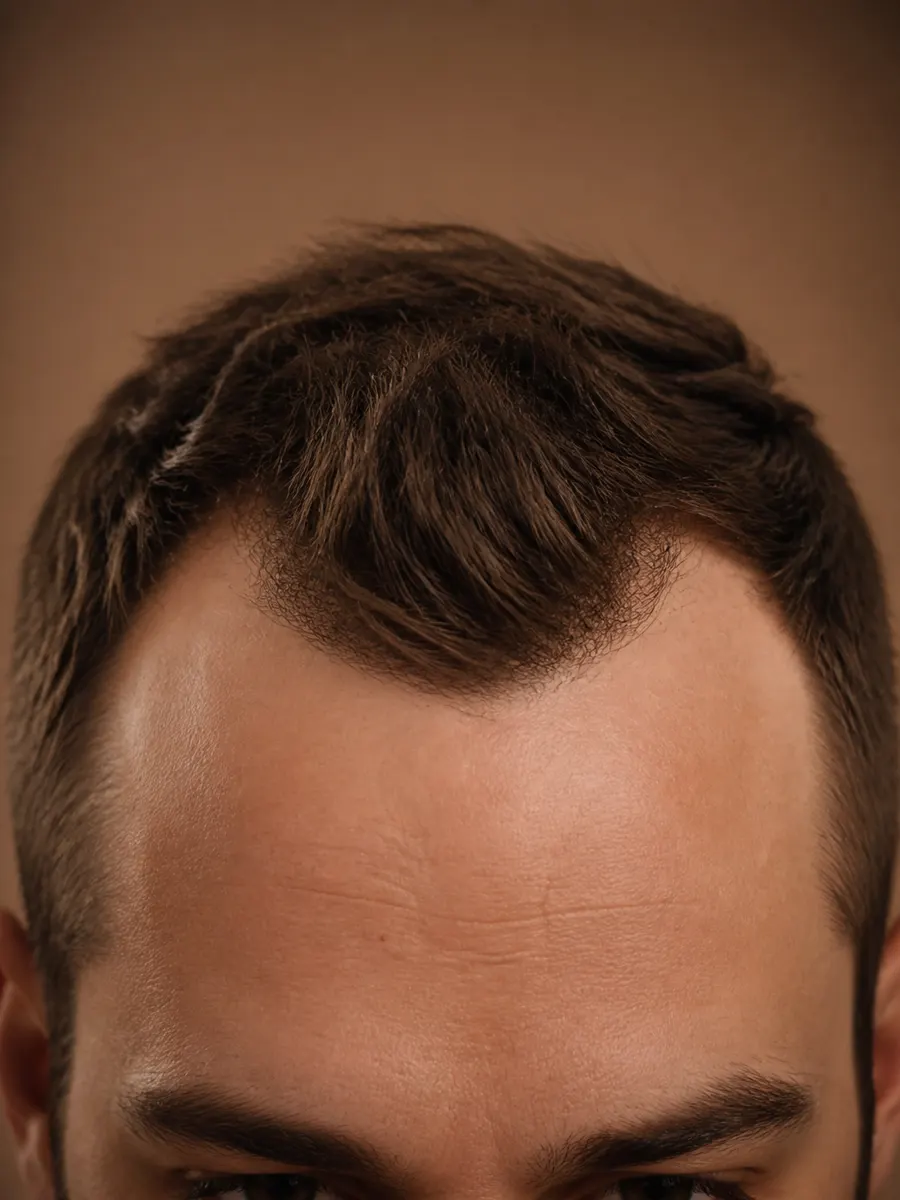
Receding temples and hairline
The temples hollow and the forehead climbs, gradually drawing the classic M of male pattern loss. These are the most stubborn zones to treat.
The most common male pattern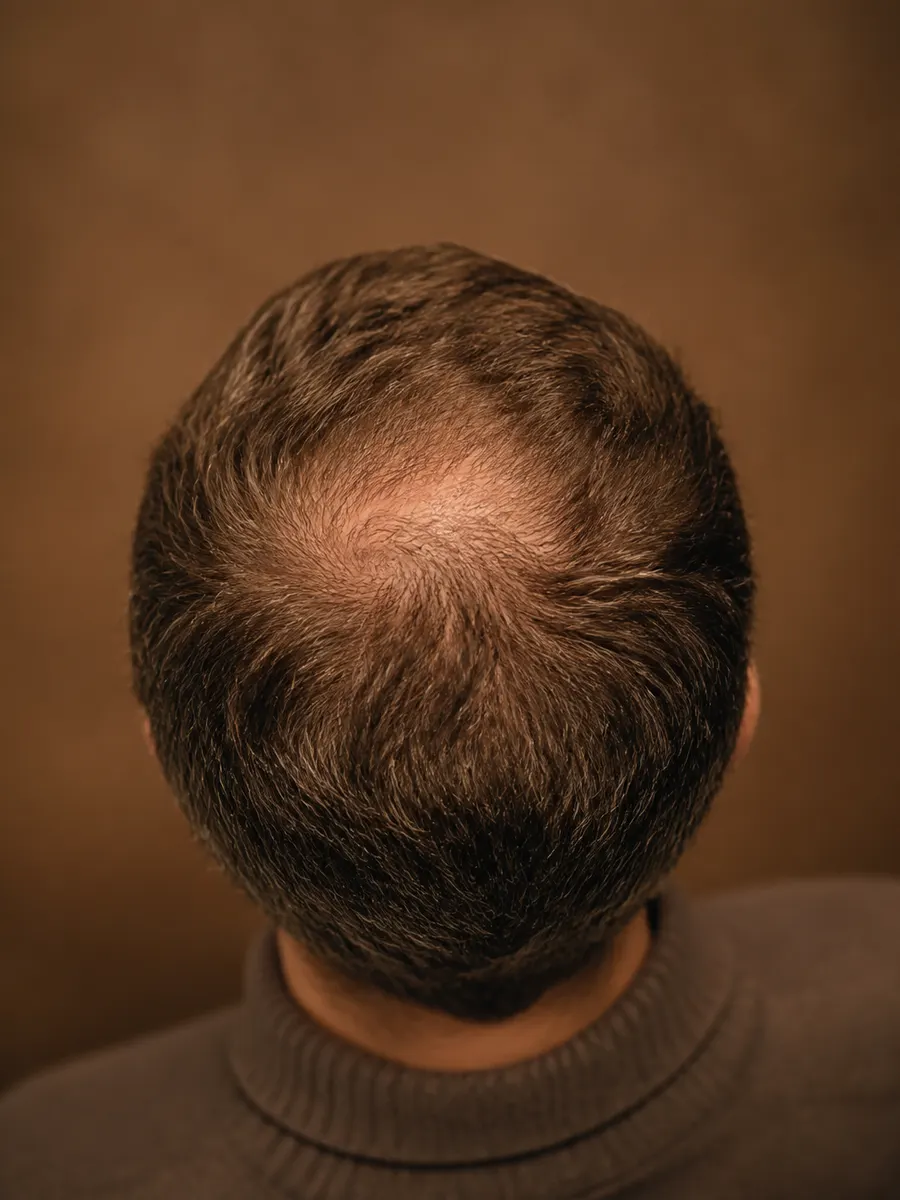
A thinning crown (vertex)
The top of the head thins in a circle, often unnoticed by the man himself until a photo shows it.
Still responds if you act early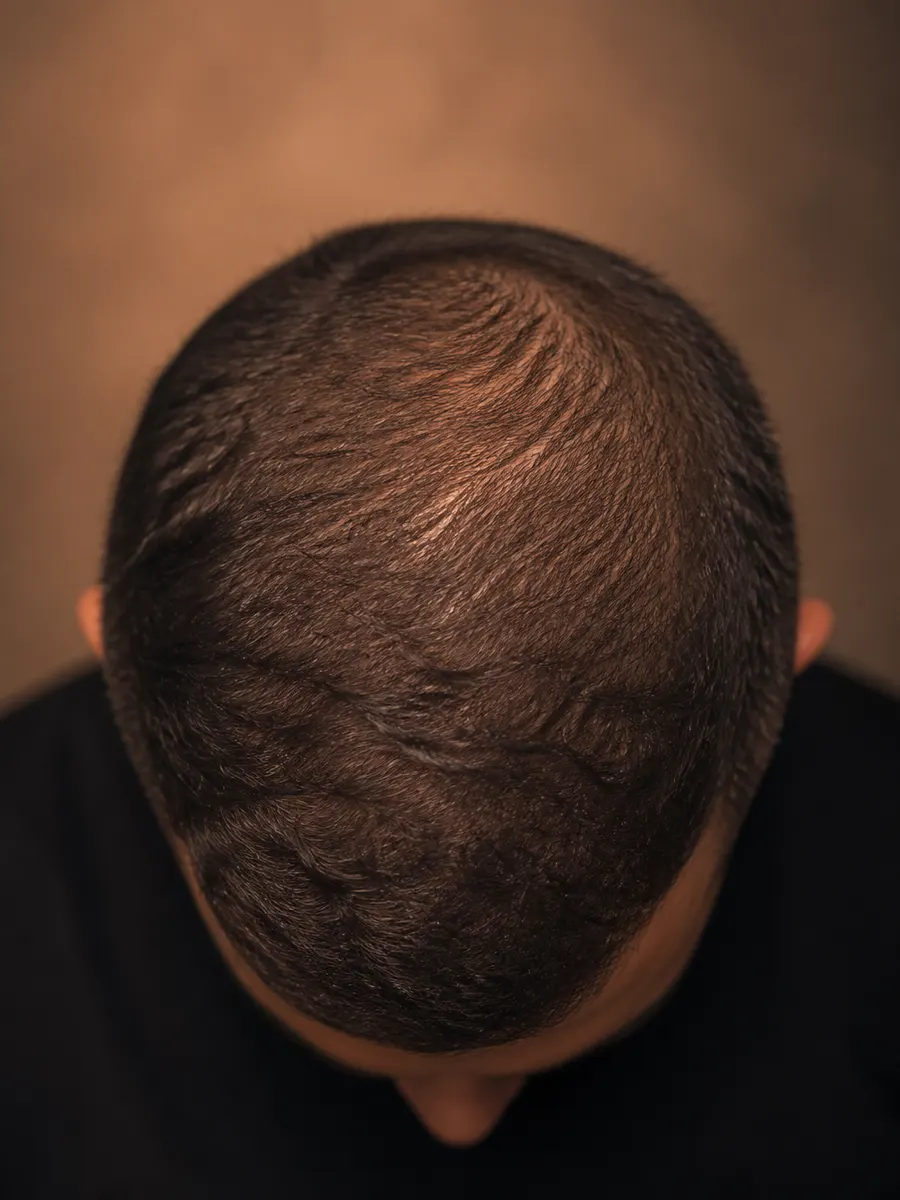
Lighter diffuse thinning
Density drops fairly evenly, with no clearly bald zone. This is the stage that responds best to treatment.
A good candidate for PRP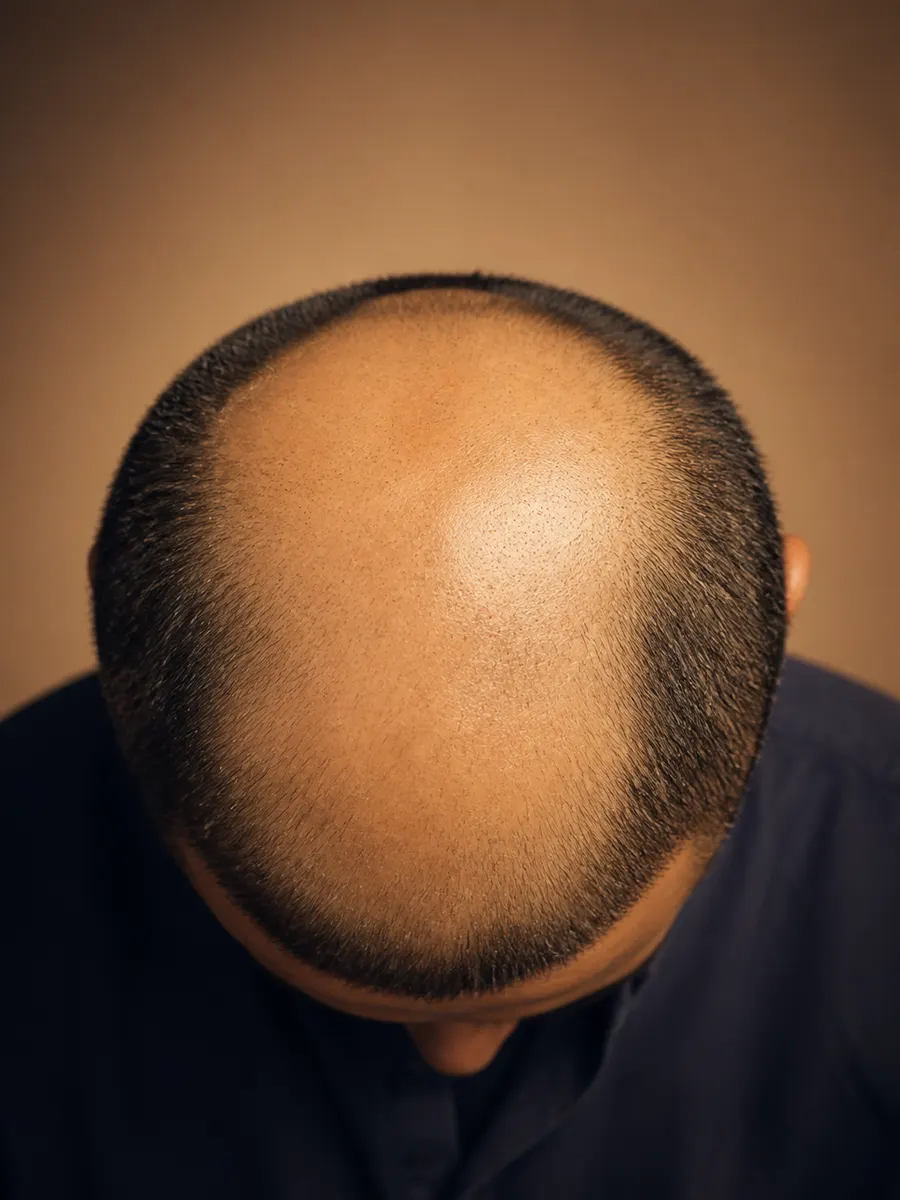
An already-bald zone
Where the follicle has been dormant a long time, regrowth no longer happens. A density treatment changes little there, and we’d rather tell you.
We refer if neededWhere are you on the Norwood scale?
The Norwood scale maps the stages of male hair loss, from an intact hairline to a crown that keeps only a ring of hair. Placing your stage tells us what a treatment can still do.
We act mainly early, around stages 2 to 4, while the follicle still responds. At advanced stages a density treatment does little, and we tell you plainly. Stage 3 also has a “vertex” variant, where the crown thins before the temples.
Why men lose their hair
In men, one cause dominates by far, and a few others sometimes add to it.
Heredity and DHT
By far the most common cause. A follicle genetically sensitive to a hormone derived from testosterone, DHT, thins with each cycle until it produces only fine down.
It often starts young
Common balding can begin in the 20s or 30s and moves in steps. The longer you wait, the more zones tip beyond the reach of treatment.
Stress and shock
Major stress or illness can shed a lot of hair at once, two or three months later. That kind of shedding is often reversible, unlike heredity.
Iron and thyroid
Low iron (ferritin) or a thyroid issue weakens growth in men too. Bloodwork helps check whether there’s a brake to correct.
Smoking and lifestyle
Smoking and poor sleep don’t explain balding, but they can speed up an already sensitive predisposition.
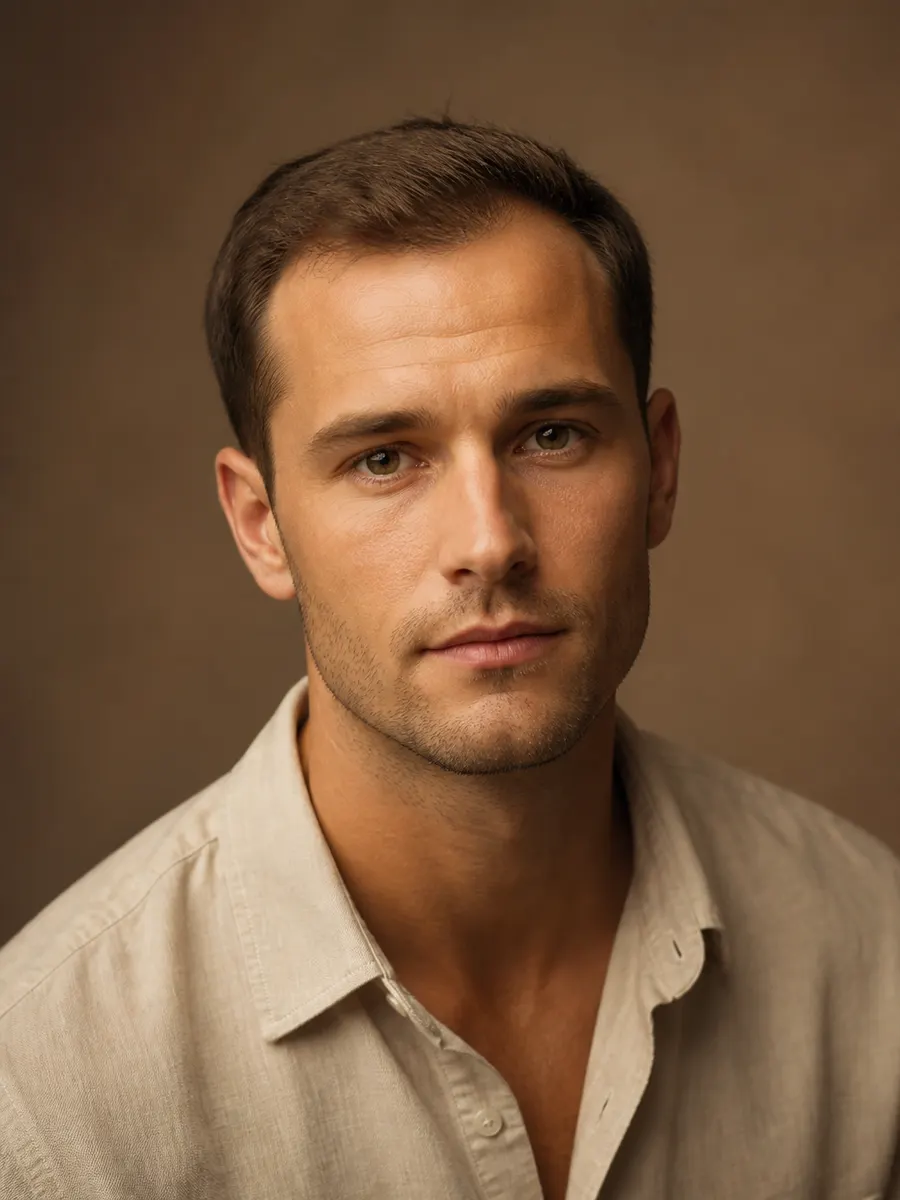
The temples start to hollow, density shifts under certain lighting. Almost everything is still there to act on.
- Thinning follicles still respond well
- The best moment for a program like DC Prime
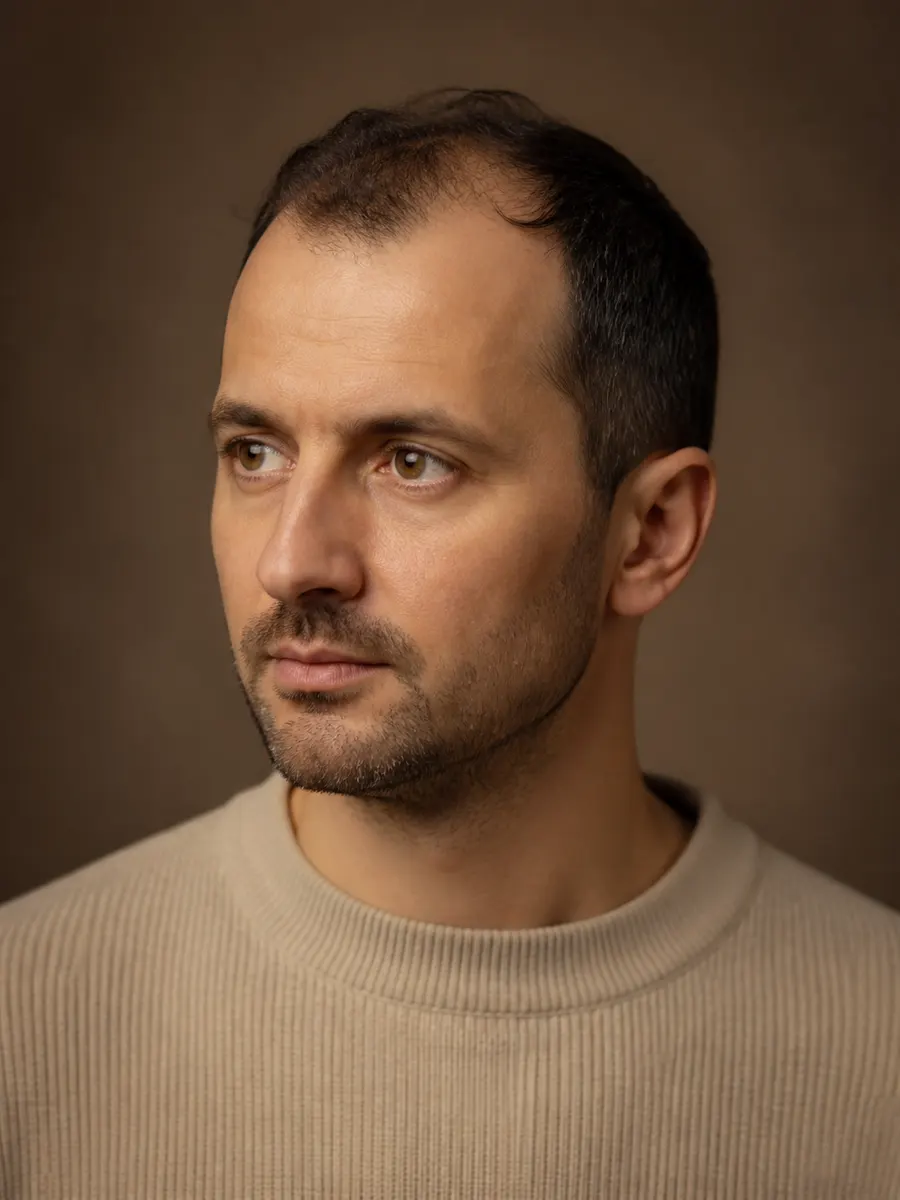
The hairline and crown become clearly visible. The window stays useful, but it’s closing.
- Still a good window for PRP, with medical support
- We set realistic expectations for your stage
Large areas no longer have an active follicle. What a density treatment can do becomes limited.
- PRP does little where the follicle is dormant
- We tell you frankly and can refer you to a physician or a transplant
First, we place your stage, honestly
Before treating, we look at where you are on the Norwood scale and your blood quality for PRP. An area still thinning isn’t treated like one bald for years, where the follicle no longer responds.
We place your stage
We look at the stage and your blood quality. No density treatment if the follicle is already dormant: we tell you upfront rather than have you pay for nothing.
Bloodwork (iron, thyroid)
Low iron or a thyroid issue slows growth. Checking and correcting it is often part of the plan.
Transplant: when it’s the right call
On an already-bald zone, only a transplant brings hair back. It’s a surgical procedure we don’t perform here, and we refer you to a specialized centre when it’s indicated.
We wake the follicles still active
With the stage placed, we stimulate the scalp with your own growth factors, in a series then upkeep. We build on your follicles, early, never a daily medication for life. None of this regrows an already-bald zone.
DC Prime
Our intensive male program: a series of PRP, drawn from your blood, reinforced with exosomes at the key stage. DC Prime $1,998, taxes extra.
See the treatment →DC Prime Exo
The most complete formula: PRP and exosomes combined at every session. DC Prime Exo $2,395, taxes extra.
See the treatment →DC-Exo
The exosome-only route, without a blood draw, open to all hair types. DC-Exo $1,898, taxes extra.
See the treatment →Ultra Exo
The LaseMD Ultra laser and exosomes combined at each of the four sessions: the laser works the scalp, the exosomes carry the signal. No blood draw. Ultra Exo $1,898, taxes extra.
See the treatment →Long-term upkeep
Balding is chronic: we manage it, we don’t cure it. Maintenance sessions hold the gain you’ve made.
What it looks like on a real crown
People followed here, photographed from the same spot and the same angle before and after their program.

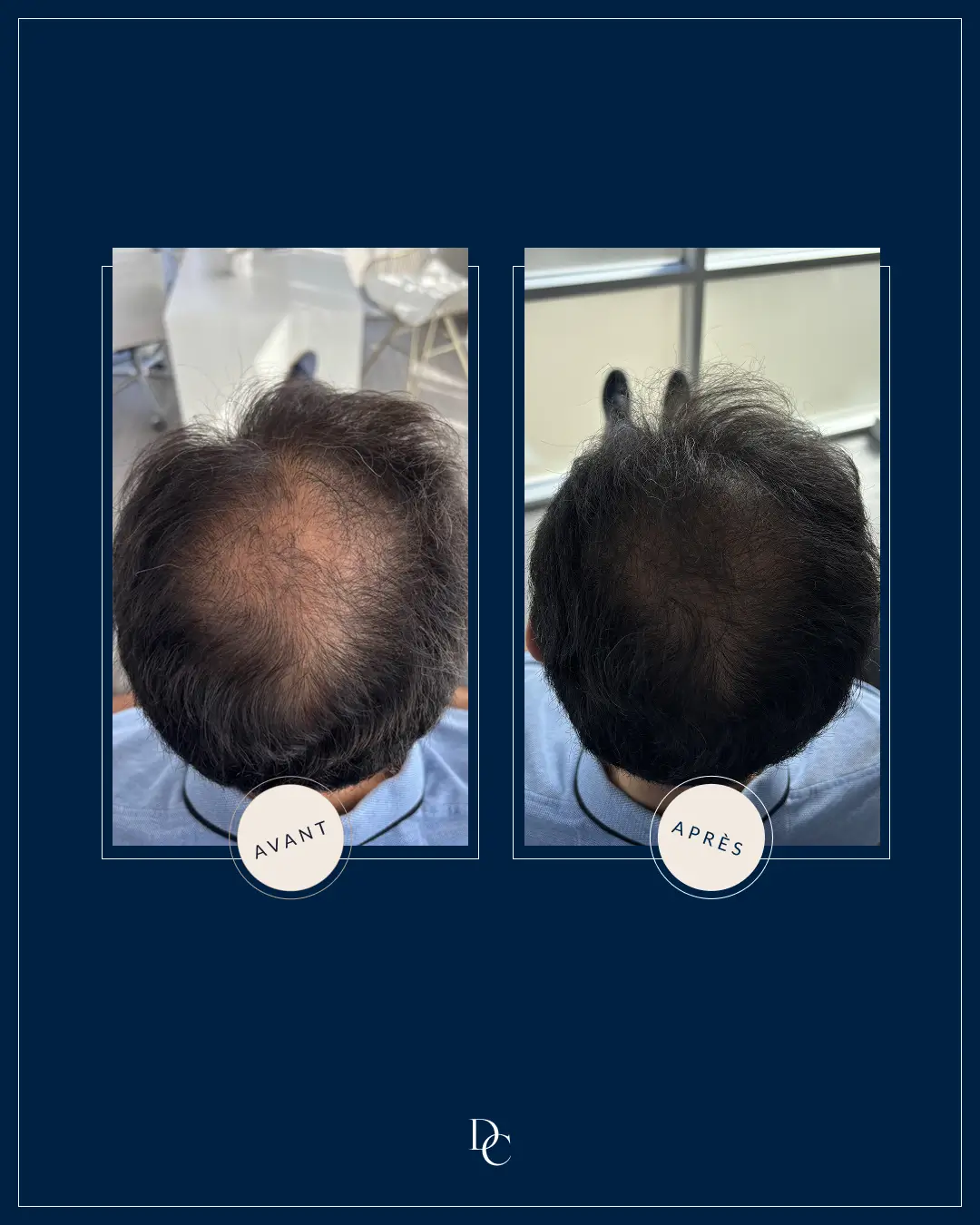

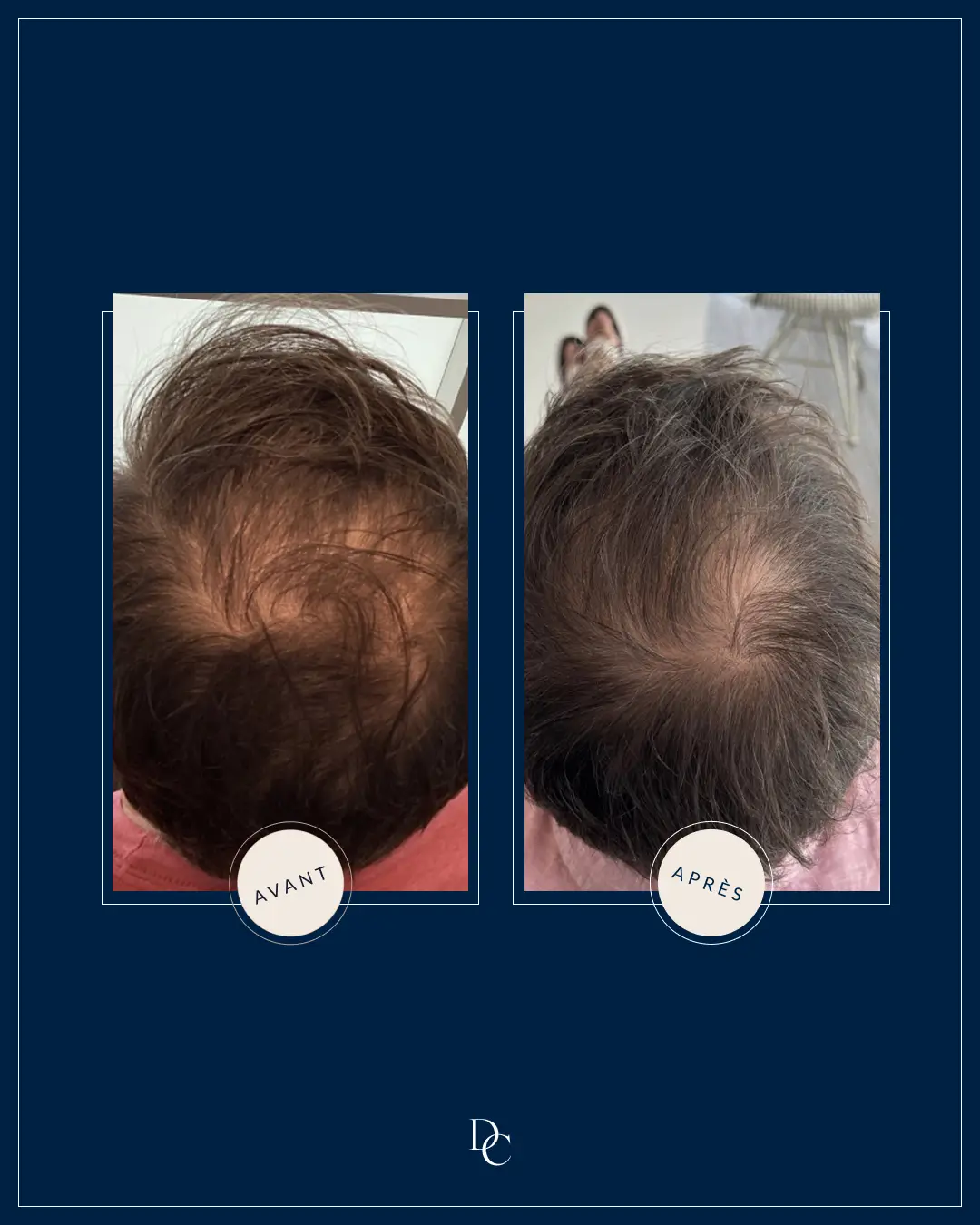
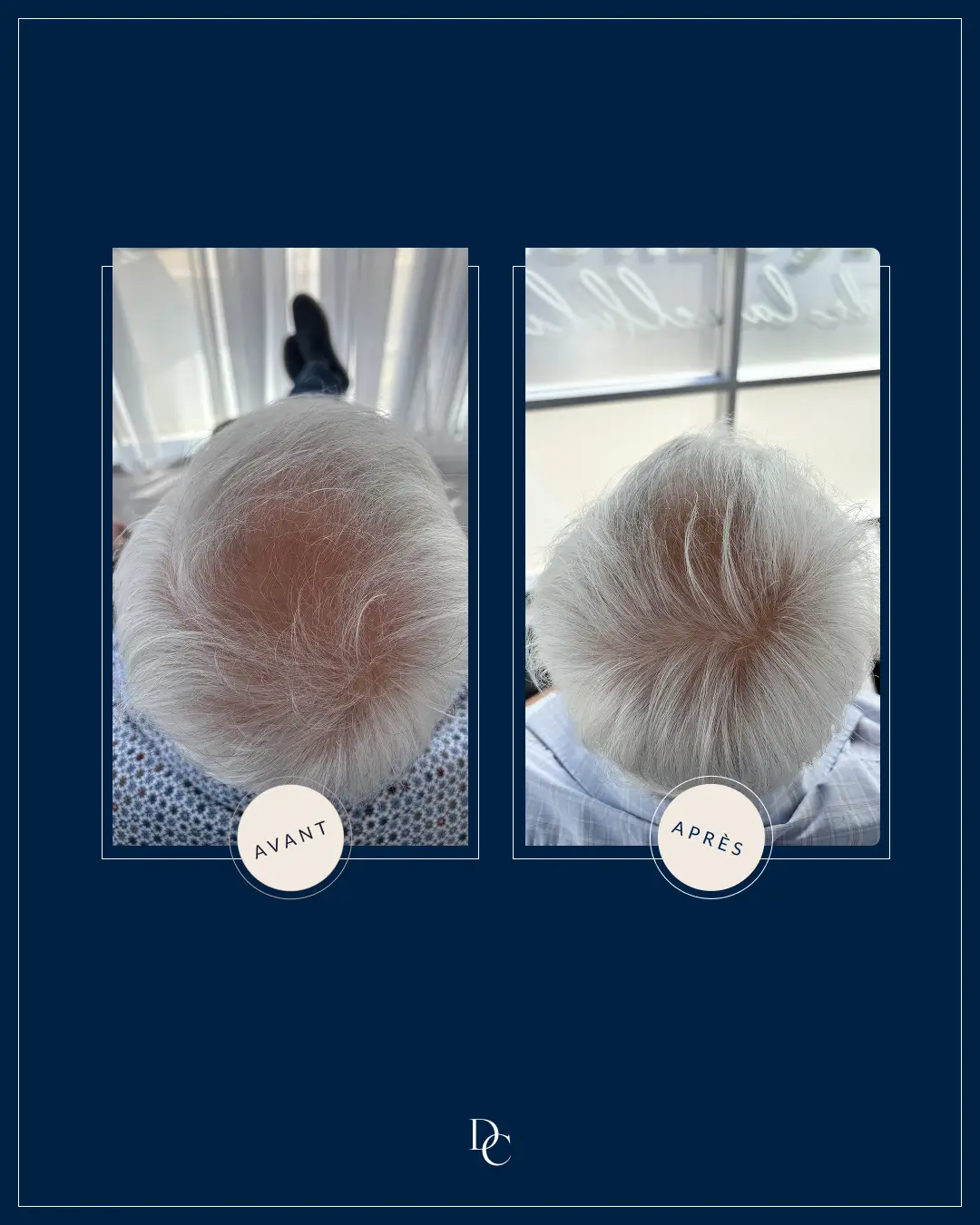


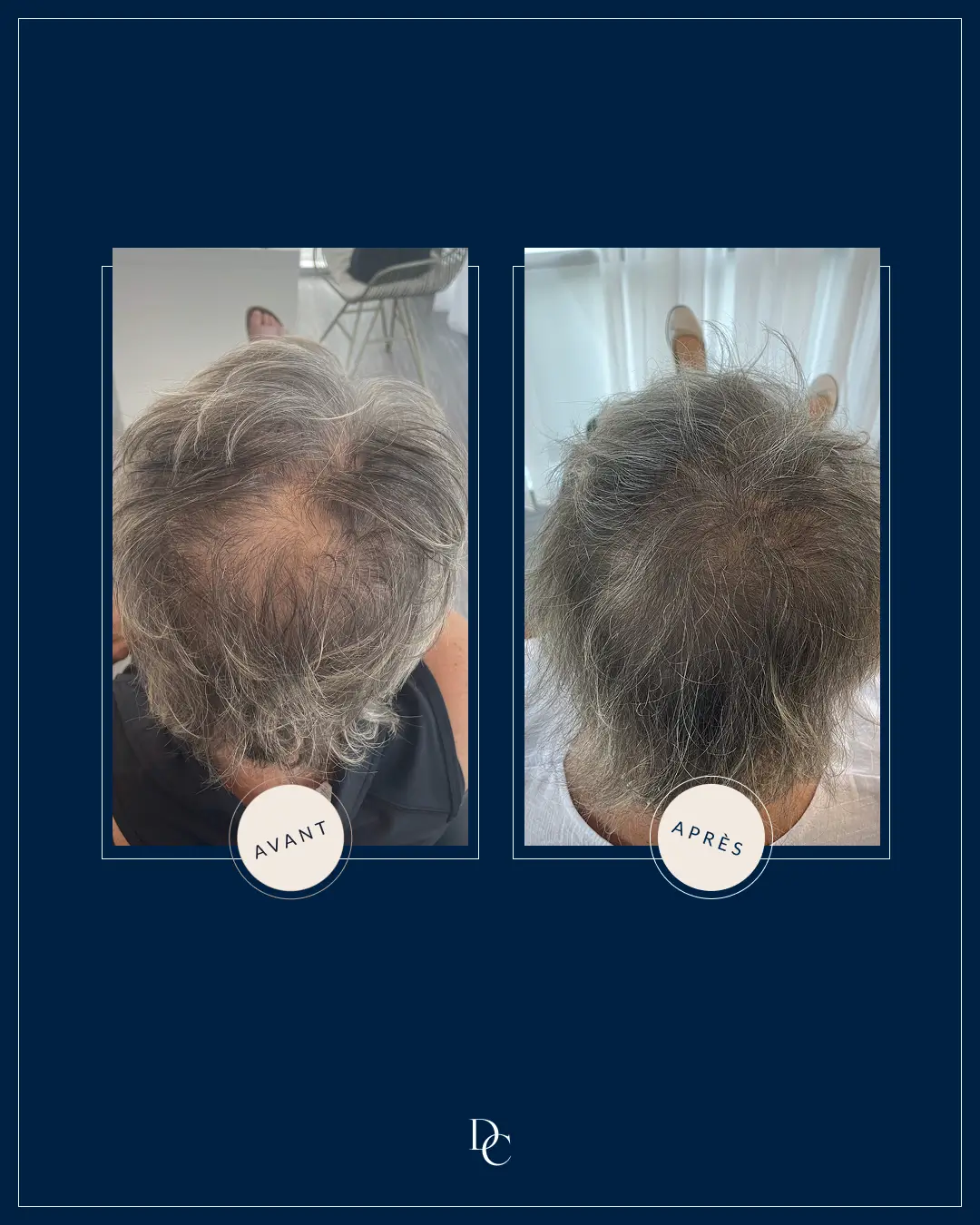

Every case differs: age, stage and how your follicles respond change what you get. We promise no result, and at the assessment we tell you what is realistic for you.
The window to act is now, while the hair is thinning
No need to dramatize: in men, loss is gradual, and that’s exactly what gives you room. As long as the zone is thinning but not bald, the follicle still responds. Once an area has been fully bare for years, it no longer does.
The early stages respond best
At early stages, say Norwood 2 to 4, the follicle thins but still works. That’s where PRP and exosomes get the most traction.
Keeping density rather than chasing it
Supporting the hair you still have is more realistic than hoping to repopulate a bare crown. We build on what’s there.
Your own follicles, not a lifelong pill
Our angle is to wake your follicles early with PRP and exosomes, rather than commit you to a daily pill for good.
We first place your stage on the Norwood scale, honestly. If a zone is too far gone, we tell you rather than have you pay for nothing.
A fully bald area doesn’t grow back. Telling you upfront saves you paying for nothing.
How we decide, together
We start by placing your stage on the scalp, and for PRP we look at your blood quality. That’s what tells us whether you’re a good candidate and at what pace to go. On progressing balding, we act early and rely on your own follicles, without putting you on a medication for life.
When an area is already dormant, we say so and can point you to a physician or a transplant rather than have you pay for little. Three nurses and three medical estheticians, seven years of experience and more than 700 reviews in Sainte-Rose, Laval.
Your questions
We start with your skin.
An honest evaluation, then a step-by-step plan. You decide, we advise.