Laser Hair Removal: When to Start, Month by Month
When to start laser hair removal? The dates month by month for a November start, at each pace, what the sun changes, and what we don't promise you.

No laser hair removal is truly painless. What makes a session bearable, zone by zone, and what an honest clinic cannot promise you in advance.

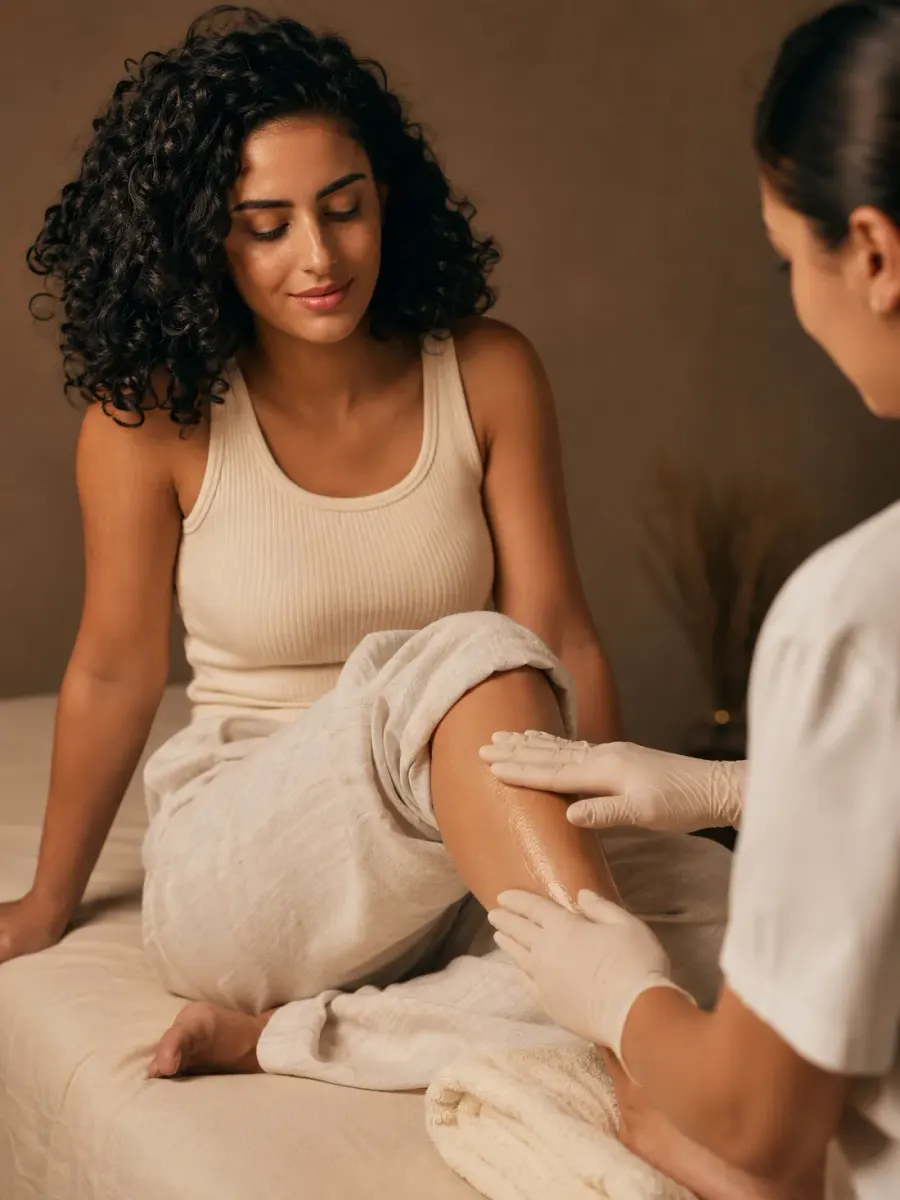
Yes, laser hair removal can be felt. Most people describe a brief flash of heat, a bit like an elastic snapping against the skin. What makes it bearable is above all the cooling of the skin on every pulse, and the sensation usually eases from one session to the next.
This article explains where the sensation comes from, what cooling changes, what you feel area by area, and what we will not promise you.
Online you read two opposite things. On one side, stories of painful sessions. On the other, devices sold as "completely painless". Neither promise is quite true.
A well-tuned session is tolerable without numbing in most cases. That does not mean you feel nothing. The American Academy of Dermatology puts it this way: many patients say the laser pulses feel like warm pinpricks or a rubber band being snapped against the skin.
As for devices sold as "painless", they often work with less energy per pulse. The sensation is gentler, but it can take more sessions to get the same result. It is a trade-off, not a magic technology.
The laser targets the pigment in the hair. The hair absorbs the light, which turns into heat, and that heat reaches the follicle, the small root under the skin. That heat is what destroys the follicle, and it is also what you feel.
The darker and coarser the hair, the more energy it absorbs, and the sharper the flash of heat. That is why the first sessions are often the most intense: there is more hair, and it is thicker. As the hair thins, the sensation fades.
What protects the surface and makes the session tolerable is cooling. A 2016 review in the Journal of Cutaneous and Aesthetic Surgery (Das, Sarda and De) describes three ways to cool the skin during laser treatment.
| Cooling method | How it works | What the review says |
|---|---|---|
| Contact | A cold surface on the skin draws heat away | Protects the epidermis during the pulse |
| Cryogen spray | A very cold burst just before the pulse | Wide safety margin; pain reduction is notable in darker skin |
| Continuous cold air | A stream of cold air over the area | Linked to more brown marks after inflammation |
On cryogen spray, the authors write:
"The reduction in pain is significant in patients with darker skin types."
The review gives no pain scores. So it does not tell us how much the sensation drops, only that cooling makes a difference.

Our device, the Clarity II by Cynosure Lutronic, has cooling built into the handpiece that lowers the surface temperature on every pulse. It combines two wavelengths, 755 nm alexandrite and 1064 nm Nd:YAG, which lets us treat every skin type.
We describe the session as bearable. We do not describe it as painless, because that would not be true.
The sensation depends mostly on two things: how thin the skin is and how dense the hair is. Areas with thin skin and dense hair are the most sensitive.
If an area worries you, say so before you start. The medical aesthetician adjusts the settings and pace to what you feel.

A few simple steps make the session more comfortable, and they also matter for safety:
The article on how to prepare for laser hair removal covers these steps and their timing. For a pain reliever or a cream before your session, we discuss it at your assessment: we do not give a product or a dose in writing.
What we can tell you is the rhythm: one session a month to follow the hair cycle, eight sessions on average, sometimes up to twelve. If you are still weighing technologies, the article on which laser for hair removal compares device families. The laser hair removal for women page lists areas and prices, taxes extra.
It feels different: a brief flash of heat with each pulse, rather than pulling. Which one feels worse depends on the person; with laser, it eases over the sessions as the hair thins.
Often because their device works with less energy per pulse. The sensation is gentler, but it can take more sessions.
Areas with thin skin and dense hair, such as the bikini line, underarms and upper lip.
Usually, yes. As the hair thins and becomes sparser, it absorbs less energy, and the sensation drops.
We discuss it at your assessment, based on your health and the area. We do not recommend a product or a dose in writing.

When to start laser hair removal? The dates month by month for a November start, at each pace, what the sun changes, and what we don't promise you.
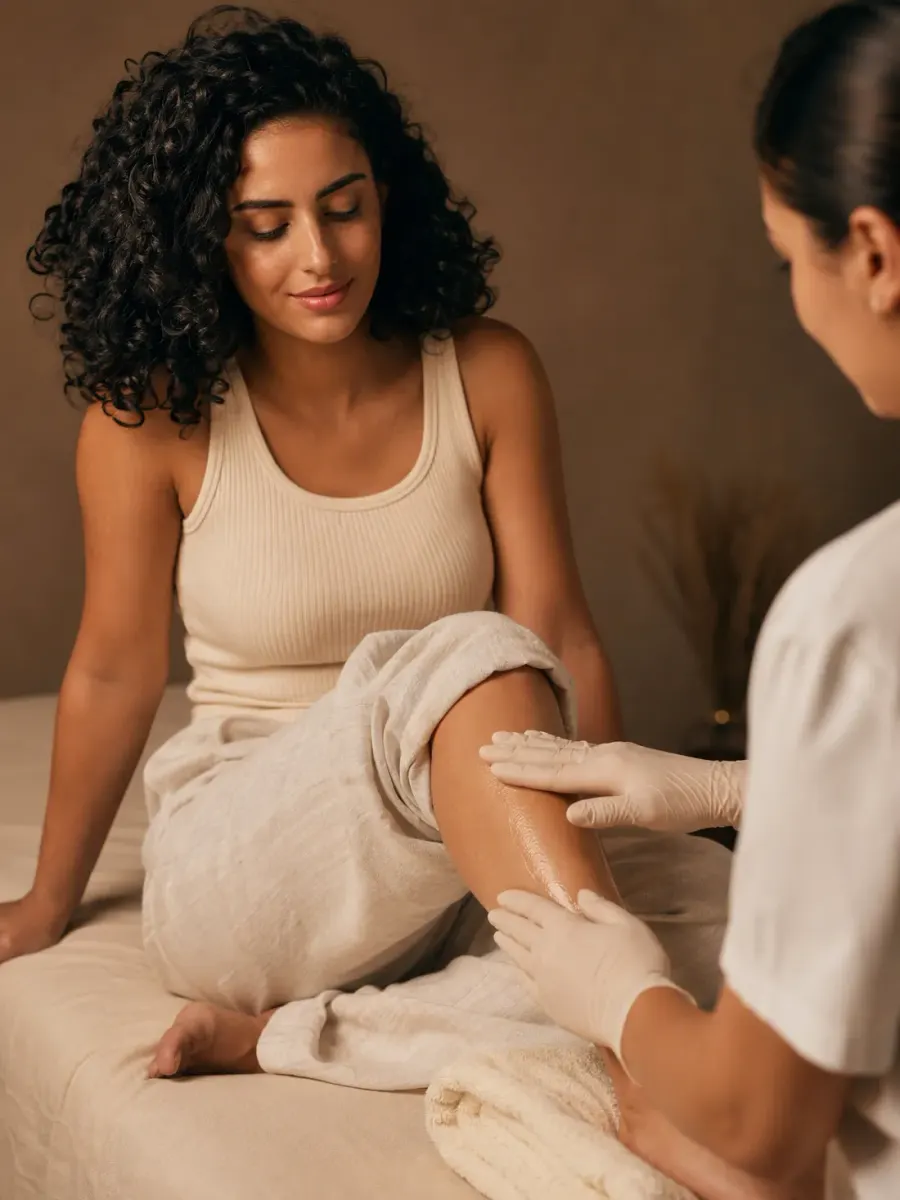
Full legs and full arms with a laser: about 8 sessions, one every 4 to 6 weeks. The per-session price compared with the Unlimited Zones plan, with the math.

Alexandrite, diode or Nd:YAG: what each laser does, for which skin and hair, explained in plain words, with what the research says about how they work.
The best plan starts with an assessment. We look at your skin and answer your questions, no obligation.

Hi, I am Stella. Ask me about a treatment, a price or the clinic, and I will point you to the right place.
Stella answers from the site. She does not diagnose and does not book. The conversation stays 24 hours on this device, and the clinic keeps a copy.