PRP and Exosomes Together: What the Combination Changes for Your Hair
Combining PRP and exosomes in one hair protocol: what exosomes add, and our programs that bring both together.

No, most people tolerate it well. What you actually feel, and why there’s no blood draw involved.

You have heard about exosomes and one question is holding you back: does it hurt?
Let us speak plainly about what actually worries you. No, in the vast majority of cases it is not painful, and there is even a route with no needle at all.
Exosome hair treatments are well tolerated by most people.
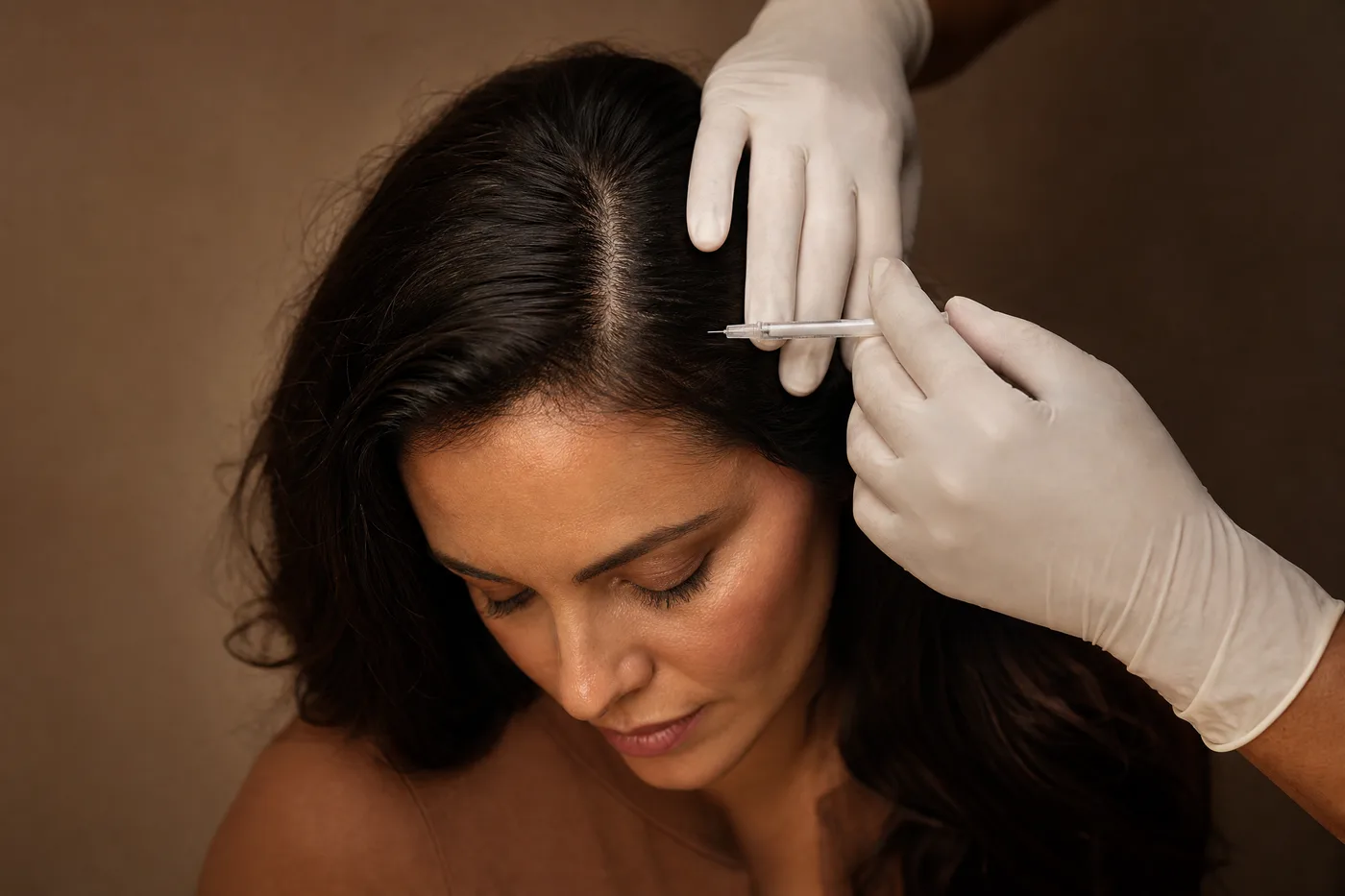
When exosomes are placed by micro-injection into the scalp:
What we do for comfort: numbing cream can be applied fifteen minutes beforehand if you are sensitive. The phrase we hear most after a first session is "that's it?".
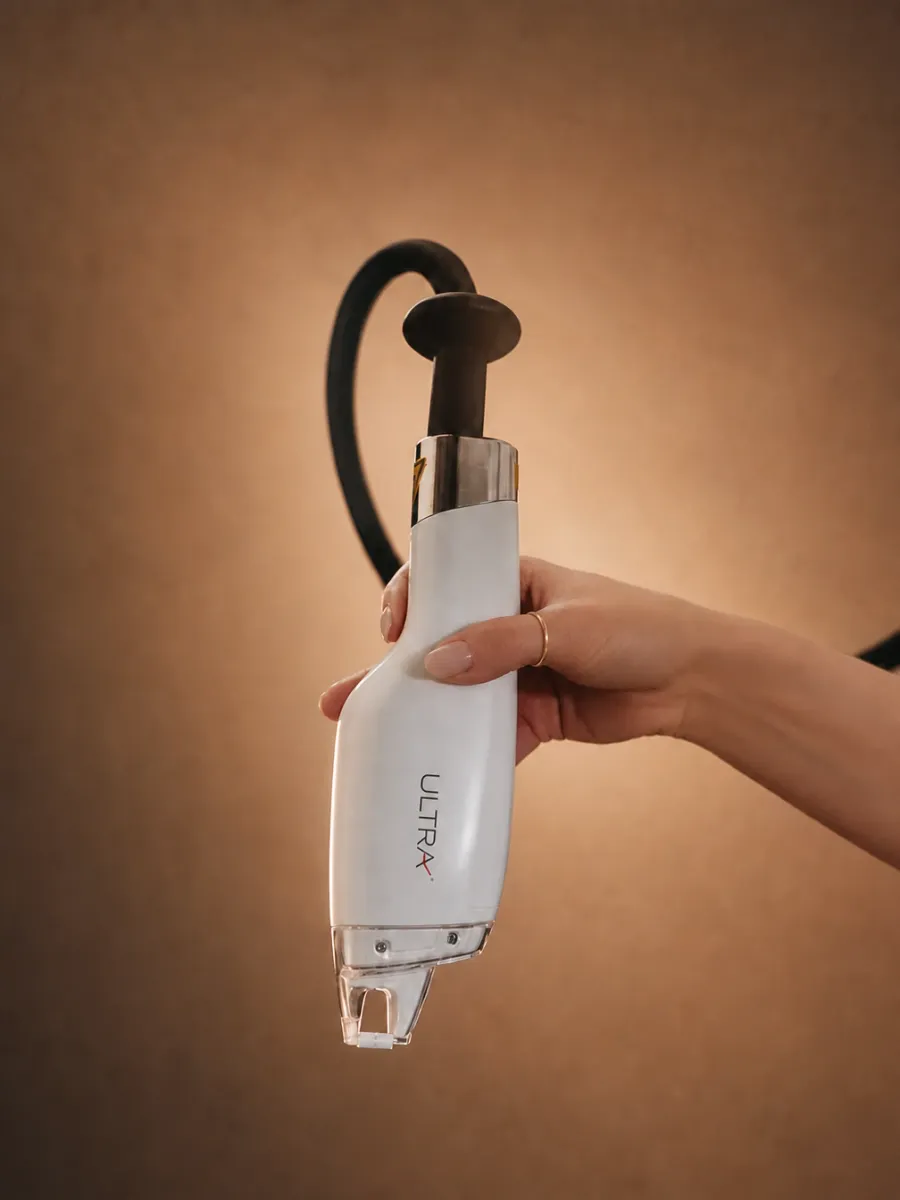
For anyone genuinely put off by needles, there is another route: laser followed by application of the exosomes, what we call Ultra Exo.
The LaseMD Ultra creates invisible micro-channels in the skin of the scalp. The exosomes are then applied and travel down those channels. We open the door, then let them in, rather than piercing.
What you feel:
During: nothing to dread, no anaesthetic to wait for, about ten minutes.
After: very discreet redness, an immediate return to your day, no downtime.
| Micro-injections | Laser and exosomes | |
|---|---|---|
| Sensation | Light tingling | Gentle warmth |
| Anaesthetic | Optional | Unnecessary |
| Aftermath | Redness 2 to 4 h | Discreet redness |
| What stops some people | The needle | Nothing |
That is the real question, and the honest answer is: the laser opens absorption pathways that let growth factors travel deep, and the available data is encouraging. But studies directly comparing the two routes on the scalp are still lacking.
In other words: both stand up, and we choose with you based on your tolerance and your situation, not on a ranking that does not exist.
The timeline, either way:
These markers describe a typical progression. The response varies from person to person.
We take the time to explain each step and answer questions before starting. If you are anxious, say so: it changes how we organize the session, and it is never a problem.
It does have a lot of nerve endings. That is exactly why we work with very fine needles, or with a non-ablative laser that creates no wound.
Few, and brief: light redness gone within 24 hours, sometimes a cool sensation. The subject is covered in detail in our article on safety.
Yes. You keep full autonomy, there is no sedation and no dressing.
Four sessions three to four weeks apart, whether you choose the needle or the laser. The difference is in comfort, not in the protocol.
They are microscopic vesicles your cells produce naturally to communicate. They carry growth factors, proteins and micro-RNA.
On the follicle, they:
It is your own regeneration process being restarted, with a signal from outside. Honest note: exosomes are not approved by Health Canada for hair regrowth, even though their use is common in clinics.
Comfort is equivalent by injection, and better with laser since there is neither needle nor blood draw.
Effectiveness: PRP is better documented and has more hindsight; exosomes have a more consistent concentration. Neither one crushes the other, and anyone telling you otherwise is simplifying.
They are not competitors. A transplant redistributes existing hair to bare areas; exosomes wake follicles that are still alive. If you have genuinely bare areas, a transplant is what you need, and we will tell you so.
The right profile:
The contraindications:
Every path starts with a scalp assessment, where we look at the history of your loss, its possible causes, what you expect, and your tolerance for treatment.
That is where the recommendation comes from: needle or laser, based on what suits you.
Fear of needles is a perfectly valid reason not to have a treatment. That is precisely why the no-injection route exists.
Comfort is not a detail: someone who dreads every session ends up not finishing their protocol, and it is the unfinished protocol that fails, not the product.
To place your case, start with our hair page.
Combining PRP and exosomes in one hair protocol: what exosomes add, and our programs that bring both together.

PRP for hair reinjects your platelets’ growth factors to wake follicles that are still alive. Here is how it works, step by step.

The evidence on hair PRP is decent but variable. We explain honestly who it works on, and who it does not.
The best plan starts with an assessment. We look at your skin and answer your questions, no obligation.

Hi, I am Stella. Ask me about a treatment, a price or the clinic, and I will point you to the right place.
Stella answers from the site. She does not diagnose and does not book. The conversation stays 24 hours on this device, and the clinic keeps a copy.