Does Facial Radiofrequency Actually Work? What the Studies Show (and Don't)
Yes for mild to moderate sagging, more modest on fine lines, no for expression lines: what the studies say, and the limits of that evidence.

Cost, sessions, slow results, limits: the real downsides of facial radiofrequency, what the studies say, and what is known about radiofrequency and cancer.


The real downsides of facial radiofrequency are mostly practical: several sessions, yearly upkeep, a result that builds over months, and limits no session gets past. If you are hoping for a facelift, that is where disappointment starts.
The risks (redness, burns) have their own article: side effects. Here, we cover what the treatment costs, what it asks of you, who it will not be enough for, and the cancer question.
Two sessions for the best result, then one upkeep session a year: that is the first downside, and we tell you before you pay.
The treatment is not a one-time payment. Here is what adds up, and when.
| What you pay for | When |
|---|---|
| One XERF session: $1,500, taxes extra | Every session |
| Two sessions, for the best result | At the start, and we can do more |
| One upkeep session | Once a year |
| Your time: 90 min | Every session, full face and neck |
The manufacturer sets a price floor on the session, so ours is never discounted: our offers add treatments around the sessions.
This is a cosmetic treatment, and you pay for it yourself. Medical News Today writes that American private insurance and Medicare do not usually cover it. In Quebec, only your own insurer can tell you what it does for you.
The gain does not keep itself. Collagen keeps aging, and the Cleveland Clinic writes that the results of radiofrequency skin tightening are temporary.
Here, the stated duration is generally 12 to 18 months for most people, sometimes up to 24 months, with good upkeep, and it varies with age, how much laxity you have and your lifestyle. In other words, you plan next year's session today.
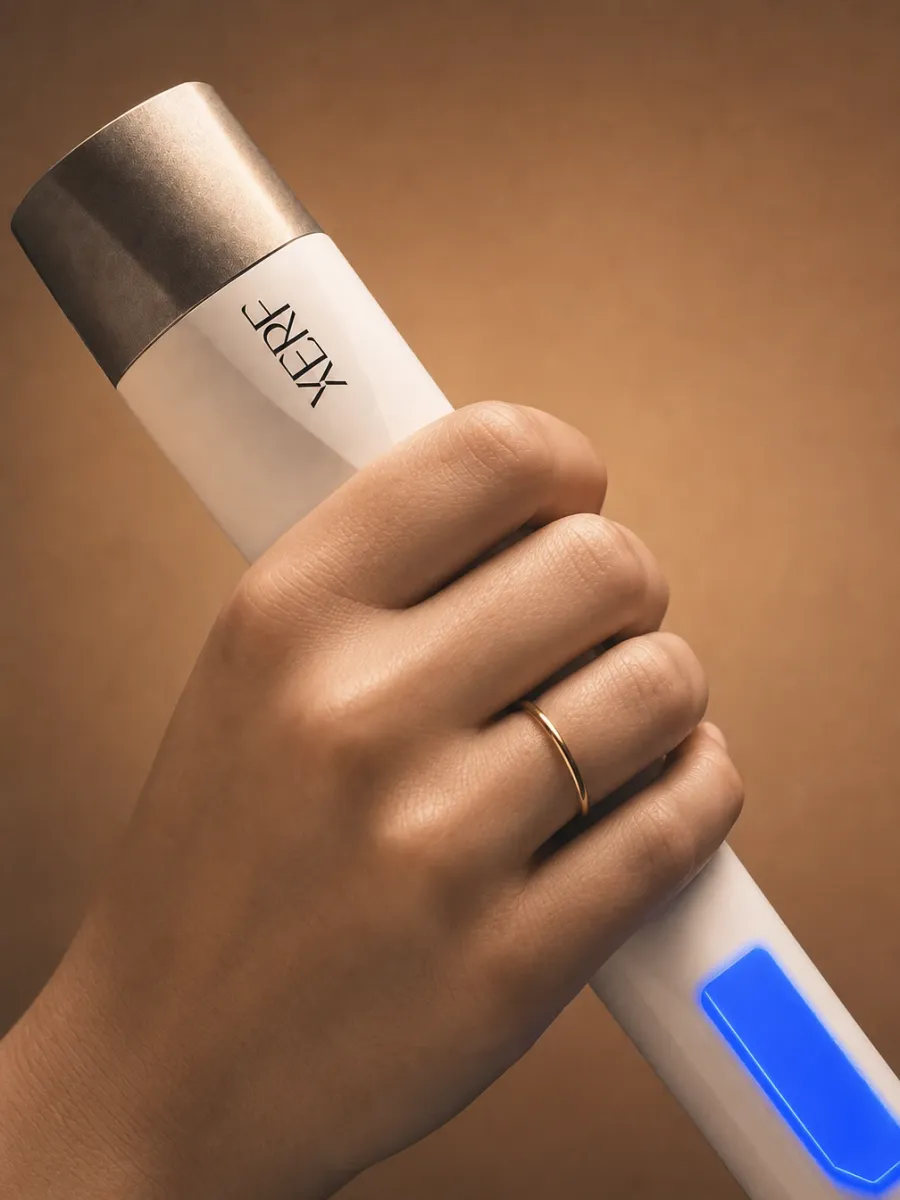
Some people notice a firming effect right after the session, thanks to existing collagen contracting. It is partial. The skin then keeps improving over 3 to 6 months while new collagen forms.
That is the downside: you spend weeks not knowing. The next day, the mirror says almost nothing, and that silence is easy to read as failure. If you have an event in ten days, radiofrequency is not the right calendar.
This is not about what rules the treatment out (pregnancy, an implanted device: that is checked at the assessment). It is about people for whom it is allowed, who expect something else.
| What you expect | What the treatment does |
|---|---|
| A facelift | Tightens skin. On very advanced laxity, surgery gives a result radiofrequency will not reach |
| Removing excess skin | No energy device removes skin |
| Filling a hollow | Does not fill. Volume comes back with a dermal filler, placed by a nurse |
| Removing fat | Does not remove it: for a pocket under the chin, it is not the right tool |
| Erasing spots or redness | Does not target pigment: that is another device |
According to the Cleveland Clinic, the treatment is less effective on severely sagging skin. When surgery answers better, we say so: the article radiofrequency or surgical facelift compares the two plainly. And the assessment may conclude it is not the right option for you. Am I a candidate? sorts it by age and by laxity.

We quote no review, and we make none up. The disappointments you read online almost always have the same sources:
There is also a problem with the evidence. A 2025 systematic review (Kumar et al., Aesthetic Surgery Journal Open Forum) reports small samples, often no control group, unvalidated satisfaction scales, a likely influence of selective publication, and studies funded by device makers. What we tell you in advance: two sessions, yearly upkeep, no skin removal, and an assessment that can end in a no.
Three different things share the same name.
And if you have already had cancer? We write no rule here: talk to your own doctor, then at the assessment.
They are mostly practical: several sessions, yearly upkeep, a result that builds over 3 to 6 months, and limits (no skin removal, no volume added). The risks are in the article on side effects.
We quote none. The disappointments come from a facelift expectation, a result promised too fast, a number of sessions announced late, or a home device compared to a clinic device.
The literature mostly reports satisfaction, but in small groups and with unvalidated scales (Kumar et al., 2025). We cite no percentage, because none is solid enough to help you.
Health Canada finds no link between environmental radiofrequency waves, at permitted levels, and cancer. For cosmetic treatments we cite no follow-up study: absence of proof of harm, without a promise. Your own history is something to discuss with your doctor and at the assessment.

Yes for mild to moderate sagging, more modest on fine lines, no for expression lines: what the studies say, and the limits of that evidence.
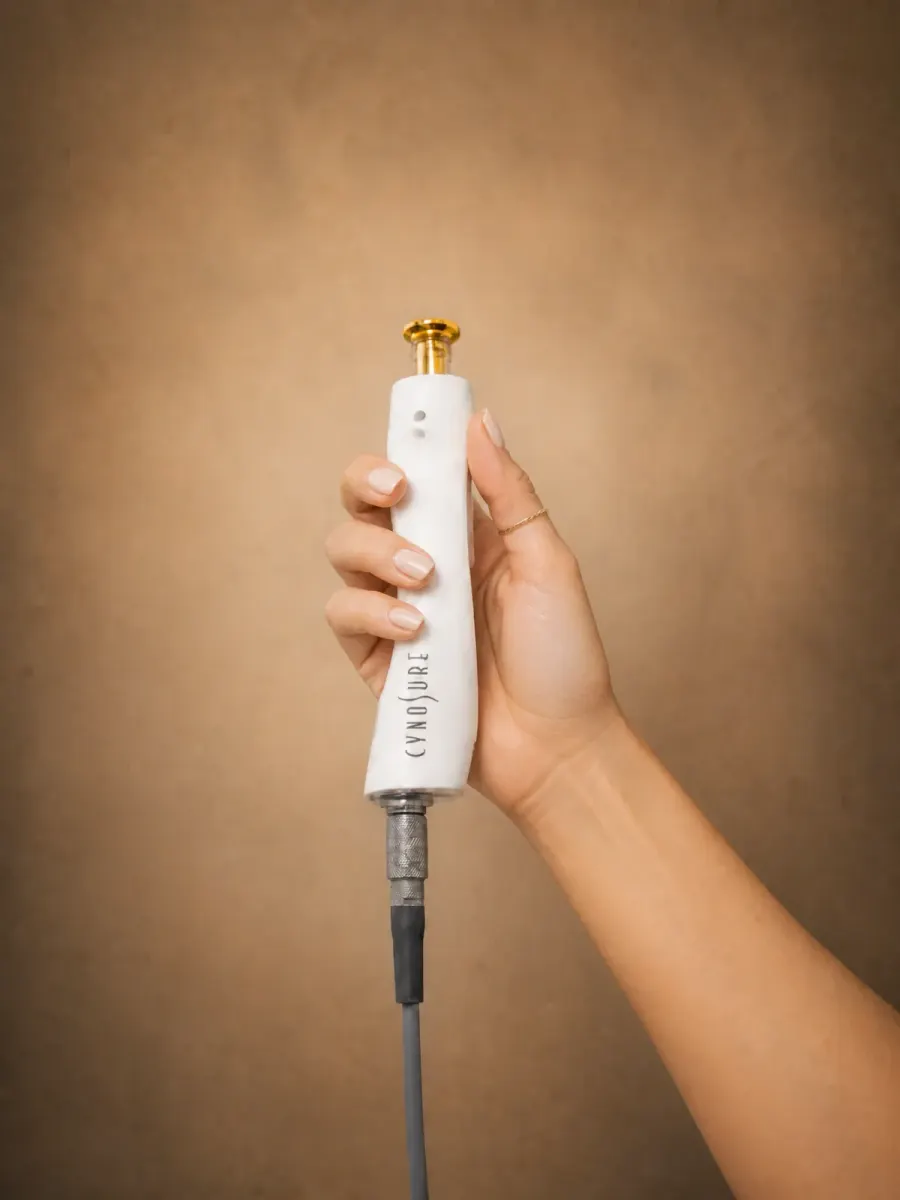
TempSure or XERF: two radiofrequencies, two depths of heat. Which one fits what you see in the mirror, and when the gentler one is truly enough.
One word, three technologies, very different bills. What changes the price of a face-tightening treatment, and where you can read our own prices.
The best plan starts with an assessment. We look at your skin and answer your questions, no obligation.

Hi, I am Stella. Ask me about a treatment, a price or the clinic, and I will point you to the right place.
Stella answers from the site. She does not diagnose and does not book. The conversation stays 24 hours on this device, and the clinic keeps a copy.