Laser or radiofrequency: which one fixes what you see in the mirror
Laser resurfacing works on the surface of your skin, radiofrequency works on its support. What each one fixes, what it will not, and how to choose.

One clinic says one session, another says eight. It isn't generosity: it's two families of devices, with two different logics.


You asked the same question in two or three places and got two or three different answers. One clinic talks about one session. Another talks about four to eight, spaced one to two weeks apart. Neither is lying. They simply aren't talking about the same device.
The number of sessions comes down to the device's power, not the clinic's generosity.
Here is why the question has two right answers, what changes your own count, and how we decide it for XERF, the radiofrequency we use here.
Most consumer content about facial radiofrequency gives four to eight sessions, one to two weeks apart. That is true for one family of devices: a lower-power radiofrequency, built to be repeated, where each pass heats a little and the effect adds up session after session.
There is another family: monopolar radiofrequency, which heats more deeply in a single pass. The literature on these higher-power devices describes single-session protocols, with follow-up running months after. It isn't the same thing, and it isn't the same heat either.
| Lower power, repeated | Monopolar, at depth | |
|---|---|---|
| Typical sessions | 4 to 8, 1-2 weeks apart | 1 to 2 |
| Logic | Each session heats a little, the effect adds up | One session heats deep enough to kick collagen into gear all at once |
| What limits the energy | A device built to stay cautious on every pass | A device that reads skin resistance and adjusts energy with every pulse |
| Upkeep | Usually yearly, once the protocol is done | One session a year, once the initial sessions are done |
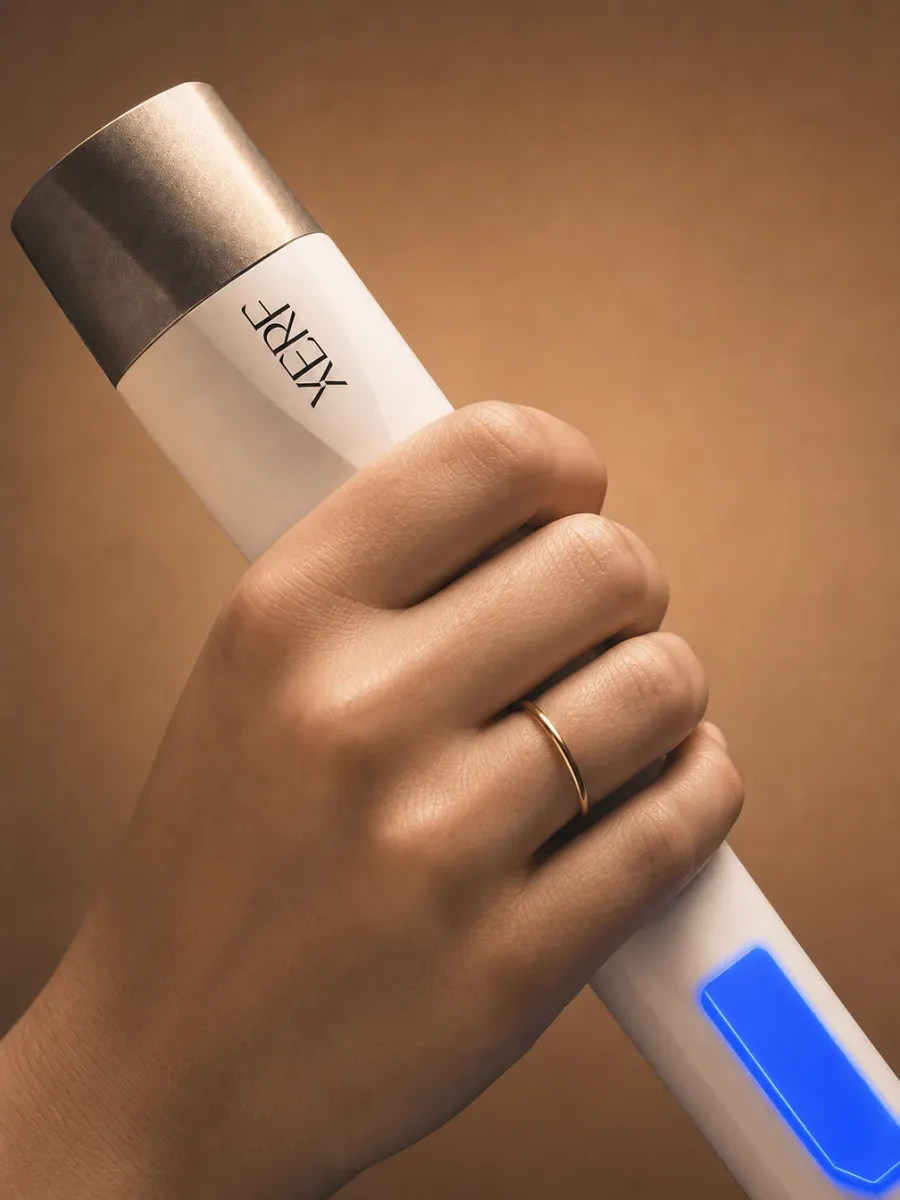
XERF belongs to the second family. According to the manufacturer, Cynosure Lutronic, it combines two frequencies (6.78 MHz and 2 MHz) to heat several layers of the skin at once, down to the supporting tissue.

It isn't magic, it's thermodynamics applied to skin. A lower-power radiofrequency stays cautious on every pass: it heats a thin layer, and you need to come back several times to build up enough heat in the right spot. A high-power monopolar radiofrequency reaches the target depth in one pass, which triggers right away the same mechanism collagen takes months to finish: existing fibres contract, and the skin makes new ones.
With XERF, the device does part of the work on its own: it reads the skin's electrical resistance with every pulse and adapts the energy delivered, while cooling protects the surface. The rest is chosen in the room, zone by zone: depth and intensity. That's one reason a shorter protocol isn't a shortcut taken on your behalf; it's what the device's power allows.
Once you know which family of device you're dealing with, there are variables that belong to you:
That's why no article, this one included, can give you a firm number before actually looking at your skin. What we can give you is our own protocol, and why it's what it is.
For XERF, we count two sessions for an optimal result, about a month apart, then one upkeep session a year, because aging keeps going. A session lasts 90 min, for the full face and neck. There is no downtime: you get on with your day.
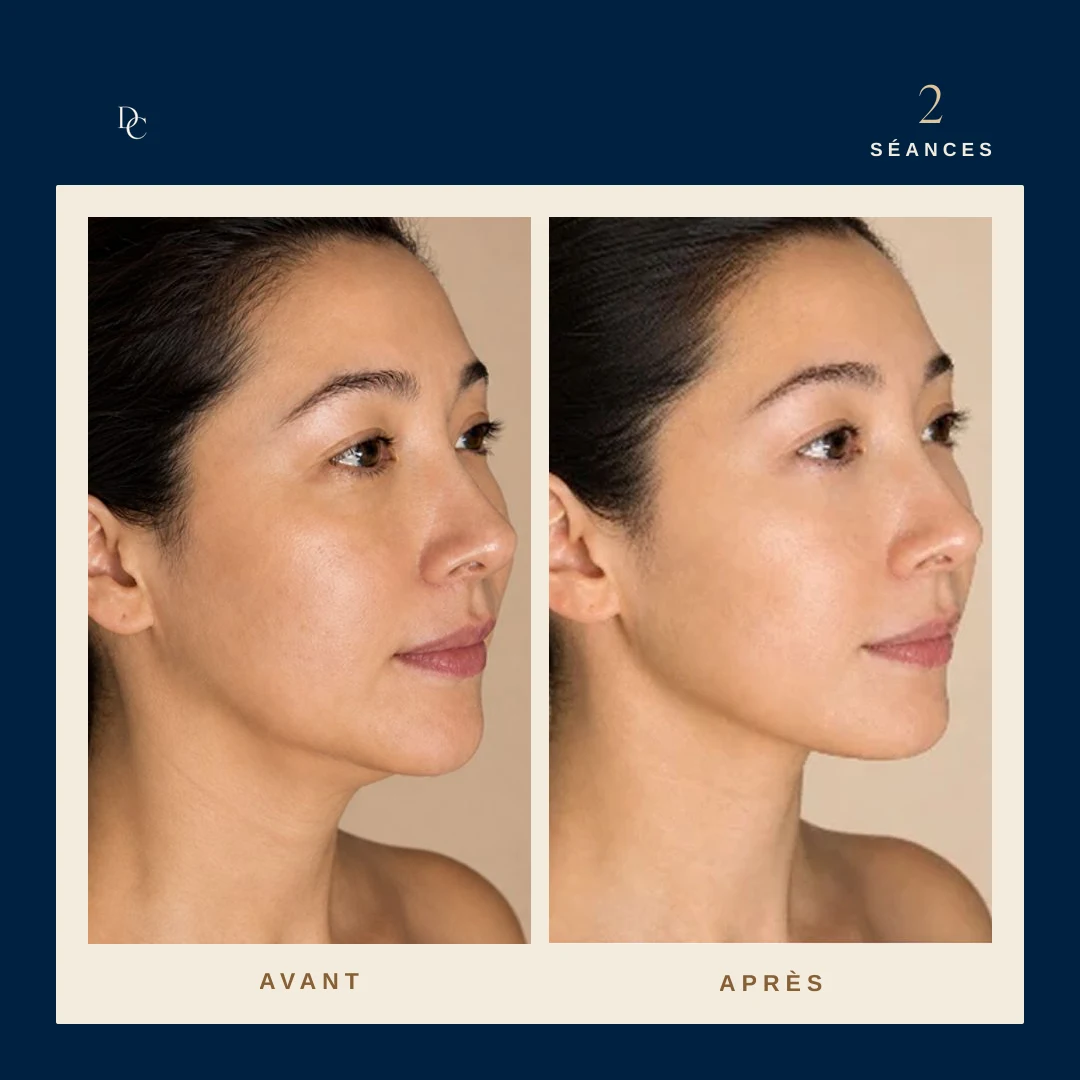
That number isn't picked at random: one session already heats at depth, but two sessions give collagen time to finish a first cycle before we start a second one, on the same area. The result reads in two stages: skin feels tighter right after the session, then the real gain builds over three to six months, while collagen rebuilds.
Two sessions do not mean "it's settled for good." Aging keeps going after the protocol, the same as before it. One upkeep session a year maintains the effect without starting over from scratch each time: it's a yearly number, not a single number that closes the file.
What the assessment decides, either way, is whether XERF is the right answer for you or not. Marked laxity, with excess skin, still belongs to surgery: no radiofrequency, however powerful, repositions tissue that has already dropped. If you're still torn between radiofrequency and another way to work the skin, this article compares the two without selling you either.
For very mild laxity, yes, one session of monopolar radiofrequency can start the mechanism. For a result we consider optimal on the oval and neck, we count two sessions here.
About a month. That gives the first collagen cycle time to properly get going before we start the second session on the same area.
Skin feels a little tighter right after the session. The real result builds over three to six months, the time it takes for collagen to reform.
One upkeep session a year, yes, once the initial protocol is done. It's a reminder, not a full restart.
They're probably using a lower-power radiofrequency: the protocol isn't more generous, it makes up with repetition what one deeper session does in one or two passes.

Laser resurfacing works on the surface of your skin, radiofrequency works on its support. What each one fixes, what it will not, and how to choose.
Choosing a XERF clinic in Laval: three questions, the result, the proof and the trust. The price, the sessions, and what Google and ChatGPT answer.

Two ways of heating skin to firm it, two sensations and two depths. What each one targets, and how to tell which is meant for you.
The best plan starts with an assessment. We look at your skin and answer your questions, no obligation.

Hi, I am Stella. Ask me about a treatment, a price or the clinic, and I will point you to the right place.
Stella answers from the site. She does not diagnose and does not book. The conversation stays 24 hours on this device, and the clinic keeps a copy.