PRP and Exosomes Together: What the Combination Changes for Your Hair
Combining PRP and exosomes in one hair protocol: what exosomes add, and our programs that bring both together.

The evidence on hair PRP is decent but variable. We explain honestly who it works on, and who it does not.

Does PRP work for hair? The honest answer is: it depends. Yes, the answer nobody likes.
What follows tells you what it depends on, so you can place yourself before paying for anything. The treatment is described on our PRP page.
Published work on hair PRP points in the right direction: it often shows a gain in density and slower shedding, with first signs around 6 to 8 weeks.
But protocols vary from one study to the next, and so do the numbers. That is why we speak of an encouraging trend rather than a guaranteed percentage. Anyone quoting you a precise figure is selling an average as if it were a promise.
Your blood contains growth factors. PRP concentrates them and places them back into the scalp, where they act as a wake-up call for dormant follicles.
What happens next:
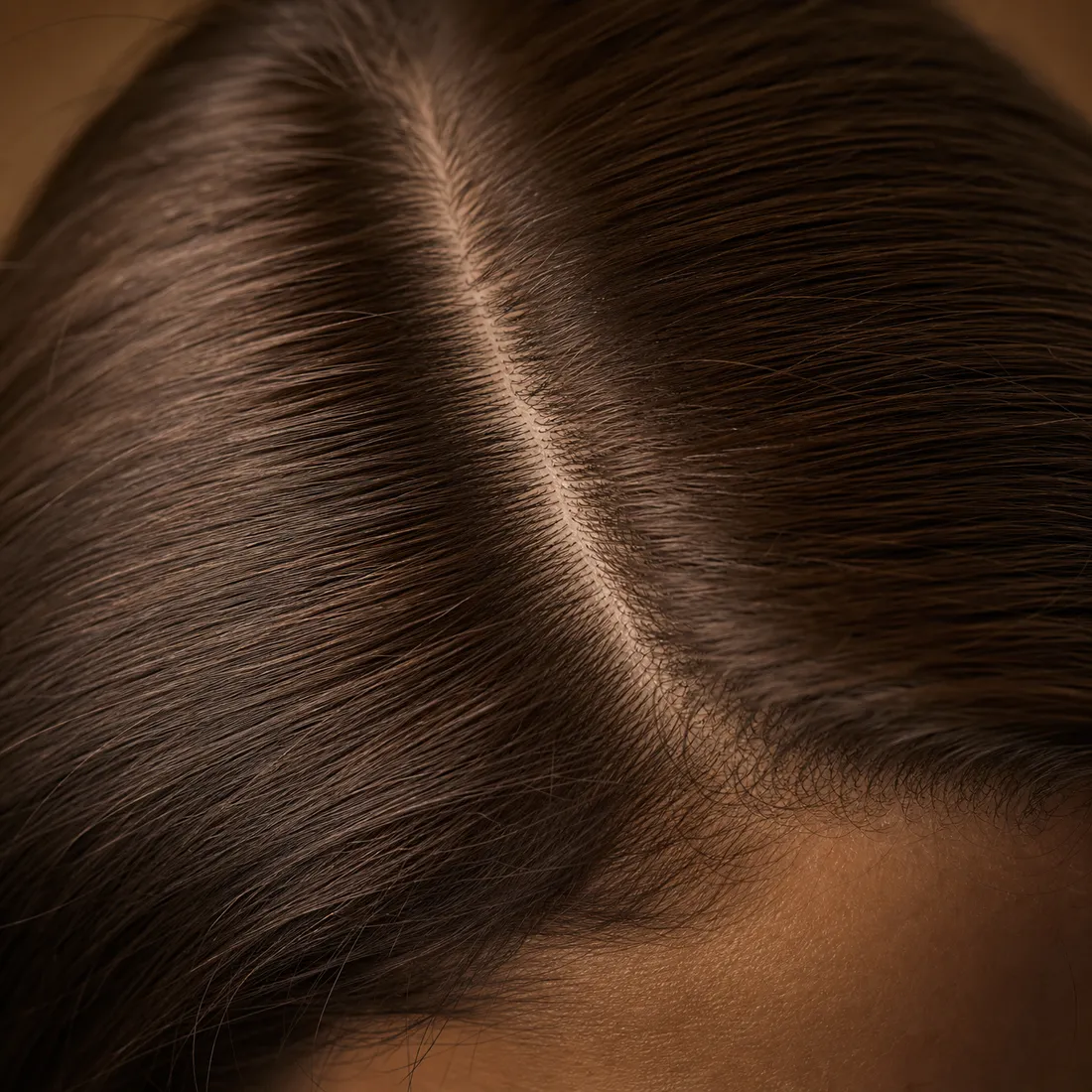
The deciding factor is neither age nor sex: it is the stage of the loss.
The best responses:
The limited responses:
The rule: the earlier you act, the better it responds. A follicle that disappears does not come back.
In women, we look first at iron, thyroid and hormones. Restarting a follicle without correcting the cause is rowing upstream.
Weeks 1 to 4: shedding stabilizes. Weeks 6 to 8: the first vellus hairs appear. Months 3 and 4: density visibly improves. Around 6 months: the result is at its best.
That progression follows the natural hair cycle. It cannot be sped up, and it is the one point nobody can do anything about.
PRP is not miraculous:
These limits do not reduce its value. They set fair expectations, which is the best service we can offer you before starting.
More effective than: supplements alone, so-called anti-shedding shampoos, and scalp massage. Those are not treatments, they are supports.
Different from minoxidil: we do not recommend it here, and the reason fits in one sentence. The day you stop, shedding resumes, often harder. Our angle is the opposite: bet on your own follicles, early, rather than on an endless daily routine.
Lighter than: a hair transplant, which remains the right answer for genuinely bare areas, and to which we will refer you if that is your case.
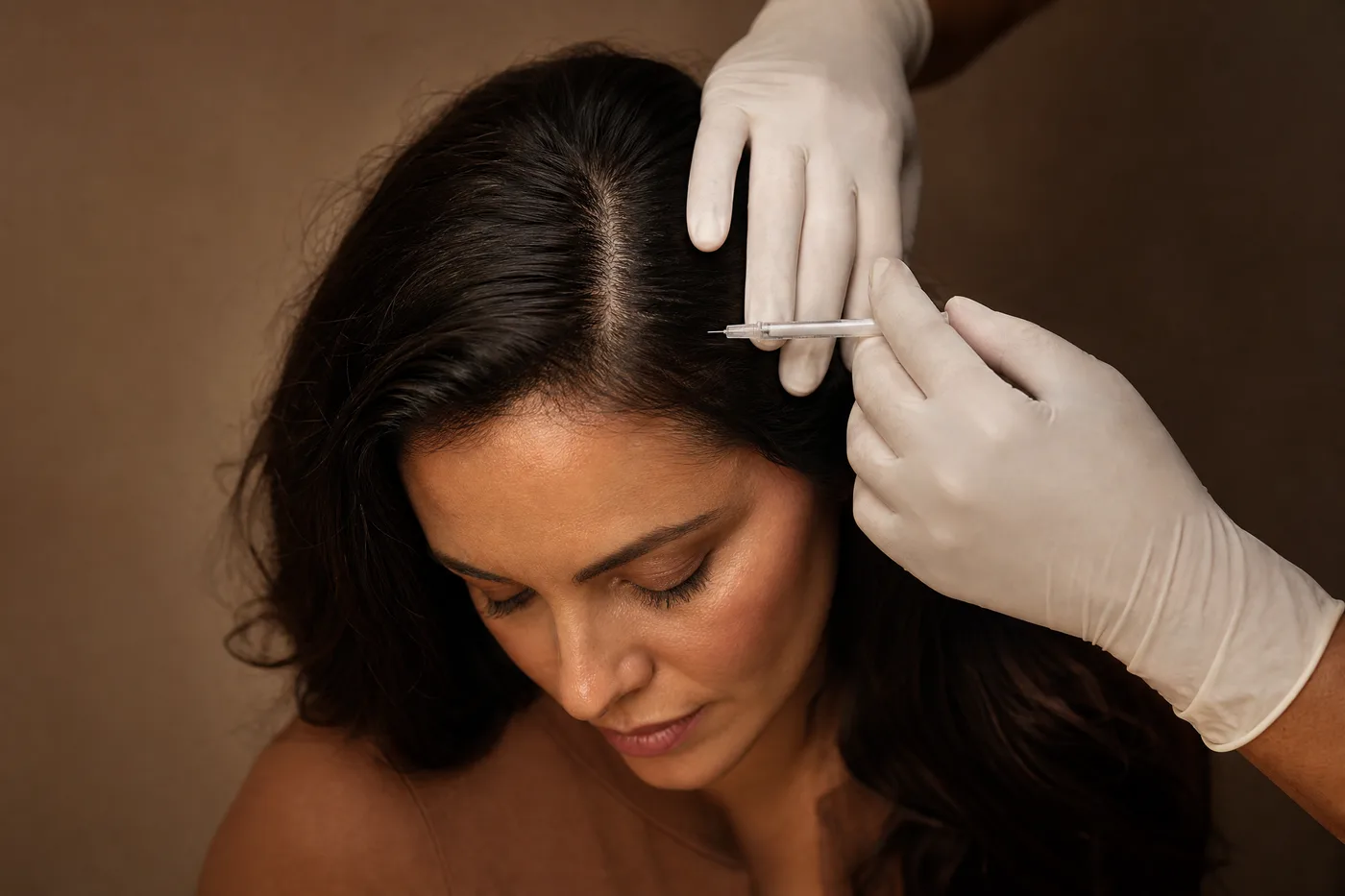
Our protocol: three to four sessions spaced three to six weeks apart, with an assessment of your type of loss up front, photographic follow-up, and suitable recommendations. That is how DC Bloom for women and DC Prime for men are built.
What genuinely improves the result:
That last point is not magazine advice: the quality of your plasma depends directly on your habits, and it is the only free lever you have. The subject is covered in this article.
Yes, if:
No, if:
In the last two cases, we will tell you at the assessment rather than letting you find out at the third session.
The before-and-afters we publish are real cases, but they vary considerably from person to person. They are results obtained after several sessions, never a guarantee.
What makes them vary: age, the state of the scalp, genetics, general health, and adherence to the protocol. We commit to the quality of what we do, not to a specific result.
The real question is not "does PRP work" but "will PRP work for me".
There is one way to find out: the hair eligibility assessment. We look at your type of loss, your history and your goals, and you leave with a clear answer, including when it is no.
To place your case before coming in, start with our hair page.
Combining PRP and exosomes in one hair protocol: what exosomes add, and our programs that bring both together.

PRP for hair reinjects your platelets’ growth factors to wake follicles that are still alive. Here is how it works, step by step.
Two approaches to support hair density. What really sets them apart, what the science says, and how we choose based on your profile.
The best plan starts with an assessment. We look at your skin and answer your questions, no obligation.

Hi, I am Stella. Ask me about a treatment, a price or the clinic, and I will point you to the right place.
Stella answers from the site. She does not diagnose and does not book. The conversation stays 24 hours on this device, and the clinic keeps a copy.