How PRP Works on Your Hair Follicles
PRP for hair reinjects your platelets’ growth factors to wake follicles that are still alive. Here is how it works, step by step.

Combining PRP and exosomes in one hair protocol: what exosomes add, and our programs that bring both together.
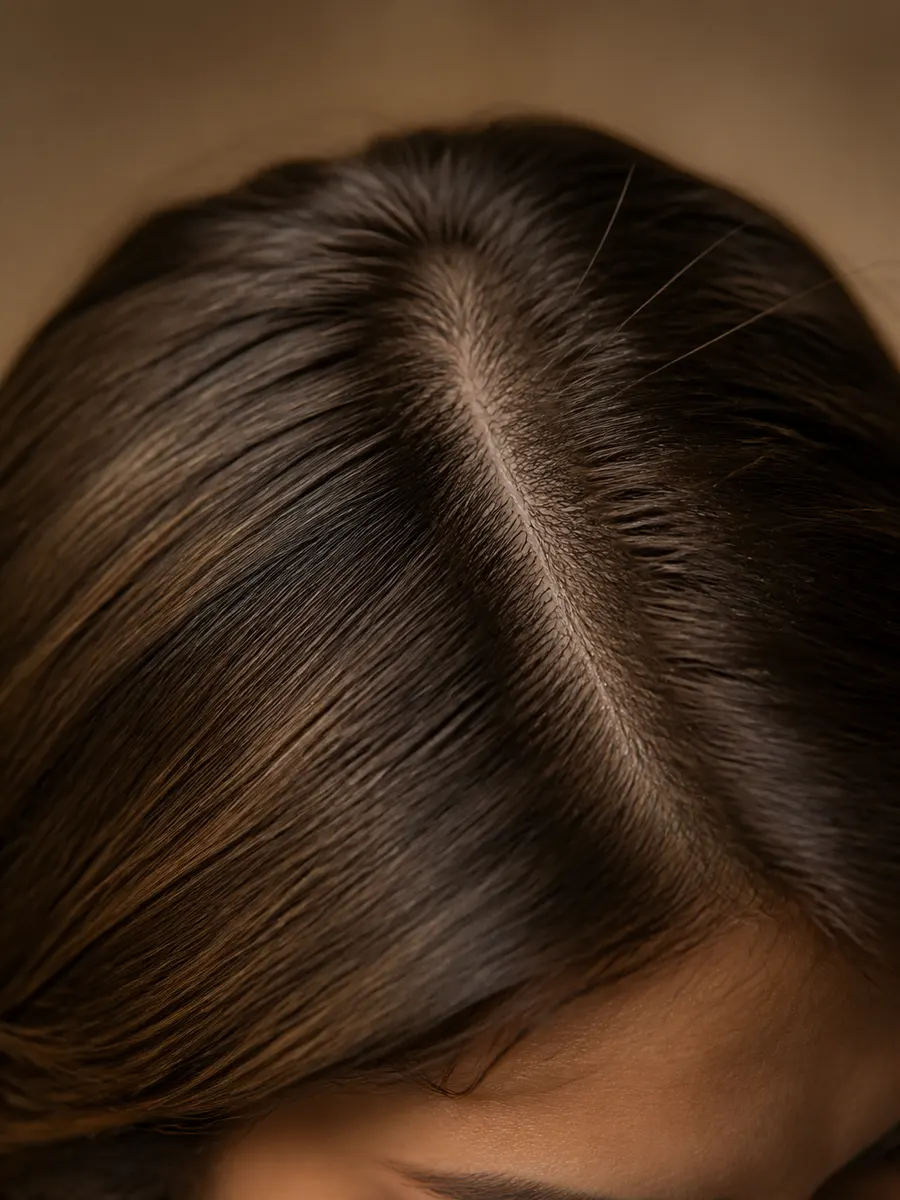
Combining PRP and exosomes means adding cellular messengers to your platelets, reinforcing the signal sent to your cells. If you are starting from scratch, PRP is explained here.
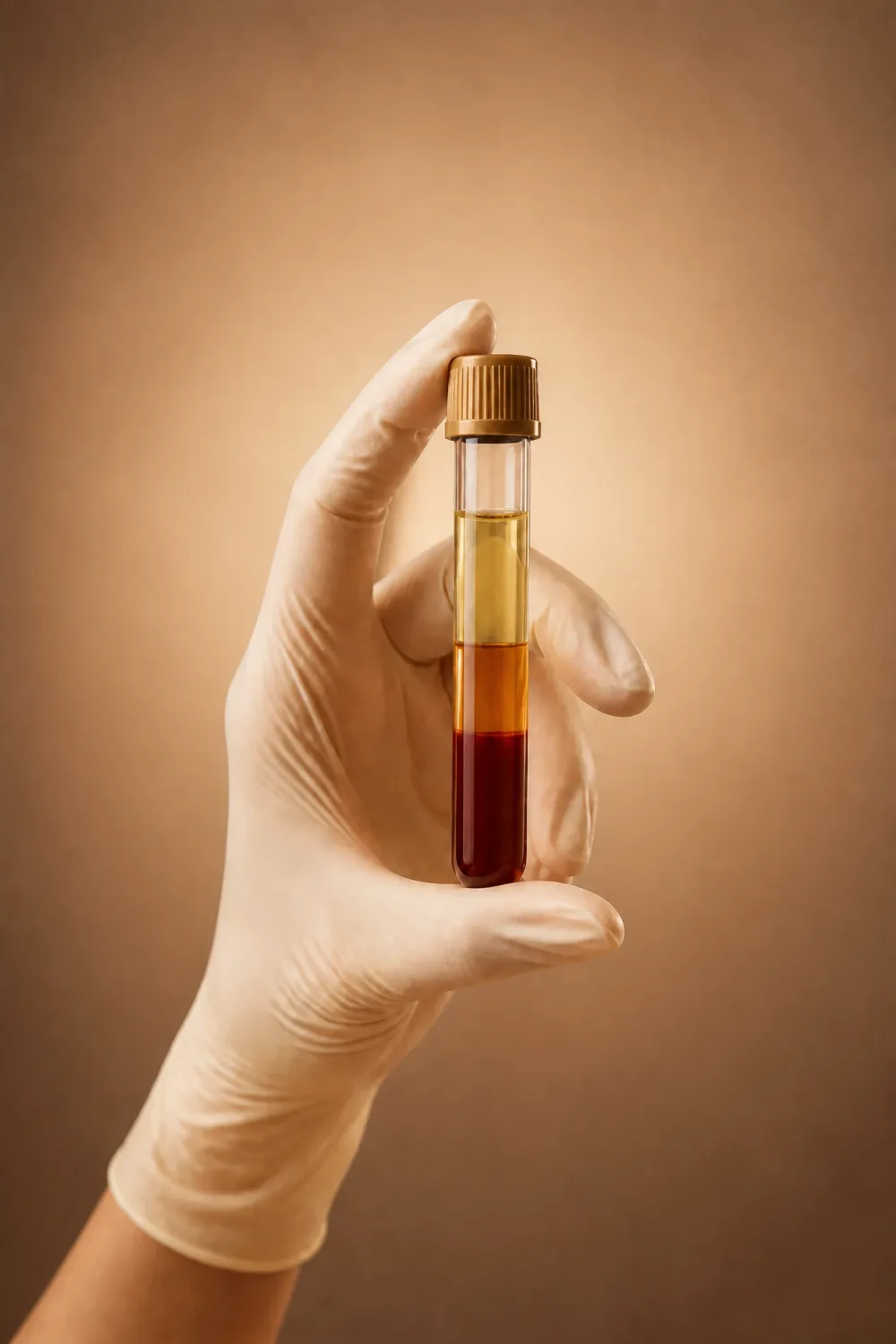
PRP comes from your own blood. We draw a small tube, less than routine lab work. Nothing to worry about.
The tube goes into a centrifuge that separates the components. What interests us: your platelets, the small cells that heal you when you cut yourself.
They are full of growth factors. They tell the skin to repair itself and produce collagen. With age, skin needs reminding. That is where PRP comes in.
Exosomes are tiny vesicles, invisible to the eye, that carry messages between your cells. As if your cells were texting each other about what to do.
A patient once told us: "It's as if my skin forgot how to be young." That is exactly it. With age, communication between cells weakens; exosomes amplify the signal.
An honest note: exosomes are not approved by Health Canada for this indication, even though their use is common in clinics.
We start by talking. What is actually bothering you?
Then we draw a little blood. Many people are surprised: "That's it? I expected worse."
While you wait, we prepare your PRP and the exosomes. It is meticulous, and we do not cut corners there.
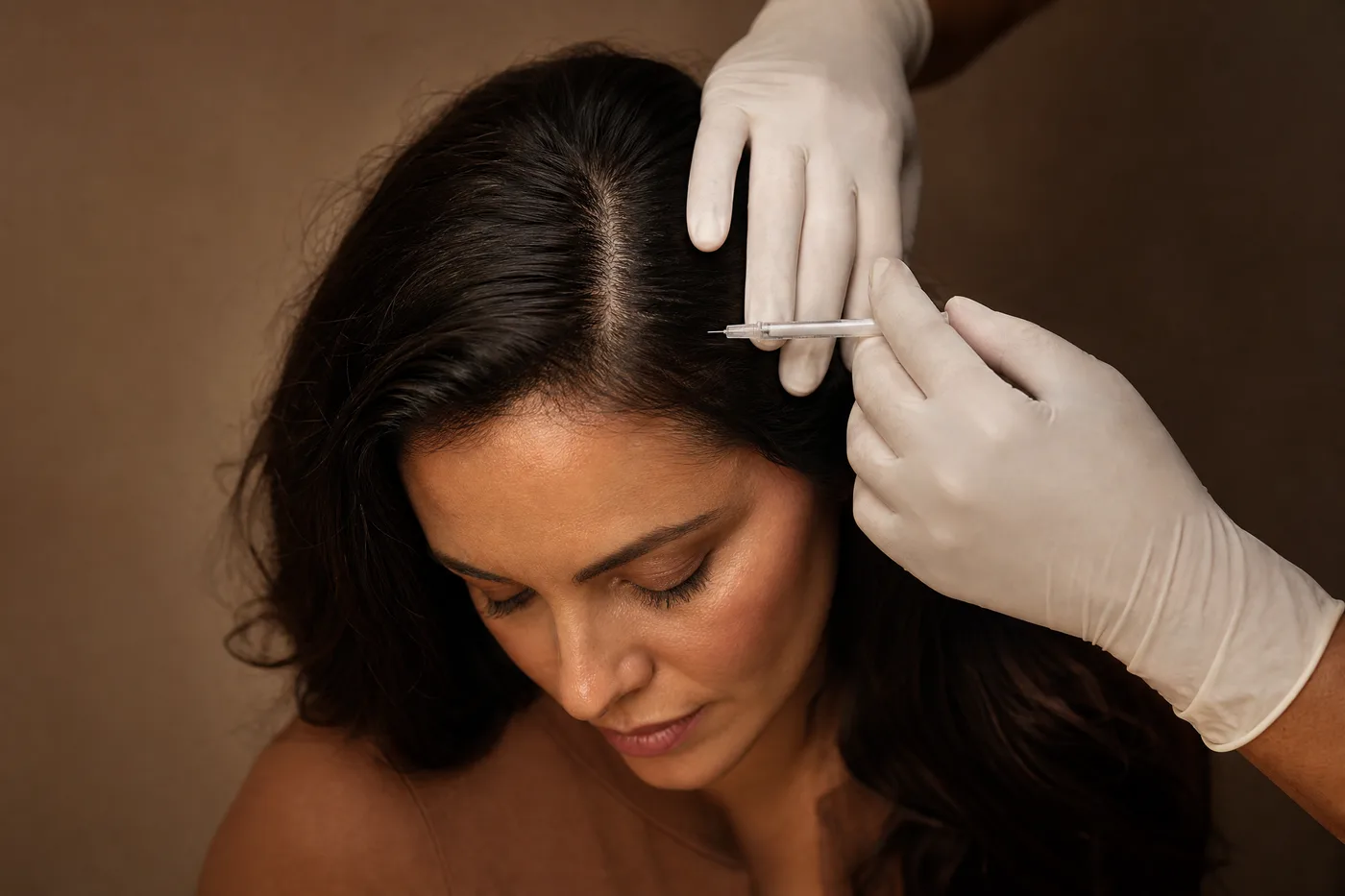
Then comes the application. The question that follows is always the same: "Is it going to hurt?" The honest answer: you will feel something, but it will be tolerable. The subject is covered in detail in this article.
The procedure is performed by one of our nurses: anything that goes through a needle is theirs.
A 52-year-old businessman told us: "I don't want to look 30. I just want to look as energetic on the outside as I feel on the inside." That sums up what most people are after.
Your body is remarkable, but it has its own pace. This is not a filter you apply, it is closer to a garden you plant.
Right after, the skin can be red. That is normal, and it is the sign the cells have woken up. A patient told us: "It's as if my skin went for its morning run."
In the days that follow, you go back to your activities. There is nothing to hide, and some people come in over their lunch hour.
In the following weeks, the work happens without your seeing it. Cells communicate, regenerate, and the result appears little by little.
The treatment plants the seeds; maintenance is the watering.
Go gently at first with your skin. No rubbing, no harsh products.
Hydrate, skin and body. Drink, genuinely.
Protect yourself from the sun, even in winter and even on grey days. It is the single gesture that best protects your investment.
Eat colourfully. Skin likes protein, berries and greens.
We are demanding about quality: products, equipment, team training. That is where the money goes.
We say no. If a treatment is not right for you, we will tell you, and we have already turned away people whose expectations did not match what the device can do.
We look at the person, not just the skin: your habits, your pace of life, what actually worries you.
"Does it hurt?" You will feel something, certainly. But most people are surprised to find it easy.
"How long does it take?" The session takes about an hour. The result evolves over time and depends on your age, your skin and your habits.
"How many sessions?" For most people, two or three sessions four to six weeks apart give a good result, then we maintain.
"Is it natural?" PRP comes from your own body, and exosomes are biological vesicles. We are not working with synthetic products, but with the language of your own cells.
A consultation commits you to nothing. We do not promise the moon: we propose what is realistic in your case, and we tell you plainly when it is not indicated.
The best compliment we get is when a patient's family says "you look well", rather than "who did your injections".
To place your case on the hair side, start with our hair page.

PRP for hair reinjects your platelets’ growth factors to wake follicles that are still alive. Here is how it works, step by step.

The evidence on hair PRP is decent but variable. We explain honestly who it works on, and who it does not.
Two approaches to support hair density. What really sets them apart, what the science says, and how we choose based on your profile.
The best plan starts with an assessment. We look at your skin and answer your questions, no obligation.

Hi, I am Stella. Ask me about a treatment, a price or the clinic, and I will point you to the right place.
Stella answers from the site. She does not diagnose and does not book. The conversation stays 24 hours on this device, and the clinic keeps a copy.